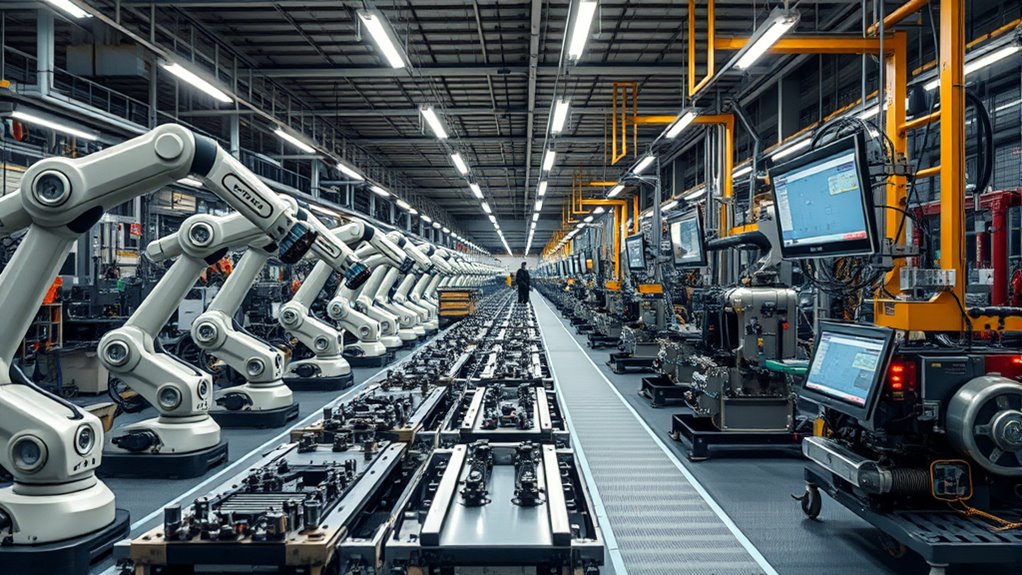

For over 200 years, fears that machines would wipe out jobs have persisted, but history shows these worries rarely lead to lasting unemployment crises. Instead, technological advances often change industries, creating new roles and opportunities. People adapt, and economies restructure smoothly over time with support from retraining programs. If you’d like to understand how these fears have consistently been proven wrong and what that means for the future, there’s more to explore.

Get business pricing on tech for your team
- Business-only prices and quantity discounts
- Tax-exempt purchasing
- Multiple users, one account, clear invoices
Key Takeaways
- Concerns about machines replacing jobs date back over two centuries but have consistently been overstated.
- Historical evidence shows technological change often leads to new roles and economic restructuring rather than long-term unemployment.
- Automation transforms industries by freeing workers for more complex tasks, fostering innovation and productivity.
- Governments and education systems help workers transition through retraining, mitigating fears of persistent job loss.
- Overall, technological unemployment fears have not materialized; economies adapt and grow through ongoing technological progress.
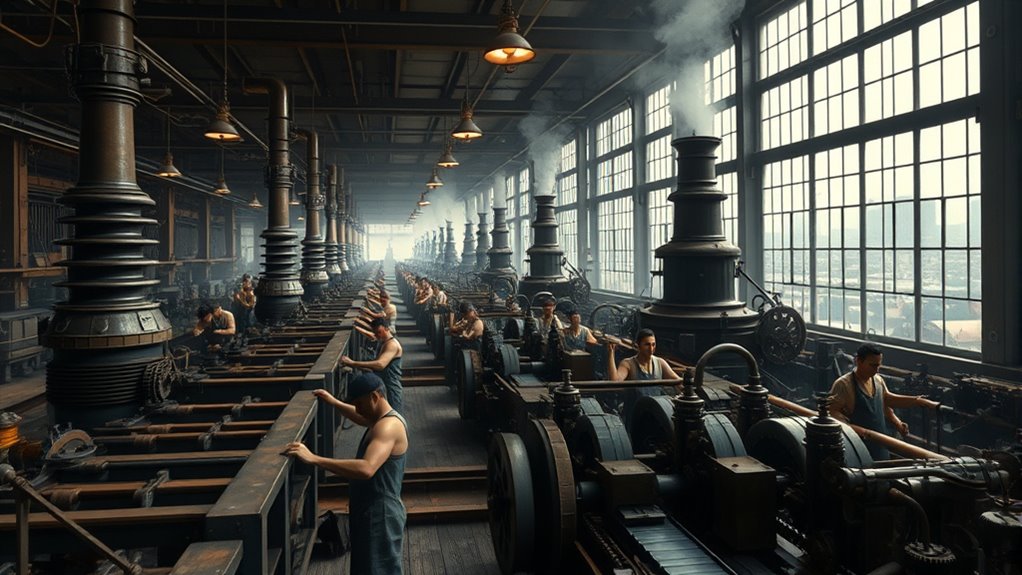
Have you ever wondered if machines are taking over jobs faster than new ones are being created? For over two centuries, this question has haunted economists, workers, and policymakers alike. The fear of technological unemployment stems from the idea that automation impacts could lead to widespread job losses, forcing economies into upheaval. Yet, despite these anxieties, history shows a different story. Instead of causing long-term unemployment crises, technological progress often results in economic restructuring that eventually creates more opportunities than it displaces. Your concern might be justified in the short term, but the overall trend suggests adaptation and growth.
When automation impacts industries, it typically transforms the labor landscape rather than obliterating it. Machines replace repetitive tasks and manual labor, freeing workers to focus on more complex, creative, or interpersonal roles. This shift accelerates productivity and encourages new business models. For example, during the Industrial Revolution, machines replaced many manual tasks, yet jobs didn’t vanish; they evolved. New sectors emerged, requiring different skills, which led to economic restructuring. Today, similar patterns hold true. Automation may temporarily disrupt employment, but it also prompts innovation and the development of new industries, ultimately balancing or surpassing the jobs lost.
The idea that technological unemployment is a 200-year-old fear that never materialized overlooks how economies have historically adapted. Each wave of technological change has initially caused concern, but these fears have often been overstated. Workers tend to transition into new roles as industries evolve. Governments and educational systems play a vital role here by providing retraining programs and policies that ease this transition. The key is understanding that automation impacts are not static; they reflect a dynamic process where economies reshape themselves around new technological possibilities. Additionally, the concept of economic restructuring highlights how labor markets adapt over time, absorbing new roles and opportunities.
In the current era, concerns about AI, robotics, and digital automation intensify because of their rapid development. However, the pattern remains consistent. While some jobs may disappear, new ones are created—often in sectors that didn’t exist before. The challenge lies in preparing the workforce for these changes through skill development and lifelong learning. If you pay attention, you’ll see that history’s lesson is clear: technological progress has never led to lasting mass unemployment. Instead, it prompts economic restructuring, which, over time, fosters new employment opportunities and economic resilience.
Ultimately, the fear that machines will take over jobs entirely overlooks the adaptability of economies. While change can be unsettling, it also brings growth and innovation. As history demonstrates, technological unemployment is less a catastrophe and more a catalyst for economic restructuring that creates new pathways for employment and prosperity.
automated job retraining programs
As an affiliate, we earn on qualifying purchases.
As an affiliate, we earn on qualifying purchases.
Frequently Asked Questions
How Have Past Technological Revolutions Impacted Employment?
You’ve seen how historical shifts in technology have transformed the labor market, often creating new jobs even as some disappear. Past revolutions, like the Industrial Revolution, initially disrupted employment, but ultimately led to economic growth and innovation. You can expect similar patterns today, where technological change might temporarily challenge jobs, but it also opens opportunities for new careers and industries, reshaping the labor market in positive ways.
What Are the Main Arguments Against the Fear of Unemployment?
You see the storm of automation sweeping through industries, yet history shows you how societies adapt. Past technological revolutions caused historical job displacement, but new roles emerged, fueling innovation and growth. This resilience proves fears of permanent unemployment are unfounded. You can trust that, with adaptation, the job market evolves, creating opportunities even amid rapid change. The rhythm of progress continues, and you can be part of this ongoing transformation.
How Do New Jobs Emerge After Automation Waves?
When automation waves hit, you can adapt by focusing on future skill development, which helps you stay relevant. New jobs often emerge in sectors requiring creativity, problem-solving, and emotional intelligence—areas automation struggles with. Building automation resilience ensures you’re prepared for change, allowing you to shift seamlessly. You’ll find opportunities in tech, healthcare, and green industries, where human skills remain essential, creating a resilient job market for the future.
What Role Do Government Policies Play in Managing Technological Unemployment?
Governments govern growth by guiding job gaps with policies like universal basic income and workforce retraining. They facilitate financial fairness, fueling future-focused flexibility. By funding retraining programs and providing reliable income, they help workers shift from obsolete roles to emerging opportunities. Proactive policies promote progress, prevent panic, and protect populations from unemployment’s pitfalls, ensuring society stays steady and supportive amid sweeping technological shifts.
Can AI Create More Jobs Than It Destroys?
AI can create more jobs than it destroys if we focus on AI ethics and responsible development. You might see new roles emerge in AI oversight, maintenance, and ethical governance, offsetting job displacement in other sectors. By investing in retraining and education, you can help guarantee that AI’s benefits outweigh its risks. Embracing innovation while managing job displacement is key to a balanced, thriving economy.
AI and robotics educational kits
As an affiliate, we earn on qualifying purchases.
As an affiliate, we earn on qualifying purchases.
Conclusion
As you watch machines replace jobs, remember the phoenix rising from ashes—history shows innovation often sparks new opportunities. Though the flames of change seem fierce, they also clear the way for rebirth and growth. Don’t fear the storm; see it as a symbol of renewal. Embrace the cycle, knowing that with each technological revolution, you have the power to adapt and soar higher than ever before.
productivity and innovation tools for workers
As an affiliate, we earn on qualifying purchases.
As an affiliate, we earn on qualifying purchases.
career transition online courses
As an affiliate, we earn on qualifying purchases.
As an affiliate, we earn on qualifying purchases.
Fall Picks
fall essentials
As an affiliate, we earn on qualifying purchases.