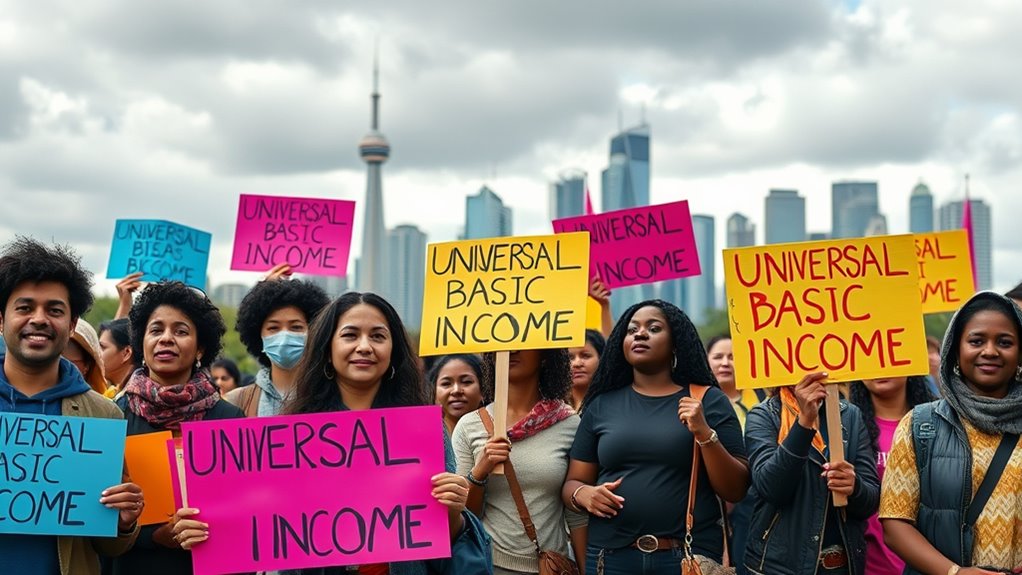

Public opinion on UBI is quite divided. Many voters see it as a way to tackle economic inequality and job insecurity, while others worry about how sustainable it is and how it would be implemented. Support often depends on personal experiences and beliefs, with some trusting its benefits and others cautious about risks like inflation and debt. If you’re curious about what shapes these opinions and future prospects, there’s more to explore.
Key Takeaways
- Public support for UBI varies widely, influenced by economic concerns and personal beliefs.
- Many voters see UBI as a potential solution to inequality and job insecurity.
- Skepticism exists regarding UBI’s economic impact, including inflation and government debt.
- Implementation challenges and funding methods significantly affect public opinion.
- Overall acceptance depends on perceived benefits outweighing potential risks and effective policy management.
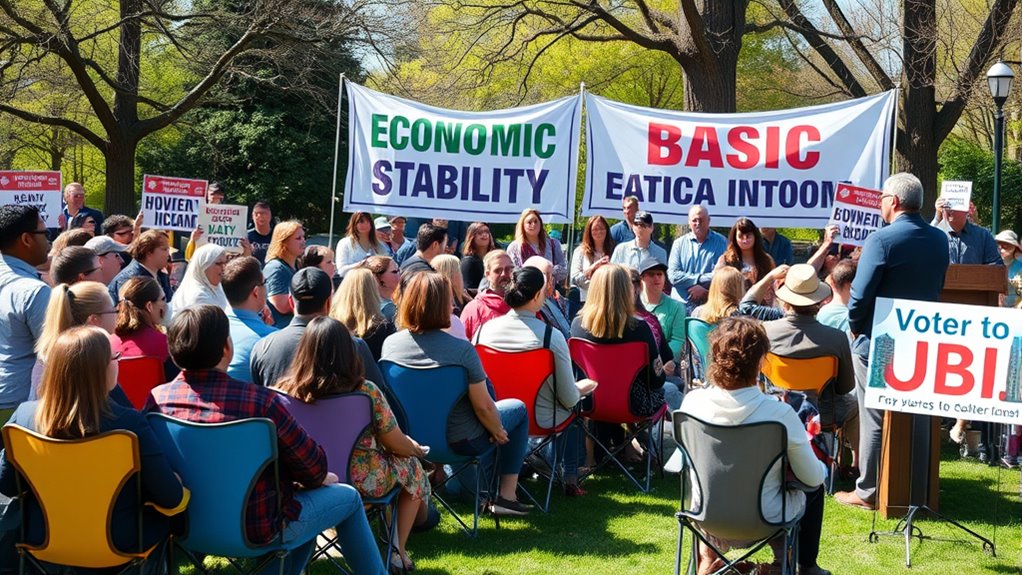
Have you ever wondered what people really think about Universal Basic Income (UBI)? It’s a topic that sparks a lot of debate, and opinions vary widely depending on who you ask. Many voters see UBI as a bold solution to economic inequality and job insecurity, but they also worry about its economic impact and the practical challenges of implementing such a program. Public opinion is complex, shaped by concerns over how it would affect work incentives, government spending, and overall economic stability.
When you consider the economic impact of UBI, it’s natural to have mixed feelings. Supporters argue that providing a regular income to everyone could boost consumer spending, reduce poverty, and stimulate economic growth. They believe that UBI could serve as a safety net that encourages entrepreneurship, innovation, and a more resilient economy. However, opponents worry about the potential for inflation or increased government debt, which might strain public finances in the long run. You might also think about whether UBI could lead to reduced motivation to work, possibly shrinking the labor force and affecting productivity. These concerns influence public opinion, making many hesitant to fully embrace UBI without clear evidence of its economic benefits. Additionally, the design of projected costs and funding mechanisms plays a crucial role in shaping public perceptions about the viability of UBI programs.
Implementation challenges play a significant role in shaping voter attitudes. You may question how a government could fund such a program sustainably—whether through higher taxes, reallocating existing budgets, or other means. Many worry about the administrative complexity involved in distributing payments to all citizens, especially in large or diverse populations. There’s also skepticism about whether UBI can be rolled out fairly and efficiently without creating bureaucratic hurdles or unintended consequences. These challenges often make voters cautious, fearing that the promises of UBI might not be realized or that it could create new economic or social issues.
Public opinion tends to mirror these concerns. Polls frequently show that support for UBI varies depending on how questions are framed and the context of implementation. Some voters are open to experimentation, especially in places facing economic hardship or high unemployment, while others remain skeptical about its feasibility and long-term effects. Personal experiences and political beliefs also influence how strongly someone supports or opposes UBI. Ultimately, while many see the potential benefits of a basic income, the economic impact and implementation challenges remain critical factors shaping public opinion. As debates continue, it’s clear that acceptance of UBI depends on convincing the public that its benefits outweigh the risks and that challenges can be effectively managed.
Frequently Asked Questions
How Does UBI Impact Economic Inequality?
You see that UBI can reduce economic inequality by improving income distribution, giving low-income individuals a safety net. When you implement UBI, it helps narrow the wealth gap, ensuring more equitable access to resources. This redistribution of wealth promotes social stability and economic mobility, making the economy more inclusive. Ultimately, UBI can be a powerful tool to address disparities and foster a fairer society for everyone.
What Are Common Misconceptions About Universal Basic Income?
You might believe that UBI discourages work or is too expensive, but myth debunking shows otherwise. Public perception often mislabels it as an overly generous handout, yet studies indicate it can boost economic security without reducing productivity. You should understand that UBI aims to provide a safety net, fostering innovation and equality, rather than promoting laziness. Recognizing these misconceptions helps you see its potential benefits clearly.
How Do Different Demographics View UBI Support?
Demographic preferences and cultural attitudes shape diverse views on UBI. Younger voters tend to support it, driven by a desire for economic security and social change, while older populations often remain skeptical, valuing traditional work ethic. Urban residents usually favor UBI for its practicality, whereas rural communities might see it as less relevant. Recognizing these differences helps you understand that demographics directly influence support levels, shaping broader public opinion.
What Are the Main Arguments Against Implementing UBI?
You might oppose UBI because you believe it could create dependency, reducing motivation to work. Critics argue that cash transfers could strain government budgets and divert funds from essential services. Others worry UBI isn’t targeted enough for poverty alleviation and might benefit the wealthy more than those in need. These concerns highlight fears that UBI might not effectively address economic disparities while risking inefficient use of resources.
How Does UBI Influence Workforce Participation Rates?
A penny saved is a penny earned, so you’ll find that UBI can boost workforce motivation by providing a financial safety net. It may lead to employment shifts, as some individuals choose to pursue careers aligned with their passions rather than just earning a paycheck. While participation might slightly decrease, overall well-being improves, encouraging a more flexible and innovative labor market without considerably harming economic productivity.
Conclusion
As you consider public opinion on UBI, think of it as planting a seed in the fertile ground of society’s hopes. While many support this idea as a beacon of fairness, others remain cautious, wary of the storm clouds of change. Ultimately, your voice helps water this emerging symbol of security, shaping whether it blossoms into a new dawn of equality or withers before sunrise. The choice is yours, and the future awaits your decision.