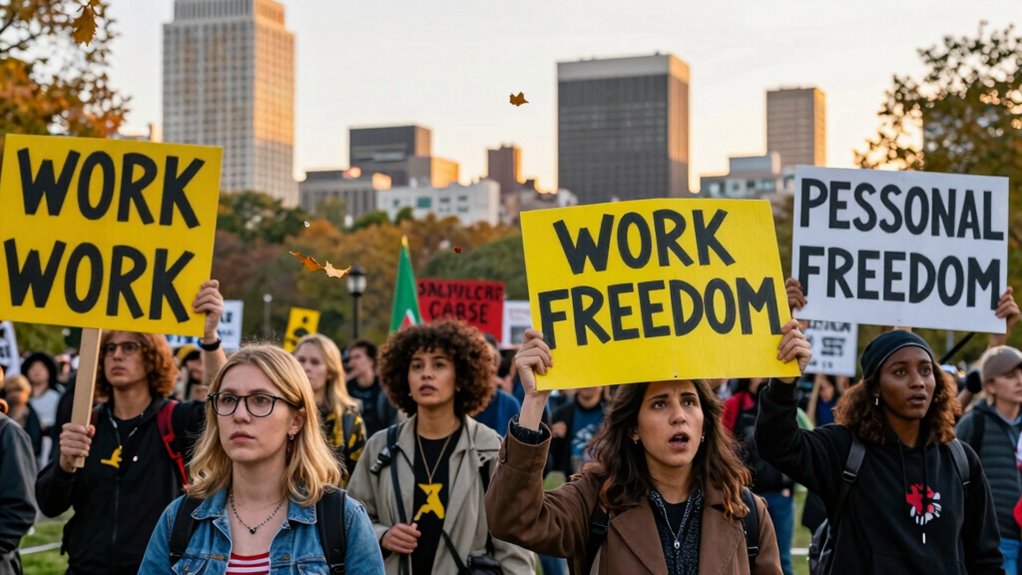

If you’re curious about the debate, critics worry that UBI might reduce your motivation to work, fearing it could harm the economy and productivity. Supporters, however, highlight how UBI can free you to pursue education, entrepreneurship, or caregiving without constant financial stress. They believe it promotes personal freedom and innovation. If you want to understand how these perspectives shape society’s future, there’s much more to explore.
Key Takeaways
- Critics focus on potential reductions in motivation to work and economic stability concerns with UBI implementation.
- Supporters argue UBI enhances personal freedom, allowing individuals to pursue meaningful and innovative activities.
- The debate centers on whether guaranteed income diminishes work incentives or promotes societal and individual liberty.
- Both sides acknowledge work’s importance but differ on its role in societal security versus personal freedom.
- Environmental and technological factors are seen as ways to support UBI’s sustainability and align with societal values.

Universal Basic Income (UBI) has become a hotly debated topic, drawing both passionate supporters and staunch critics. You’re likely aware of the core arguments: critics worry that providing a guaranteed income might diminish your motivation to work, while supporters emphasize the freedom it grants to pursue meaningful lives beyond just paycheck dependence. You might wonder how these perspectives influence the broader societal and environmental context, especially considering the importance of biodiversity and sustainability in shaping future policies. The critics often ask, “Will UBI kill work incentives?” They argue that if people receive money regardless of employment status, some may choose to work less or not at all, which could harm the economy and reduce productivity. Their concern is straightforward: if people don’t need to work for survival, they might lose the drive to contribute actively to society. Critics see this potential reduction in work effort as a threat to economic security for everyone, fearing that fewer people working could lead to labor shortages and a weaker economy overall.
Supporters, however, counter these points by highlighting the personal and societal freedom that UBI can provide. They argue that economic security isn’t just about having enough money—it’s about having the freedom to make choices that aren’t solely dictated by financial necessity. When you’re not constantly worried about making ends meet, you gain the flexibility to pursue education, start a business, care for family members, or engage in community activities. Supporters see UBI as a way to enhance work incentives in a different way: by removing the fear of destitution, people might be more willing to take risks and innovate, which can ultimately lead to new economic opportunities. They believe that a society with economic security for all creates a more motivated and creative workforce, where the focus shifts from mere survival to meaningful contribution. Additionally, the implementation of technological advancements could reshape the economy in ways that support the effectiveness of UBI. Embracing these technological changes can also promote more sustainable economic practices, aligning with environmentally sustainable principles.
Furthermore, the integration of environmentally sustainable practices into economic policies could amplify the benefits of UBI by encouraging responsible resource use and conservation. The debate isn’t just about whether people will work less; it’s about what kind of society you want to build. Do you want a system that prioritizes economic security and personal freedom, trusting that individuals will choose to work when they find value in it? Or do you prefer a system wary of change, fearing that guaranteed income might undermine the work ethic? Both sides acknowledge the importance of work incentives, but they interpret their impact differently. For supporters, UBI isn’t about replacing work—it’s about redefining its role. For critics, it’s about safeguarding the motivation to work. Ultimately, the conversation revolves around whether freedom from economic hardship can coexist with a thriving, purposeful workforce, or whether it might inadvertently weaken the very fabric of work and productivity that sustains society.
Universal Basic Income support books
As an affiliate, we earn on qualifying purchases.
As an affiliate, we earn on qualifying purchases.
Frequently Asked Questions
How Does UBI Impact Long-Term Economic Growth?
Universal Basic Income (UBI) can boost long-term economic growth by maintaining consumer spending during downturns, which encourages innovative entrepreneurship. With a safety net, you’re less pressured to accept unfulfilling jobs, freeing you to pursue more meaningful work and ideas. This shift can improve labor incentives, leading to increased productivity and innovation. Over time, this environment promotes sustainable growth, benefiting the economy by fostering creativity and resilience.
What Are the Environmental Effects of Implementing UBI?
Implementing UBI can positively impact environmental sustainability by encouraging resource conservation. When you receive a basic income, you’re less pressured to overconsume or exploit natural resources for immediate needs. This financial security allows you to make more sustainable choices, supporting long-term ecological health. However, if UBI leads to increased consumption without proper regulation, it might strain resources. Overall, with conscious policies, UBI can promote responsible resource use and environmental preservation.
Can UBI Effectively Reduce Income Inequality?
Yes, Universal Basic Income can effectively reduce income disparity by providing everyone with a financial safety net, ensuring basic needs are met. Think of it as a safety valve, releasing pressure from those struggling the most. It narrows the gap between the wealthy and the disadvantaged, fostering economic equality. By guaranteeing a minimum income, UBI empowers individuals to pursue opportunities without fear, making social mobility more attainable for all.
How Would UBI Be Funded Sustainably?
You can fund Universal Basic Income sustainably by implementing a mix of policies like progressive taxation, closing tax loopholes, and introducing financial transaction taxes. Redirecting existing welfare costs and reducing administrative expenses also help. Ensuring fiscal sustainability requires balancing increased revenue with controlled expenditures. This approach maintains the program’s long-term viability, enabling Universal Basic Income to support economic freedom while keeping government finances healthy and responsibly managed.
What Are the Potential Social Consequences of UBI?
Coincidences happen, and with Universal Basic Income, you might see increased social cohesion and universal security. As people feel financially stable, social bonds strengthen, reducing inequality and fostering trust. However, there’s a chance that some may become complacent or disengaged. Overall, UBI could promote a more inclusive society, where everyone shares in prosperity, but it also requires careful implementation to prevent unintended social divisions.
As an affiliate, we earn on qualifying purchases.
Conclusion
As critics clutch their concerns and supporters serenade with stories of sovereignty, you see the stark struggle shaping society’s stance. The debate dances dangerously between doubt and devotion, each side shaping the shape of your future. Remember, in this tug-of-war, your voice is essential—vividly voicing your vision. Stand firm, stay informed, and let your beliefs be bold, because in this battle of beliefs, your choice crafts the coming chapter.
UBI entrepreneurship starter kit
As an affiliate, we earn on qualifying purchases.
As an affiliate, we earn on qualifying purchases.
As an affiliate, we earn on qualifying purchases.