This checklist is for people choosing hardware for AI inference, whether they are assembling a development setup or adding components to an existing system. The product picks cover an edge AI board, a GPU support bracket, a network adapter, and an NVMe drive, with advice for neural processing units and GPU cooling fans.

Get business pricing on tech for your team
- Business-only prices and quantity discounts
- Tax-exempt purchasing
- Multiple users, one account, clear invoices
The sections follow those hardware roles, so you can focus on the parts relevant to your setup. Each pick is a starting point: the product name alone does not establish its compatibility with your system or workload.
Before buying, check your system’s available slots, connectors, physical space, and cooling arrangements against the manufacturer’s documentation. Use the look-for lists to identify the details to confirm, then prioritize components that fit your current build and intended use.
Edge AI Development Board
An edge development board can be a practical starting point when you want to build and evaluate an AI inference setup around a compact system. The NVIDIA Jetson Orin Nano Developer Kit is the named pick for this slot. Before choosing it, identify the tasks you want to try and check the kit’s published specifications and software support for the tools you expect to use.
A common buying mistake is assuming a development kit will work with every peripheral or software stack without checking. Confirm the board’s supported connections, power requirements, operating environment, and physical setup against your needs. Also consider how you will connect storage, networking, and any cameras or other devices you plan to use; the product name alone does not confirm that a specific accessory is supported.
Think about where the kit will sit and how you will access it during development. Check the dimensions and any enclosure or mounting requirements in the documentation, and make sure the cooling arrangement suits the intended environment. If the board is meant to complement an existing workstation, verify how it will communicate with that system before buying. Compatibility checks help keep the first build focused on development rather than avoidable setup changes.
What to look for:
- Confirm software and framework support in the manufacturer’s documentation.
- Check the kit’s power requirements and supported power supply.
- Verify that required peripherals can connect to the board.
- Review dimensions, mounting, and cooling requirements.
- Plan how the board will connect to storage and the rest of your setup.
NVIDIA Jetson Orin Nano Developer Kit
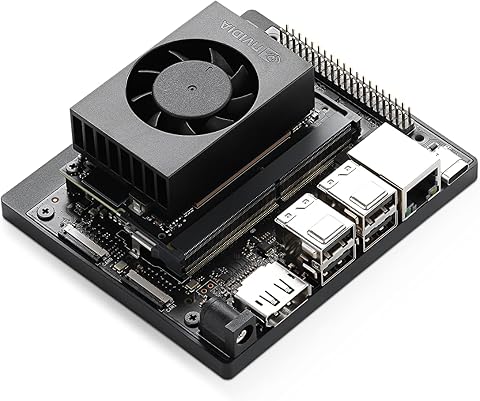
The NVIDIA Jetson Orin Nano Developer Kit is designed for creating entry-level AI-powered robots, drones, and cameras. It offers up to 40 TOPS of AI performance, a compact design, and extensive connectivity, making it ideal for prototyping next-generation edge AI products.
Pros:
- High AI performance suitable for advanced robotics and vision applications
- Compact design with extensive connectivity options
- Supports a wide range of AI frameworks and tools
Cons:
- Complex setup may require technical expertise
- Premium price point for entry-level developers
- Limited details on included accessories
Best for: People building an edge AI development setup
Not ideal for: Buyers who have not checked software and peripheral compatibility
Bottom line: Choose the NVIDIA Jetson Orin Nano Developer Kit after confirming it fits your software, connection, power, and cooling requirements.
Neural Processing Unit
A neural processing unit can be relevant when you are considering hardware for inference, but this checklist has no specific product pick for the slot. Start by checking whether your intended software can use the NPU and whether the workloads you care about are supported. Software compatibility is a key part of the decision because the component’s name alone cannot establish that it will work with your applications.
A common mistake is choosing an NPU based only on a general description of its role. Look for clear documentation on supported frameworks, operating systems, model formats, and any required drivers or runtimes. Check how the device connects to your system and whether it can coexist with the other components you plan to use. Confirm the manufacturer’s stated requirements rather than assuming support based on a connector or platform label.
Fit also depends on the system you have or plan to build. Review the available slot or connection, physical clearance, power requirements, and cooling needs in the documentation. If you are weighing an NPU against another inference component, compare the supported software and workload requirements for your specific project instead of relying on broad category claims. Documented support gives you a sound basis for deciding whether an NPU belongs in your build.
What to look for:
- Confirm your intended software and frameworks support the NPU.
- Check supported operating systems, model formats, and required runtimes.
- Verify the connection type and available system slot.
- Review physical clearance, power, and cooling requirements.
- Match documented capabilities to the workloads you plan to run.
GPU Accelerator Card
A GPU support bracket can help address card support within a build, and the named pick is GPU Support Bracket White, Adjustable Anti-Sag Aluminum Video Card Hol. Treat the title as a starting point rather than a complete fit specification. Check the product listing and manufacturer details for the bracket’s adjustment range, mounting approach, and supported card and case configurations before ordering.
A frequent buying mistake is assuming every adjustable bracket fits every graphics card or case. Compare the bracket’s dimensions and mounting points with the available space in your case, and check whether it could interfere with other components or airflow. Look for clear information about how it is secured and which surfaces it contacts. If your card or case has an unusual layout, confirm the fit from the documentation instead of relying on the product title.
Also consider the card’s position and the practical access needed to install or adjust the bracket. Check clearances around the card, nearby slots, and case floor or mounting area, as applicable to the design. Do not assume the bracket provides cooling or electrical compatibility; confirm its stated function and materials in the listing. Physical fit is the central question for this pick, so measure the relevant space and compare it with the bracket’s published dimensions.
What to look for:
- Check the bracket’s published dimensions and adjustment range.
- Confirm its mounting method works with your case layout.
- Verify the listed graphics card and case compatibility.
- Check clearance around nearby slots and components.
- Review the stated material and intended support function.
GPU Support Bracket White, Adjustable Anti-Sag Aluminum Video Card Holder with M

This all-aluminum GPU support bracket provides strong, long-lasting support for graphics cards, preventing sagging. It features adjustable height from 72 to 117mm, easy tool-free installation with magnets, and includes a bubble level for proper alignment.
Pros:
- Durable all-aluminum construction
- Adjustable height for compatibility with various chassis
- Easy to install without tools, with magnetic base for stability
- Includes bubble level for precise alignment
Cons:
- Limited to support height up to 117mm
- Requires checking compatibility with specific graphics cards
- Magnet-based installation may not suit all chassis types
Best for: Builders who need a compatible GPU support bracket
Not ideal for: Systems where case clearance or mounting points are uncertain
Bottom line: Measure your case and verify the bracket’s mounting and adjustment details before choosing this GPU support pick.
High-Speed Network Adapter
A network adapter is worth evaluating when your inference system needs a particular wired connection. The named pick is 10GbE SFP+ Network Card Compatible with BCM57810S 2-Port PCIe 2.0 Adap. The title provides some interface details, but it does not confirm compatibility with a particular motherboard, operating system, switch, or transceiver. Check the full product specifications and vendor documentation against your setup.
A common mistake is focusing on the card alone and overlooking the rest of the network path. Verify that your system has a suitable PCIe slot and that the card is supported by its operating system and drivers. Confirm the SFP+ modules, cabling, and network equipment you intend to use are compatible with the card. Check whether you need one or both ports and how the card’s stated interface fits into the system you have.
Physical fit matters as well: review the card’s dimensions, bracket type, and available space in the case. If your motherboard or other installed cards limit access to a slot, account for that before buying. Look for explicit information about the BCM57810S chipset and the card’s supported configurations rather than assuming that chipset compatibility guarantees support across every system. End-to-end compatibility means checking the adapter, host, drivers, modules, cable, and network equipment together.
What to look for:
- Confirm the motherboard has a compatible PCIe slot and enough clearance.
- Check operating system and driver support for the card.
- Verify SFP+ module and cabling compatibility.
- Confirm the network equipment supports the intended connection.
- Review card dimensions, bracket type, chipset, and port requirements.
10GbE SFP+ Network Card Compatible with BCM57810S 2-Port PCIe 2.0 Adapter
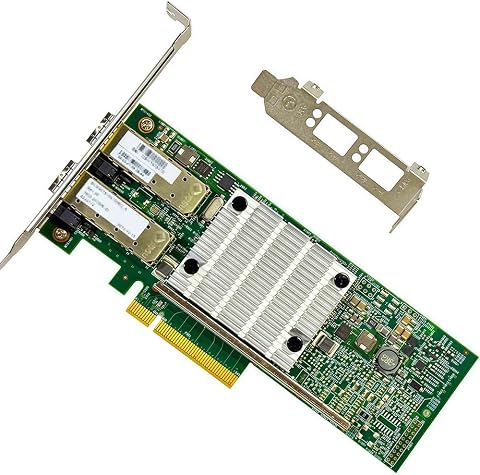
This dual-port 10GbE SFP+ network card features SFP+ ports supporting 10GBASE-SR/LR modules, ideal for high-speed server and NAS connections. It offers virtualization, jumbo frames, PXE/iSCSI boot, and flexible deployment options for enterprise and data center use.
Pros:
- Supports high-speed 10GbE SFP+ connectivity for servers and NAS devices
- Flexible deployment with full-height and low-profile brackets
- Features advanced virtualization and offload capabilities
Cons:
- Requires compatible SFP+ modules (not included)
- Limited warranty period of 3 months
- Requires specific SFP+ modules for RJ45 connections
Best for: Builders whose host and network equipment match the card specifications
Not ideal for: Setups with unverified drivers, modules, cabling, or slot fit
Bottom line: Choose this adapter only after confirming host, driver, SFP+ component, cable, and network equipment compatibility.
NVMe Solid-State Drive
Storage selection affects how a system is assembled and what connections it needs. The named pick is Samsung 9100 PRO 4TB PCIe 5.0 NVMe M.2 SSD. Before buying, verify that your motherboard supports the drive’s interface and form factor, and consult its documentation for any relevant slot requirements. The product name does not confirm that a particular system supports every listed feature.
A common mistake is checking only whether the motherboard has an M.2 slot. Compare the drive’s length and interface with the supported M.2 slots, and check whether using that slot affects other connections in your configuration. Verify the motherboard’s stated support for PCIe 5.0 and NVMe, plus any setup or firmware requirements from the manufacturer. Confirm that the operating system and system configuration can use the capacity and interface as expected.
Check physical clearance around the M.2 slot, including any heatsink or other components specified by the motherboard documentation. If the system uses an M.2 heatsink, confirm how it fits with the drive and follow the manufacturers’ installation guidance. Think through the role of the drive in your build and make sure the selected slot is suitable for that role. Slot compatibility is the first check; dimensions, cooling provisions, and platform support complete the fit review.
What to look for:
- Confirm the motherboard supports PCIe 5.0 NVMe drives.
- Check M.2 slot length and any slot-sharing details.
- Verify physical clearance and heatsink compatibility.
- Review motherboard, firmware, and operating system requirements.
- Confirm the 4TB capacity suits the intended system configuration.
Samsung 9100 PRO 4TB PCIe 5.0 NVMe M.2 SSD

The Samsung 9100 PRO 4TB SSD offers blazing PCIe 5.0 speeds up to 14,800 MB/s, ideal for AI computing, gaming, and heavy-duty workstations. It features high random read/write performance, efficient thermal management, and software support for firmware updates and drive health monitoring.
Pros:
- Exceptional PCIe 5.0 performance for fast data transfer
- High capacity options up to 8TB for extensive storage
- Efficient thermal management for sustained performance
- Reliable brand with software support for updates and monitoring
Cons:
- Premium price may be high for some users
- Requires compatible PCIe 5.0 motherboard to achieve maximum speeds
Best for: Builders with a compatible PCIe 5.0 NVMe M.2 slot
Not ideal for: Systems with unverified M.2 interface or clearance support
Bottom line: Choose the Samsung 9100 PRO 4TB only after verifying motherboard, slot, capacity, and cooling compatibility.
GPU Cooling Fan
This checklist has no specific GPU cooling fan pick, so begin with the graphics card and case documentation. Confirm how the card is designed to cool itself and whether your build needs an additional fan. Cooling compatibility depends on the hardware and layout in your system; a fan’s title or general category is not enough to establish that it will fit or connect correctly.
A common mistake is buying a fan before checking its size, mounting points, and electrical connection. Review the case’s supported fan locations and dimensions, then compare them with the product specifications. Check how the fan connects to the motherboard or a controller, and confirm that the relevant headers and controls are available. Consider clearance around the GPU, nearby components, and any existing fans before selecting a location.
Look for manufacturer guidance on fan placement and the cooling requirements of the GPU and case. Confirm that the selected fan’s specifications match the intended position and connection, and check whether installation would obstruct access or interfere with other components. If you are replacing an existing fan, verify its dimensions and connector before ordering. Measure first and use documented requirements to choose a fan that fits the system you actually have.
What to look for:
- Check the GPU and case makers’ cooling guidance.
- Match fan dimensions to a supported case mounting location.
- Verify mounting points and clearance around the GPU.
- Confirm connector type and available motherboard or controller headers.
- Check placement against existing fans and nearby components.
For a budget-first buying order, start by checking the components already in your system and identifying the limits that affect your build: supported software, slots, connections, physical space, and cooling. Prioritize the part that addresses a confirmed need, then verify compatibility before adding supporting hardware such as storage, networking, or a bracket.
You do not need to choose every category at once. Use the checklist to narrow each decision to documented requirements, measure where fit matters, and keep the product details for your exact system nearby. A little checking before checkout can make the build process easier to plan.
Halloween Picks
halloween
As an affiliate, we earn on qualifying purchases.