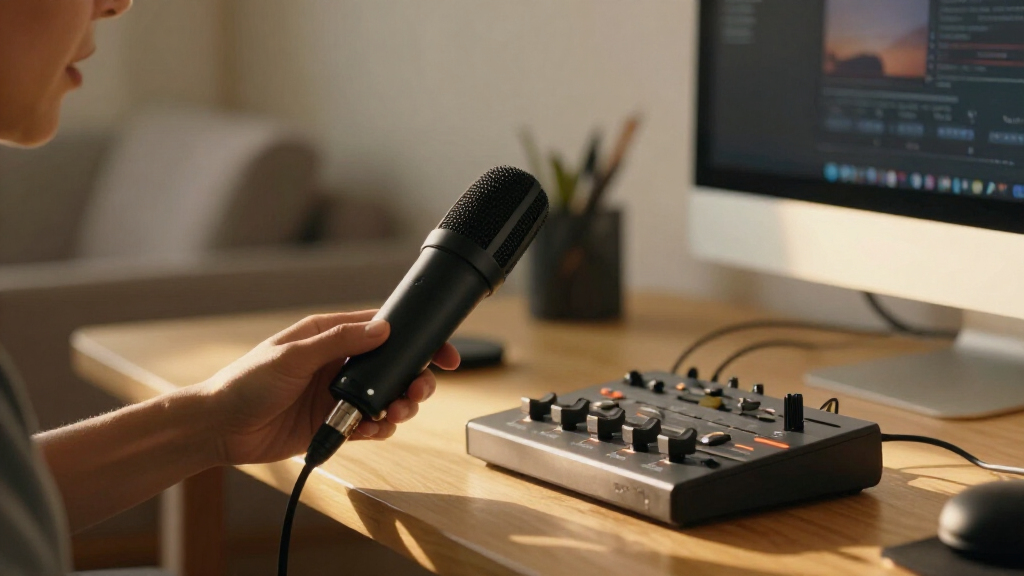

This checklist is for people putting together voice automation gear for recording, calls, or a home workspace. The picks span microphones, audio connections, headphones, speakerphones, mic support, and room treatment, so you can focus on the parts that match your setup. Start with your main use—recording, meetings, or both.

Get business pricing on tech for your team
- Business-only prices and quantity discounts
- Tax-exempt purchasing
- Multiple users, one account, clear invoices
The sections are organized by gear category, with one named pick in each slot. Each one explains why that category matters, what to check before choosing, and where fit or compatibility can affect your setup. Check the details for your devices and workspace before buying.
Use the look-for list as a practical checklist, then compare the pick with your actual needs. Confirm connection types, available space, and how you plan to position or wear the gear. Build around your workflow and add components in an order that keeps your setup usable.
USB Microphones
A USB microphone can simplify a voice setup by connecting directly to a computer, but the product name here combines a document camera, manual focus webcam, and microphone. That makes it important to check what role each part plays in your intended workflow. If you need a dedicated voice recording microphone, confirm how the microphone connects and whether it can be used independently of the camera. Match the whole device to the task you want it to handle.
A common mistake is assuming that a USB connection guarantees compatibility with every computer, app, or operating system. Check the product’s connection details and your device’s available ports, and verify how the microphone is selected in the software you plan to use. Manual focus may suit a fixed camera position, but consider whether you will need to adjust framing during calls or recordings. Also check the camera’s footprint and how it will sit alongside your screen and other equipment. Verify the connection and placement before committing to a spot on your desk.
What to look for:
- Confirm the microphone’s connection type and supported devices.
- Check whether the microphone works independently of the camera.
- Verify compatibility with your recording or call software.
- Consider manual focus needs for your usual camera position.
- Measure desk space and check how the unit will be placed.
USB Document Camera and Manual Focus Webcam with Microphone

This foldable USB document camera works as a visualizer and webcam, with manual focus, a built-in noise-reducing microphone, and video capture up to 1080p at 30 fps. Its camera arm extends to 20.4 inches and rotates 360 degrees for adjustable views.
Pros:
- Combines a document camera, visualizer, and webcam
- Foldable design with flexible positioning and 360-degree camera rotation
- Manual focus helps adjust image clarity
- Built-in microphone is designed to reduce noise
Cons:
- Requires connection to a computer to operate
- Not compatible with iPads, mobile phones, or other portable devices
Best for: People who want a document camera, webcam, and microphone in one named pick
Not ideal for: Anyone seeking a microphone-only setup without a camera
Bottom line: Confirm the microphone’s connection and independent-use details against your workflow before choosing this camera-and-mic combination.
Audio Interfaces
An audio interface sits between audio gear and a computer, so its connections matter to any voice setup that uses external equipment. The Focusrite Scarlett 16i16 4th Gen USB-C Audio Interface is the pick for this slot. Before choosing an interface, list the microphones and other audio devices you expect to connect, then compare that list with the product’s documented inputs and outputs. Count your connections first so the interface fits the setup you actually plan to build.
Do not assume that a USB-C label alone settles compatibility: check the computer’s ports, operating system support, and any setup requirements for your recording or automation software. Consider where the interface will sit, how its cables will route, and whether you can reach the controls from your working position. If you are connecting a microphone arm or monitoring headphones, verify their connection needs as well. The product name does not specify those details, so consult the product documentation before relying on a particular configuration. Confirm the full signal path across your devices.
What to look for:
- Compare documented inputs and outputs with your planned gear.
- Check USB-C compatibility with your computer and operating system.
- Review software and setup requirements for your recording workflow.
- Confirm how your microphone and headphones connect.
- Plan cable routing and accessible placement on your desk.
Focusrite Scarlett 16i16 4th Gen USB-C Audio Interface

The Scarlett 16i16 is a 16-input, 16-output audio interface with two 4th-generation mic preamps, Hi-Z and line inputs, ADAT, S/PDIF, and MIDI connectivity. Its 24-bit/192kHz converters, Air modes, Auto Gain, and Clip Safe support detailed recording and level management, while Focusrite Control 2 enables hardware and DAW routing.
Pros:
- Broad analog and digital connectivity, including ADAT, S/PDIF, and MIDI
- 24-bit/192kHz converters with a stated 122 dB dynamic range
- Auto Gain and Clip Safe help manage recording levels
- Includes recording software, effects, and mastering tools
Cons:
- Requires an external power supply
- The stated frequency response of 125 kHz may be a data-entry error
Best for: Setups that need an audio interface with USB-C connectivity
Not ideal for: People whose devices or software lack confirmed compatibility
Bottom line: Match the interface’s documented connections and requirements to every device in your voice setup.
Closed-Back Headphones
Closed-back headphones can be part of a voice workflow when you want to monitor audio privately while recording or working on calls. The pick is the Focal Lensys Professional Closed-Back Headphones. Before deciding, check how they connect to your computer or audio interface and whether any adapter is needed for your equipment. Check the connection path before assuming they will plug directly into your preferred device.
Fit matters for headphones you expect to wear through long sessions. Review the product’s documented fit and adjustment options, and consider whether you can try them on or return them if the fit does not suit you. Think about where you will store them and how their cable, if applicable, will move around your desk and microphone arm. A common mistake is choosing headphones based on the category alone without checking comfort, connection, and how they fit into a particular monitoring workflow. Plan for extended wear as well as compatibility.
What to look for:
- Confirm the headphone connection and any adapter requirements.
- Check compatibility with your computer or audio interface.
- Review documented fit and adjustment options.
- Consider comfort for the length of your usual sessions.
- Plan storage and cable routing around your workspace.
Focal Lensys Professional Closed-Back Headphones

Focal’s Lensys Professional headphones feature dual aluminum/magnesium drivers and sound isolation design, providing detailed monitoring and authentic playback. They are designed for studio use, monitoring, and casual listening, with soft memory foam earpads and a sturdy headband for comfort.
Pros:
- High-quality aluminum/magnesium drivers deliver detailed sound
- Effective sound isolation for studio and casual use
- Comfortable soft memory foam earpads and sturdy headband
- Suitable for monitoring, recording, and playback
Cons:
- Wired connection may limit mobility
- Lack of foldable design for portability
- No water resistance for outdoor use
Best for: People seeking closed-back headphones for a voice workflow
Not ideal for: Anyone whose devices lack a compatible headphone connection
Bottom line: Check connection requirements and fit before adding these headphones to your monitoring setup.
USB Speakerphones
A speakerphone combines speaker and microphone functions for voice calls, which can suit a shared or hands-free workspace. The listed pick is “Conference Speaker and Microphone – Bluetooth Speakerphone with Daisy,” and the name is incomplete at the end. Before choosing it, confirm the full product identity and its connection options. Resolve the incomplete name so you can verify the right device and its documented features.
Check whether the speakerphone connects to your computer or phone through Bluetooth, USB, or another documented method, and confirm that your call software supports that connection. Consider where it will sit relative to the people speaking and the computer’s other audio devices. A common mistake is assuming that any speakerphone will work with every meeting app or pair smoothly with an existing headset or microphone. Check the product’s setup instructions and how audio input and output are selected in your devices. Confirm software and device compatibility before planning a meeting-room setup around it.
What to look for:
- Confirm the complete product name and exact model.
- Verify documented Bluetooth and other connection options.
- Check compatibility with your computer, phone, and call software.
- Review how the device is selected for audio input and output.
- Consider placement relative to speakers and microphones.
Conference Speaker and Microphone – Bluetooth Speakerphone with Daisy Chain, AI

This conference speakerphone features AI noise cancellation, voice enhancement, and full duplex communication, ensuring clear audio during meetings. It supports multiple connection methods including Bluetooth, USB, and wireless dongle, and can be daisy-chained for larger rooms.
Pros:
- Excellent noise cancellation and voice clarity for meetings
- Flexible connectivity options including Bluetooth, USB, and wireless dongle
- Expandable via daisy chaining for larger conference rooms
- Compatible with all major conferencing software
Cons:
- Plastic enclosure may feel less durable
- Requires multiple components for full setup
- No waterproof feature
Best for: People looking for a conference speaker and microphone setup
Not ideal for: Anyone unable to identify the exact product from the incomplete name
Bottom line: Verify the full model and its connection details before relying on this pick for calls.
XLR Microphone Arms
A microphone arm can help position a microphone for a voice workflow while keeping placement adjustable. The pick, RØDE PSA1+ Professional Studio Boom Arm, Black, is described as a professional studio boom arm. Check its mounting requirements and whether the arm supports the microphone and any accessories you plan to attach. Verify the mount and load using the product documentation and your microphone’s specifications.
A common buying mistake is checking only whether an arm clamps to a desk, then discovering that the desk edge or available clearance does not suit the installation. Measure the mounting area, check the desk thickness against the arm’s stated requirements, and map out the range of motion you need. Confirm whether your microphone uses an XLR connection and how its cable will route along the arm; an arm’s category does not establish the cable or microphone’s compatibility. Consider nearby monitors, shelves, and keyboard space so the arm can move without getting in the way. Measure your setup before installing the arm.
What to look for:
- Check microphone support and mounting requirements.
- Measure desk thickness and available clamp space.
- Confirm the microphone’s mount fits the arm.
- Plan XLR cable routing and check connection compatibility.
- Check arm clearance around screens, shelves, and work areas.
RØDE PSA1+ Professional Studio Boom Arm, Black

The RØDE PSA1+ is a studio boom arm for microphones weighing 0.25–1.2 kg, with a desk clamp for surfaces up to 70 mm thick. Its damped springs support quiet, smooth repositioning, while 360-degree rotation and integrated cable management help keep a recording setup tidy.
Pros:
- Damped internal springs enable quiet repositioning.
- Supports microphones weighing 0.25–1.2 kg.
- Rotates 360 degrees for flexible microphone placement.
- Integrated cable management keeps cables organized.
Cons:
- Desk clamp fits desks up to 70 mm thick.
- Microphone support is limited to 0.25–1.2 kg.
Best for: People who want an adjustable boom arm for a microphone
Not ideal for: Workspaces without compatible desk mounting space
Bottom line: Confirm the microphone mount, cable plan, and desk fit before choosing the RØDE PSA1+.
Acoustic Panels
Acoustic panels are a room-treatment option to consider when planning a voice recording or calling space. The listed pick is Focusound 120-Pack Acoustic Foam Panels, 1″ x 12″ x 12″, with Double-S. Its product name includes a cut-off ending, so confirm the complete product identity and details before choosing it. Verify the full listing and the stated dimensions.
Plan the area you intend to cover and compare it with the panel dimensions and pack contents in the product documentation. A common mistake is buying panels without first measuring the wall or considering how they will be installed. Check what “with Double-S” refers to in the complete listing, whether any adhesive or mounting method is specified, and whether that method suits your wall surface. Also consider where doors, windows, shelves, and equipment leave usable wall area. Measure before planning coverage, and follow the product’s stated installation directions.
What to look for:
- Confirm the complete product name and pack details.
- Check the stated panel dimensions against your intended wall area.
- Verify what the listing means by “with Double-S.”
- Review the documented mounting method and wall compatibility.
- Measure usable wall space around doors, windows, and equipment.
Focusound 120-Pack Acoustic Foam Panels, 1" x 12" x 12", with Double-Sided Adhes

These acoustic foam panels have triangular grooves designed to absorb echoes, reverb, and other unwanted sound reflections in recording studios, vocal booths, control rooms, and offices. The pack includes 600 pieces of double-sided adhesive for installation; if panels lose their shape, soaking and air-drying them may help restore it.
Pros:
- Grooved design helps reduce echoes and reverb
- Includes 600 pieces of double-sided adhesive
- Suitable for studios, offices, vocal booths, and control rooms
- Can regain its shape after soaking and air-drying, according to the description
Cons:
- May take 24 to 48 hours to regain shape after air-drying
- Intended for targeted sound treatment rather than general use
Best for: People planning to add acoustic foam panels to a voice space
Not ideal for: Anyone without suitable wall space or a confirmed mounting method
Bottom line: Confirm the full listing, panel dimensions, and installation method before planning coverage.
If you are building gradually, prioritize the gear that supports your main task, then add pieces that fit the connections and space you have confirmed. For a recording-focused setup, check the microphone, interface, headphones, and arm as one connected arrangement. For calls, first verify the speakerphone or camera-and-microphone device against your computer and software. Let your workflow set the order, and confirm each product’s requirements before adding the next piece.
You do not need to solve every part of a voice setup at once. Use the lists to check compatibility, fit, and placement, then choose the component that addresses your most immediate need. As your setup changes, revisit the connections and measurements so each addition works with the equipment around it. A few careful checks can make the process easier and help you build a setup that suits your workspace.