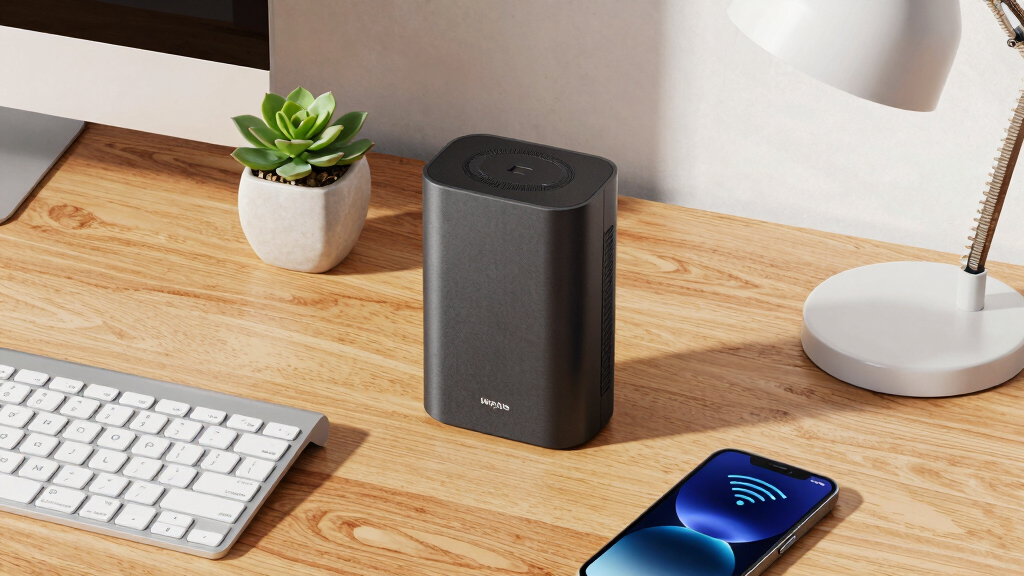

Choosing the best access points for high-device home offices requires balancing performance, coverage, and ease of management. The Ubiquiti UniFi nanoHD stands out as the top overall choice thanks to its reliability and enterprise-grade features. For those seeking cutting-edge WiFi 7 technology, the Ubiquiti UniFi 7 Pro offers impressive speeds but comes with a higher price tag. Another key consideration is how well these access points handle multiple devices simultaneously without slowing down or dropping connections. This article explores 12 options to help you find the best fit for your high-device environment. Continue reading for detailed insights into each product’s strengths and tradeoffs.

Get business pricing on tech for your team
- Business-only prices and quantity discounts
- Tax-exempt purchasing
- Multiple users, one account, clear invoices
Key Takeaways
- High-device environments benefit most from access points with MU-MIMO and WiFi 6/6E support for optimal simultaneous connections.
- Coverage and placement are critical; mesh-capable access points or those with multiple antennas improve signal reach across larger spaces.
- Price often correlates with advanced features like WiFi 7, multi-Gigabit ports, and enterprise-level management capabilities.
- Ease of setup and management varies—more advanced systems tend to require more technical knowledge but offer better scalability.
- Tradeoffs include higher costs versus performance gains, and simpler models may lack the capacity to support numerous high-speed devices effectively.
| Ubiquiti UniFi nanoHD Compact 802.11ac Wave 2 MU-MIMO Enterprise Access Point |  | Best Overall for High-Density Enterprise Home Offices | Technology: 802.11ac Wave 2, 4×4 MU-MIMO | Concurrent Users: 200+ | Power over Ethernet: 802.3af PoE | VIEW LATEST PRICE | See Our Full Breakdown |
| Ubiquiti UniFi 7 Pro WiFi 7 Access Point |  | Best for Large-Scale, Future-Proof Home Offices | WiFi Generation: WiFi 7 | Frequency Bands: Dual-Band + 6 GHz | Spatial Streams: 6 | VIEW LATEST PRICE | See Our Full Breakdown |
| TP-Link Omada 7 Pro BE11000 Wireless Access Point |  | Best for Centralized Management and High Device Capacity | Wi-Fi Standard: Wi-Fi 7 (BE11000) | Bands: Tri-Band | Max Speed: 11.0 Gbps | VIEW LATEST PRICE | See Our Full Breakdown |
| TP-Link TL-WA1201 AC1200 Dual Band Wireless Gigabit Access Point |  | Best for Budget-Friendly Dual-Band Performance | Wireless Standard: 802.11ac Wave 2 (MU-MIMO) | Max Speed: 1200 Mbps | Frequency Bands: 2.4GHz / 5GHz | VIEW LATEST PRICE | See Our Full Breakdown |
| WiFi Extender AX3000 WiFi 6 Signal Booster for Home and Office |  | Best for Extensive Coverage and High-Speed Signal Boosting | Wireless Compatibility: ax / 802.11a/b/g/n/ac/ax | Data Transfer Rate: 3000 Mbps | Range: 12000 sq.ft. | VIEW LATEST PRICE | See Our Full Breakdown |
| TP-Link Omada EAP225 AC1350 Wireless Gigabit Access Point with PoE Injector |  | Best Overall for Business-Grade Home Offices | Wi-Fi Standard: 802.11ac (AC1350 dual-band) | MIMO: MU-MIMO | Ethernet Ports: Gigabit | VIEW LATEST PRICE | See Our Full Breakdown |
| BrosTrend AC1200 Dual-Band WiFi Access Point with Gigabit Ethernet Port (A1P) |  | Best Compact Wall-Plug Design for Easy Extension | WiFi Standard: AC1200 dual-band | Max Speed (5 GHz): 867 Mbps | Max Speed (2.4 GHz): 300 Mbps | VIEW LATEST PRICE | See Our Full Breakdown |
| HPE Networking Instant On Access Point AP32 WiFi 6E Indoor Wireless Access Point |  | Best for High-Speed Wi-Fi 6E Performance | Wi-Fi Generation: Wi-Fi 6E | Maximum Data Rate: 3.6 Gbps | Frequency Bands: Tri-Band | VIEW LATEST PRICE | See Our Full Breakdown |
| BrosTrend AX3000 Gigabit WiFi 6 Access Point |  | Best for High-Speed, Long-Range Coverage | WiFi Standard: WiFi 6 (802.11ax) | Speed: AX3000 (2402Mbps @ 5GHz, 574Mbps @ 2.4GHz) | Band: Dual-Band | VIEW LATEST PRICE | See Our Full Breakdown |
| Zyxel NWA50AX PRO WiFi 6 Wireless Access Point (AX3000, 2.5G, PoE+) |  | Best for Multi-Floor, Business-Ready Networks | WiFi Standard: Wi-Fi 6 (802.11ax) | Total Throughput: AX3000 (3000 Mbps) | Uplink Port: 2.5G Multi-Gig Ethernet | VIEW LATEST PRICE | See Our Full Breakdown |
| Tenda WiFi 6 AX3000 Dual-Band Wireless Access Point |  | Best Overall for High-Device Home Offices | WiFi Standard: WiFi 6 (802.11ax) | Max Speed: 2976 Mbps (2402 Mbps on 5GHz + 574 Mbps on 2.4GHz) | Bandwidth: 160MHz | VIEW LATEST PRICE | See Our Full Breakdown |
| Ubiquiti U6+ Dual Band Wireless Access Point (802.11 a/b/g/n/ac/ax, 3 Gbit/s) |  | Best for High-Performance, Wired-Integrated Home Offices | Wireless Standard: IEEE 802.11 a/b/g/n/ac/ax | Max Speed: 3 Gbit/s | Ethernet: Gigabit Ethernet | VIEW LATEST PRICE | See Our Full Breakdown |
More Details on Our Top Picks
Ubiquiti UniFi nanoHD Compact 802.11ac Wave 2 MU-MIMO Enterprise Access Point
The Ubiquiti UniFi nanoHD stands out for delivering enterprise-grade performance in a compact form, making it an excellent choice for high-device environments. Its four-stream 802.11ac Wave 2 MU-MIMO technology enables it to support over 200 concurrent users, surpassing many consumer models like the TP-Link TL-WA1201, which is more limited in capacity. Although the nanoHD’s discreet design and optional covers help it blend seamlessly into professional settings, the need to purchase covers separately can be a minor inconvenience. It is powered via 802.3af PoE, simplifying installation, but its compact size does mean it lacks the extensive coverage of larger access points. This pick makes the most sense for users who need reliable, high-capacity Wi-Fi in a small footprint, especially in environments where aesthetics matter.
Pros:- Supports 200+ concurrent users for demanding environments
- Compact design that integrates well into any setting
- Supports MU-MIMO technology for efficient multi-device handling
- PoE compatibility simplifies installation
Cons:- Optional covers for discreet mounting are sold separately
- Limited coverage area compared to larger enterprise access points
Best for: High-density home offices or small enterprises requiring reliable, multiple-device support in limited space.
Not ideal for: Home users on a tight budget or those seeking simple, plug-and-play solutions without enterprise features.
- Technology:802.11ac Wave 2, 4×4 MU-MIMO
- Concurrent Users:200+
- Power over Ethernet:802.3af PoE
- Model:UAP-nanoHD-US
- Optional Covers:Sold separately
Our verdict“Ideal for users needing enterprise-grade capacity in a small, unobtrusive design.”
Ubiquiti UniFi 7 Pro WiFi 7 Access Point
The Ubiquiti UniFi 7 Pro introduces WiFi 7 with 6 GHz support, making it suitable for demanding, large-scale environments where interference and speed are critical. Its 6 spatial streams and six internal antennas deliver up to 5.7 Gbps, ideal for high-bandwidth activities like 4K streaming or large data transfers. Unlike the TP-Link Omada EAP770, which offers high speeds and central management, the UniFi 7 Pro’s ceiling-mounted design helps cover extensive areas efficiently. However, the absence of a PoE+ adapter requires an additional purchase, and its single LAN port limits wired connectivity options. This access point is best suited for those who want cutting-edge WiFi technology integrated into a professional, scalable setup.
Pros:- Supports WiFi 7 with interference-free 6 GHz band
- High throughput with 6 spatial streams and internal antennas
- Ceiling-mounted design for extensive coverage
- Managed via UniFi OS and app control
Cons:- PoE+ adapter sold separately, adding to cost
- Limited to 1 Gbps LAN port
Best for: Tech-savvy home office users with large spaces and high bandwidth needs who are ready for WiFi 7’s advanced features.
Not ideal for: Users seeking an all-in-one, plug-and-play solution or those with limited technical expertise, due to the need for separate PoE+ power supply.
- WiFi Generation:WiFi 7
- Frequency Bands:Dual-Band + 6 GHz
- Spatial Streams:6
- Data Transfer Rate:5.7 Gbps
- Coverage:140 m2 (1,500 ft2)
- Control Method:Touch / App
Our verdict“Best suited for future-proofing a large home office with demanding wireless needs and technical confidence.”
TP-Link Omada 7 Pro BE11000 Wireless Access Point
The TP-Link Omada 7 Pro offers a compelling balance of speed, device support, and centralized management, making it a strong choice for demanding home offices. Its tri-band Wi-Fi 7 delivers up to 11.0 Gbps across 6 GHz, 5 GHz, and 2.4 GHz bands, supporting over 380 devices simultaneously—more than adequate for busy environments. Unlike the Ubiquiti UniFi 7 Pro, which is more streamlined for large spaces, the Omada 7 Pro’s 2.5G Ethernet port and cloud management platform enable extensive remote control and monitoring. The inclusion of 12V DC power and PoE+ flexibility simplifies deployment, but the 2.5G port can become a bottleneck if the wired infrastructure isn’t upgraded. This device is best for those who prioritize centralized management and high device density.
Pros:- Tri-band Wi-Fi 7 with speeds up to 11.0 Gbps
- Supports over 380 devices simultaneously
- Flexible power options with PoE+ and included DC adapter
- Centralized Omada cloud management platform
Cons:- 2.5G Ethernet port may limit full utilization of wireless speeds
- Full feature set requires Omada ecosystem
Best for: Tech-forward home offices requiring scalable, managed Wi-Fi with high concurrent device support.
Not ideal for: Home users with minimal network complexity or limited technical skills needing straightforward setup.
- Wi-Fi Standard:Wi-Fi 7 (BE11000)
- Bands:Tri-Band
- Max Speed:11.0 Gbps
- Concurrent Devices:380+
- Ethernet Port:2.5G
- Management:Omada Cloud
Our verdict“Targeted at users who want robust management and high device capacity in a scalable, enterprise-like setup.”
TP-Link TL-WA1201 AC1200 Dual Band Wireless Gigabit Access Point
The TP-Link TL-WA1201 provides reliable dual-band Wi-Fi speeds up to 1200 Mbps, making it suitable for moderate high-device home offices. Its four external antennas with Beamforming help extend coverage, outperforming basic single-antenna models like some older Wi-Fi 5 options. Its four operation modes—AP, Client, Multi-SSID, and Range Extender—offer flexibility, but it falls short when compared to Wi-Fi 6 or Wi-Fi 7 models, which can handle more devices at faster speeds. The included passive PoE simplifies setup, but the single Ethernet port limits wired options. This pick makes the most sense for users who need solid dual-band Wi-Fi without the complexity or cost of newer standards.
Pros:- Supports dual-band speeds up to 1200 Mbps
- Versatile with four operation modes
- External antennas with Beamforming for extended coverage
- Passive PoE support for easy placement
Cons:- Limited to Wi-Fi 5 standards; no Wi-Fi 6 support
- Only one Ethernet port
Best for: Home office users seeking reliable dual-band Wi-Fi with multiple modes on a budget.
Not ideal for: Environments with many devices or high bandwidth demands, where Wi-Fi 6 or 7 would perform better.
- Wireless Standard:802.11ac Wave 2 (MU-MIMO)
- Max Speed:1200 Mbps
- Frequency Bands:2.4GHz / 5GHz
- Operation Modes:Client, Multi-SSID, Range Extender, AP
- Ethernet Port:Gigabit
- Antennas:4 external, Beamforming
Our verdict“A solid choice for budget-conscious users needing dependable dual-band Wi-Fi with flexible deployment options.”
WiFi Extender AX3000 WiFi 6 Signal Booster for Home and Office
The WiFi Extender AX3000 enhances existing WiFi networks with WiFi 6 speeds up to 3000 Mbps and coverage up to 12,000 sq.ft., making it ideal for large homes or offices with many devices. Its dual-band support and ability to connect over 99 devices position it well for busy environments, surpassing simple extenders that only boost signal strength. The built-in Gigabit Ethernet port offers wired connectivity, but setup can be less straightforward, requiring a web interface or app. While it provides broad coverage, placing extenders in dense environments may lead to interference, so placement needs careful planning. This device is best for users who need a straightforward way to expand WiFi coverage at high speeds over large areas.
Pros:- Supports WiFi 6 with speeds up to 3000 Mbps
- Extends coverage up to 12,000 sq.ft.
- Supports over 99 devices simultaneously
- Includes Gigabit Ethernet port for wired devices
Cons:- Setup may be complex for less technical users
- Coverage area may cause interference if not optimally placed
Best for: Large households or home offices needing to extend Wi-Fi coverage and support many devices with high-speed requirements.
Not ideal for: Small spaces or users seeking a dedicated access point rather than a signal booster.
- Wireless Compatibility:ax / 802.11a/b/g/n/ac/ax
- Data Transfer Rate:3000 Mbps
- Range:12000 sq.ft.
- Device Support:99+
- Ethernet Port:Gigabit
- Color:Black
Our verdict“Best for expanding high-speed WiFi across large spaces with many connected devices in a straightforward manner.”
TP-Link Omada EAP225 AC1350 Wireless Gigabit Access Point with PoE Injector
The TP-Link Omada EAP225 is a versatile choice for high-device home offices that demand reliable, scalable Wi-Fi. Its dual-band AC1350 speeds, combined with MU-MIMO technology, ensure efficient handling of multiple devices simultaneously—ideal for busy work environments. The integration with Omada SDN platform offers cloud-based centralized management, making it easier to oversee a multi-access point setup without complex wiring. Compared to the BrosTrend AX3000, the EAP225 adds the advantage of mesh support, which helps extend coverage seamlessly across larger spaces. However, MU-MIMO and seamless roaming depend on compatible client devices, and real-world performance can vary based on environment. This pick makes the most sense for professionals needing a flexible, scalable network that can grow with their home office needs, especially if they value centralized control.
Pros:- Flexible power options with included PoE injector
- Cloud-based centralized management via Omada SDN platform
- Mesh support for expanding coverage without extra wiring
- MU-MIMO and seamless roaming for multi-device environments
Cons:- MU-MIMO and seamless roaming require compatible client devices
- Performance can vary based on environmental factors
Best for: Small to medium-sized home offices requiring centralized management and scalable coverage.
Not ideal for: Home users with minimal devices or those without compatible cloud management needs, as the setup might be more complex than simpler models.
- Wi-Fi Standard:802.11ac (AC1350 dual-band)
- MIMO:MU-MIMO
- Ethernet Ports:Gigabit
- Power:802.3af PoE or passive PoE (injector included)
- Seamless Roaming:802.11k/v
- Management:Omada SDN (cloud access and app)
Our verdict“This access point is perfect for high-device, scalable home offices that need centralized management and future-proof features.”
BrosTrend AC1200 Dual-Band WiFi Access Point with Gigabit Ethernet Port (A1P)
The BrosTrend A1P stands out as a straightforward, space-saving solution for extending Wi-Fi in areas with existing wired Ethernet access. Its AC1200 dual-band speeds (867 Mbps on 5 GHz and 300 Mbps on 2.4 GHz) deliver reliable performance, especially with Beamforming and dual 5 GHz amplifiers to bolster signals. Unlike the TP-Link Omada EAP225, which offers centralized management, the A1P emphasizes simplicity with web-based setup and a plug-and-play design. This makes it ideal for those who want an easy upgrade without complex configuration. The main tradeoff is that it requires a wired Ethernet uplink, so it won’t work where cabling isn’t available, and it functions solely as an access point—not a range extender. It makes sense for users needing quick, space-efficient Wi-Fi expansion in well-wired environments.
Pros:- Creates a separate AC1200 dual-band Wi-Fi network from Ethernet
- Dual 5 GHz amplifiers and Beamforming enhance signal strength
- Compact wall-plug design saves space and simplifies installation
- Quick and easy web-based setup
Cons:- Requires an existing Ethernet connection; no Wi-Fi-only solution
- Limited to access point functionality without mesh or management features
Best for: Home users seeking a quick, reliable Wi-Fi extension in rooms with existing Ethernet wiring.
Not ideal for: Those without Ethernet access or looking for a device with mesh or management features beyond basic setup, as it functions solely as an access point.
- WiFi Standard:AC1200 dual-band
- Max Speed (5 GHz):867 Mbps
- Max Speed (2.4 GHz):300 Mbps
- Ethernet Port:Gigabit
- Features:Beamforming, dual 5 GHz amplifiers
- Setup:Web-based
Our verdict“This device suits those needing a simple, space-efficient Wi-Fi extension in wired environments with minimal setup fuss.”
HPE Networking Instant On Access Point AP32 WiFi 6E Indoor Wireless Access Point
The HPE Instant On AP32 delivers cutting-edge Wi-Fi 6E technology, making it a prime choice for high-demand home offices with multiple devices. Its tri-band setup, including the new 6GHz spectrum, supports up to 3.6 Gbps in combined speeds, surpassing many older Wi-Fi standards like the AC1350. Compared with the BrosTrend AX3000, the AP32 offers a broader frequency range and better future-proofing for Wi-Fi 6E-compatible devices. Setup is streamlined through a mobile app or web portal, and its PoE support allows flexible deployment. The main limitation is that power sources are not included, and it’s designed solely for indoor use. This makes it ideal for tech-savvy users aiming for the highest speeds and latest Wi-Fi standards in a dedicated workspace environment.
Pros:- Supports Wi-Fi 6E with tri-band spectrum for high-speed connectivity
- Easy setup via mobile app and web portal
- Flexible PoE power options (not included)
- Future-proof with 6 GHz support
Cons:- Power source not included, adding extra cost
- Indoor use only, limited to dedicated spaces
Best for: Tech enthusiasts and professionals with Wi-Fi 6E devices seeking maximum future-proofing and ultra-fast speeds.
Not ideal for: Home users without Wi-Fi 6E devices or those seeking a budget option, as the advanced features come with higher complexity and cost.
- Wi-Fi Generation:Wi-Fi 6E
- Maximum Data Rate:3.6 Gbps
- Frequency Bands:Tri-Band
- Ports:1 LAN
- Power:PoE 802.3at or 12V power adapter (not included)
- Coverage:Indoor
Our verdict“This access point is best for users prioritizing the latest Wi-Fi technology and top-tier speeds for demanding high-device environments.”
BrosTrend AX3000 Gigabit WiFi 6 Access Point
The BrosTrend AX3000 is a highly capable Wi-Fi 6 access point designed for extensive coverage in high-device environments. Its dual external antennas and beamforming technology enable better long-range performance, making it ideal for reaching remote parts of a large home or multi-floor setup. With combined speeds up to 3000Mbps, it rivals more expensive enterprise solutions like the Ubiquiti U6+ in speed. Compared to the TP-Link Omada EAP225, it emphasizes raw speed and range, though it lacks some advanced management features, focusing instead on straightforward setup via a web UI. The fixed antennas, despite being described as adjustable, might limit fine-tuning. It’s perfect for users who want robust long-range coverage without complex enterprise features.
Pros:- Fast AX3000 dual-band speeds with 160MHz channels
- Long-range external antennas with beamforming
- Easy wall-plug installation with no complex setup
- Supports up to 45 devices with reliable connections
Cons:- Requires an existing Ethernet port; no standalone Wi-Fi uplink
- Fixed antennas, despite being described as adjustable, limit customization
Best for: Homeowners needing fast, far-reaching Wi-Fi in large or multi-story spaces with many devices.
Not ideal for: Those seeking advanced network management or needing mesh support, as this device is primarily a standalone access point.
- WiFi Standard:WiFi 6 (802.11ax)
- Speed:AX3000 (2402Mbps @ 5GHz, 574Mbps @ 2.4GHz)
- Band:Dual-Band
- LAN Port:Gigabit Ethernet
- Antenna:2 external, fixed
- Max Devices:45
Our verdict“This device fits users who want maximum speed and range in a straightforward, easy-to-install package for large or multi-floor homes.”
Zyxel NWA50AX PRO WiFi 6 Wireless Access Point (AX3000, 2.5G, PoE+)
The Zyxel NWA50AX PRO offers a compelling combination of high throughput, multi-gig Ethernet, and advanced management features ideal for demanding home office setups. With speeds up to 3000 Mbps and a 2.5G uplink port, it surpasses many standard access points like the BrosTrend AX3000, especially in multi-floor environments. The three internal high-gain antennas provide broad coverage, and the device’s support for WPA3, VLANs, and mesh makes it suitable for complex home networks. Its management options—either local GUI or Nebula cloud—allow flexible control without additional licensing fees. The main tradeoff is the requirement for PoE+ injector or switch, which could add to initial setup costs. This product targets tech-savvy users seeking enterprise-level features in a home setting.
Pros:- 2.5G multi-gig Ethernet uplink for future-proofing
- Supports WPA3, VLANs, fast roaming, and mesh
- Three high-gain internal antennas for broad coverage
- Flexible management via local GUI or Nebula cloud
Cons:- Requires PoE+ injector or switch, adding initial cost
- Maximum speed depends on client device support for Wi-Fi 6 with 160MHz channels
Best for: Home offices on multiple floors needing high-speed, secure, and manageable Wi-Fi with multi-gig uplink capacity.
Not ideal for: Users who lack PoE infrastructure or prefer plug-and-play simplicity over advanced network features.
- WiFi Standard:Wi-Fi 6 (802.11ax)
- Total Throughput:AX3000 (3000 Mbps)
- Uplink Port:2.5G Multi-Gig Ethernet
- Power:PoE+
- Antennae:3 high-gain internal
- Features:WPA3, VLAN, fast roaming, mesh
Our verdict“This access point is ideal for multi-floor, high-speed, secure networks requiring advanced management features and future-proofing.”
Tenda WiFi 6 AX3000 Dual-Band Wireless Access Point
The Tenda AX3000 stands out as the most balanced option for high-device home offices needing reliable WiFi 6 performance. It offers speeds up to 2976 Mbps using 160MHz bandwidth, which outpaces many entry-level models like the BrosTrend AX3000 but remains accessible for most small to medium spaces. Its support for up to 60 devices makes it suitable for crowded environments, and the inclusion of PoE simplifies installation without requiring additional power outlets. Compared with the Ubiquiti U6+, the Tenda provides more comprehensive management options via app, cloud, and local web interface, plus a longer warranty. However, it requires a PoE switch or injector, which adds initial setup complexity, and coverage is limited to roughly 1615 sq ft per unit, meaning larger spaces may need multiple units. Overall, this pick makes the most sense for those wanting high-speed, scalable WiFi with flexible management at a reasonable price point.
Pros:- High WiFi 6 speeds up to 2976 Mbps with 160MHz bandwidth
- Supports up to 60 devices, ideal for busy home offices
- PoE support with included injector simplifies installation
- Multiple management options including app, cloud, and web interface
Cons:- Requires a PoE switch or injector, adding to initial setup cost
- Coverage limited to about 1615 sq ft per unit, possibly necessitating multiple units for larger areas
Best for: High-volume home office setups with many devices and a need for flexible, managed WiFi coverage
Not ideal for: Large open-plan offices or spaces exceeding 1600 sq ft that require extensive coverage without multiple units
- WiFi Standard:WiFi 6 (802.11ax)
- Max Speed:2976 Mbps (2402 Mbps on 5GHz + 574 Mbps on 2.4GHz)
- Bandwidth:160MHz
- Antennas:5 x 4dBi high-gain antennas
- Coverage:Up to 1615 sq ft
- Max Devices:60
- Power:802.3at PoE (PoE injector included)
- Security:WPA3
Our verdict“This device is best suited for tech-savvy users seeking fast, scalable WiFi with flexible management for medium-sized high-device home offices.”
Ubiquiti U6+ Dual Band Wireless Access Point (802.11 a/b/g/n/ac/ax, 3 Gbit/s)
The Ubiquiti U6+ offers exceptionally high throughput, supporting Wi-Fi 6 with speeds up to 3 Gbit/s, making it ideal for users who prioritize raw performance and wired connectivity. Its Gigabit Ethernet port and PoE+ support allow for clean, single-cable installation, which is particularly advantageous compared to the Tenda’s reliance on a PoE injector. The wall-mountable design adds flexibility for placement in different environments. While it excels in speed, the Gigabit Ethernet port could become a bottleneck if you’re pushing full wireless speeds, especially in heavily loaded networks. Additionally, this device requires a PoE+ injector or switch, which could increase setup complexity and cost, especially for those unfamiliar with network hardware. Compared to the Tenda AX3000, the U6+ is better suited for users with existing PoE infrastructure or those needing maximum wired and wireless speeds, but it might be overkill for smaller, less demanding setups. It’s best for individuals who need top-tier performance and are comfortable with slightly more complex installation.
Pros:- Supports Wi-Fi 6 with speeds up to 3 Gbit/s
- PoE+ support for simplified installation and minimal cabling
- Wall-mountable with flexible placement options
- Built-in data encryption enhances security
Cons:- Gigabit Ethernet port may limit maximum wired throughput in high-performance scenarios
- Requires a PoE+ injector or switch, adding cost and complexity
Best for: Tech-heavy home offices with wired infrastructure and a need for the fastest wireless speeds
Not ideal for: Home users with limited network expertise or those seeking a straightforward, plug-and-play setup
- Wireless Standard:IEEE 802.11 a/b/g/n/ac/ax
- Max Speed:3 Gbit/s
- Ethernet:Gigabit Ethernet
- PoE Support:PoE+ up to 25.5W
- Form Factor:Wall Mountable
- Security:Data Encryption
Our verdict“This device is best for demanding home offices with existing PoE infrastructure that require the highest wireless throughput and wired performance.”

How We Picked
The access points included in this roundup were selected based on their ability to support high-device environments typical of busy home offices. Key evaluation criteria included wireless performance (speed, MU-MIMO, WiFi 6/6E support), coverage range, build quality, ease of setup, and management features. Devices offering multiple Ethernet ports and PoE support were prioritized for flexibility. We also considered value for money and future-proofing, such as WiFi 7 compatibility. The ranking reflects a balance of performance, scalability, and ease of use, ensuring options suit a variety of high-demand home office setups.Factors to Consider When Choosing Best Access Points For High-device Home Offices
When selecting an access point for a high-device home office, several factors influence performance and usability. Understanding these can help avoid common pitfalls like underestimating coverage needs or choosing incompatible hardware. The right access point not only supports current devices but also provides room to grow as your setup expands. Careful consideration of features, management options, and future-proofing ensures a smooth experience and reliable connectivity across your workspace.Performance and Speed
For high-device environments, performance hinges on WiFi standards like WiFi 6 and WiFi 6E, which handle multiple streams more efficiently. MU-MIMO support allows simultaneous data transmission to multiple devices, reducing lag and congestion. It’s advisable to select an access point with multi-Gigabit Ethernet ports for wired backhaul and future upgrades. Remember, a faster device won’t help if your network can’t handle the traffic, so prioritize models with robust performance metrics and support for high-speed connections.
Coverage and Placement
Coverage is often underestimated, especially in larger or multi-room setups. Access points with multiple antennas, beamforming, and mesh capabilities deliver better signal distribution. Proper placement—centralized and elevated—maximizes coverage and minimizes dead zones. For sprawling spaces, consider mesh systems or multiple access points to ensure consistent performance. Avoid placing access points near thick walls or electronic interference sources, which can significantly degrade signal quality.
Ease of Setup and Management
Ease of installation varies greatly. Consumer-oriented models tend to be plug-and-play, while enterprise-grade options might require more technical setup but offer advanced management tools. Features like cloud management, mobile apps, and integration with existing network infrastructure simplify ongoing maintenance. For non-technical users, intuitive interfaces and good documentation are worth paying for. However, more complex systems often provide better scalability and customization for growing high-device environments.
Scalability and Future-Proofing
High-device setups often grow over time, so choosing an access point that can support future standards like WiFi 7 or integrate with mesh networks is wise. Multi-user environments benefit from systems with centralized management, allowing easy addition of new units. PoE support simplifies deployment and reduces clutter, especially if you plan to install multiple units. Consider your long-term needs—investing in a more capable device now can save money and hassle later.
Price and Value
Higher-priced access points typically offer advanced features like multi-Gigabit ports, WiFi 7 support, and enterprise management. However, for many home offices, mid-range models with WiFi 6 may suffice and provide better value. Balance your budget with your performance needs—paying extra for top-tier features makes sense only if your device count and bandwidth requirements justify it. Conversely, cheaper models might lack the robustness or range needed for high-device environments, leading to frustrations and frequent upgrades.
Frequently Asked Questions
How many devices can a high-end access point support simultaneously?
High-end access points, especially those supporting WiFi 6/6E and MU-MIMO, can typically handle dozens of devices at once with minimal performance degradation. The actual number depends on the bandwidth each device requires, but many can support 50 or more active connections. In practice, the real-world limit will be influenced by network congestion, device types, and interference. Choosing a device with ample concurrent connection support ensures your high-device environment remains stable and responsive.
Can I use multiple access points in my home to improve coverage?
Yes, deploying multiple access points can significantly enhance coverage and reduce dead zones in a high-device home office. Many modern systems support mesh networking, allowing seamless roaming between units. Proper placement—such as central locations and avoiding interference—is key to maximizing their effectiveness. Be aware that managing multiple units may require more setup effort, but the payoff is a more reliable, expansive network capable of supporting numerous devices simultaneously.
Is WiFi 6 necessary for a high-device home office?
WiFi 6 is highly recommended for high-device environments because it efficiently manages multiple connections, reduces latency, and improves overall network capacity. While WiFi 5 can suffice for smaller setups, WiFi 6’s MU-MIMO and OFDMA technologies make a noticeable difference when supporting many devices. Investing in WiFi 6 or WiFi 6E ensures your network remains responsive as your device count and bandwidth demands grow, offering better future-proofing than older standards.
What features should I look for if I want to upgrade my network later?
When planning for future upgrades, prioritize access points that support the latest standards like WiFi 6E or WiFi 7, along with multi-Gigabit Ethernet ports and PoE compatibility. Centralized management software also simplifies adding or replacing units later. Consider devices with mesh capabilities, so expanding coverage is straightforward. Choosing a flexible, scalable system now can save time and money as your high-device setup evolves.
Are enterprise-grade access points suitable for home use?
Enterprise-grade access points offer advanced features like enhanced security, remote management, and higher device capacity, making them suitable for demanding home offices. They typically require more technical knowledge to set up but deliver superior reliability and scalability. For users with many devices or complex network needs, these models provide long-term value. However, for simpler setups, consumer-grade or small-business options often suffice and are easier to manage.