
📊 Full opportunity report: What Google Trends Signals Reveal About U.S.–Belgium Trade And Supply Chains on IdeaNavigator AI — validation score, market gap, and execution plan.

Get business pricing on tech for your team
- Business-only prices and quantity discounts
- Tax-exempt purchasing
- Multiple users, one account, clear invoices
TL;DR
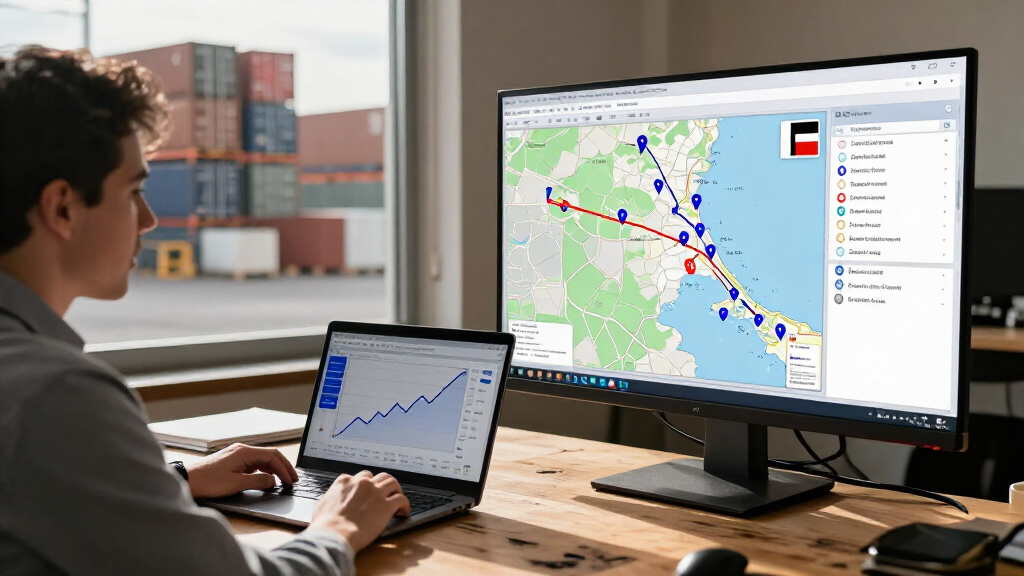
IdeaNavigator AI has identified the Google Trends query “estados unidos – belgica” as an 88/100 signal for a proposed U.S.–Belgium trade and supply-chain monitor. The score is presented as an opportunity to test a targeted briefing service, not as proof that a specific trade disruption or policy change has occurred.
IdeaNavigator AI says a Google Trends query concerning the United States and Belgium scored 88 out of 100 as a potential signal for a trade and supply-chain monitoring service. The score is being used to propose a small product test for operations managers, but it does not establish that a trade dispute, shipping interruption or other supply-chain event has taken place.
The proposed service would monitor Google Trends and similar feeds for geopolitical and trade developments, then filter items for operations leads responsible for trade and supply-chain exposure. Each alert would be converted into a short brief describing what changed, why it matters and what action may be relevant. The example query is written as “estados unidos – belgica,” Spanish wording for the United States and Belgium.
IdeaNavigator AI frames the idea as a focused first test, rather than a complete monitoring platform. Its suggested validation plan is to deliver the brief and two additional geopolitical or trade items to five people matching the intended operations-lead profile during one week. The test would track whether any recipient changes a decision or forwards a brief to a colleague.
The commercial model under consideration is a subscription for operations professionals who want an early, role-filtered read on developments. The supplied description does not identify paying customers, a launched product, or results from the proposed test. Nor does it explain how the 88/100 score was calculated.
Testing Alerts Against Operations Decisions
The proposal focuses on a practical challenge for operations teams: relevant trade and geopolitical information can be spread across news coverage, forums and filings, while broad roundups may not connect a development to a specific company’s exposure. A concise alert that links a reported change to an operational decision could help teams decide what merits further checking.
But a high Trends score is not itself evidence of commercial demand or operational impact. Search interest can point to a topic attracting attention; it does not say whether a company’s suppliers, routes, costs or compliance obligations are affected. The proposed test is intended to address that gap by checking whether target users act on or share the briefs, rather than treating interest in a search term as proof that the service is useful.
For readers assessing the idea, the distinction is consequential: an alert product would need to turn a signal into verified, relevant information without overstating what the signal means. The supplied description sets out that intended workflow, but reports no measured effect on decisions and no evidence that the proposed subscription has market demand.
Products Worth Considering

Samsung 27-Inch Odyssey G5 QHD Gaming Monitor (G51F)

LG UltraGear 34G600A-B 34-Inch Curved WQHD Gaming Monitor

Samsung 32 Odyssey G5 QHD Gaming Monitor
As an affiliate, we earn on qualifying purchases.
From Search Interest to Trade Briefs
Google Trends reports relative search interest for queries over a selected time and place; it does not independently verify the events that may prompt searches. The supplied IdeaNavigator AI description calls the U.S.–Belgium query an 88/100 signal, but gives no date range, geography settings, comparison query, baseline or scoring method. Without those details, the figure should be treated as a score in the proposal, not as a measure of trade activity or a quantified increase in searches.
The product concept is aimed at trade and supply-chain operations, not general-interest news readers. Its stated rationale is that geopolitical developments can move quickly and that a same-day, role-filtered brief may be more useful to an operations lead than a generic weekly summary. The material does not describe a specific policy announcement, bilateral negotiation, tariff change, port disruption or company filing tied to the query.
The proposed workflow has three parts: monitor public signals, identify developments that could matter to the intended role, and produce a short decision-oriented summary. That is a product hypothesis. The suggested five-person test would offer an early check on relevance, but its small, short-term design would not by itself establish broader demand or prove that the service improves supply-chain outcomes.
What the 88 Score Does Not Show
The supplied information does not state when the query was observed, which region or time period was selected in Google Trends, or what the 88/100 score represents. It also provides no search-volume figures or baseline, so the score cannot be interpreted as a percentage increase or as a measure of the scale of interest.
Most importantly, there is no confirmed underlying trade event in the description. It does not identify a change in U.S.–Belgium trade policy, a supply interruption, an affected industry or an exposed company. The query may indicate attention to the relationship, but the reason for that attention is not established.
The product remains a proposal in the material provided. There are no reported results from the five-person test, customer commitments, subscription pricing, or evidence that users would change decisions based on its alerts. How the service would verify items, distinguish consequential developments from noise and tailor findings to individual firms also remains unspecified.
A Five-User Test Comes First
The next step proposed by IdeaNavigator AI is to deliver the U.S.–Belgium brief and two other trade or geopolitical items to five people who fit the intended operations-lead profile during one week. The test would look for two observable responses: a recipient changes a decision, or forwards a brief to a colleague.
No launch date or completed test is reported. If the test proceeds, its results could indicate whether the brief is relevant enough to warrant further product development, but five recipients would provide only an initial signal. Details such as the scoring method, sourcing and verification process, user feedback, and any later subscription offer would be needed to judge the service beyond that pilot.
Source: IdeaNavigator AI
Key Questions
What is the reported U.S.–Belgium trade development?
The material does not report a specific trade-policy or supply-chain event. It describes a Google Trends query about the United States and Belgium as a potential signal for a proposed monitoring service.
What does the 88/100 score mean?
IdeaNavigator AI labels the query an 88/100 signal, but the scoring method, measurement window, geographic settings and comparison baseline are not provided. It should not be read as an 88% increase or as proof of an event.
What would the proposed monitor do?
It would watch Google Trends and similar feeds, filter trade and geopolitical developments for operations leads, and prepare short briefs on what changed, why it may matter and what to do.
Has the service been validated with users?
No validation results are reported. The proposed next step is a one-week test with five operations leads, measuring whether they change a decision or forward a brief.
Source: IdeaNavigator AI