TL;DR
A scenario article by Thorsten Meyer argues that AI systems could help accelerate the development of later systems, compressing a year of progress into two months before compute constraints slow the loop. METR’s benchmark data shows rapid gains in the length of software tasks AI agents can complete, but projections vary widely, and the benchmark has limits. The scenario is not a forecast, and the timing and scale of any acceleration remain uncertain.
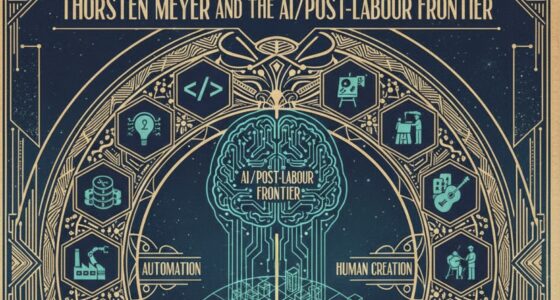
Thorsten Meyer has outlined a possible 2027 in which AI systems help build more capable successors quickly enough to compress a year of progress into two months, before limits on computing capacity slow the cycle. The article presents this as a scenario to test, not a forecast, and says the public evidence does not establish that such an acceleration will occur.

Get business pricing on tech for your team
- Business-only prices and quantity discounts
- Tax-exempt purchasing
- Multiple users, one account, clear invoices
The analysis uses METR’s 80% time horizon, a measure of how long a software task an AI agent can complete successfully four times out of five. METR’s recorded results rose from under a minute for GPT-4 in March 2023 to 185.9 minutes for an early Claude Mythos Preview in April 2026. METR marked its public page as no longer actively updated on September 8, 2026, limiting how current the series is.
Meyer’s own fits to METR’s measured points produce markedly different timelines. An exponential fit using data since 2024 doubles the measured task length every 3.4 months and reaches 16 hours in January 2027. A fit using data since 2019 doubles every 6.4 months and reaches that point in June 2028. The 16-hour mark exceeds the benchmark’s stated measurement range, so these dates are extrapolations, not observed results.
The analysis also cites METR’s estimate that Anthropic is improving models on well-specified tasks at around twice its earlier rate; METR said it would not be surprised by a rate between 1.3 and 3 times as high. Meyer’s proposed two-month compression implies roughly sixfold acceleration, which is faster than that estimate. Separately, the article says OpenAI’s GPT-6.2 Astra is its first externally released model to meet the company’s “High” threshold for AI self-improvement.

The Gap Between Speed and Scale
If AI systems take on more of the work involved in coding, testing and developing later systems, improvement could feed back into further improvement. That possibility matters to companies and workers because faster capability gains could shorten the time available to adapt products, processes and skills. The article’s proposed next step, called embodied self-improvement, extends the loop to robots, factories and automated labs, with potential effects across more kinds of work.
But progress on software tasks does not by itself show that AI has been widely adopted or that jobs are already changing at the same pace. The source cites estimates that 18% of US firms used AI in a business function in late 2025 and early 2026, while 2% reported AI-related job cuts. Those figures describe different measures: benchmark capability and business use are not interchangeable.
Products Worth Considering

Logitech MX Master 4 Ergonomic Wireless Mouse with Haptics – Graphite

Sonos Arc Ultra Dolby Atmos Soundbar, Black

Apple MacBook Air 15-inch Laptop with M5 Chip, 24GB Memory, 1TB SSD, Midnight
As an affiliate, we earn on qualifying purchases.
What the Benchmark Measures
METR’s time horizon tracks performance on a set of software tasks with known evaluation criteria. It offers one way to compare how long an agent can work reliably, but it does not measure every aspect of AI capability or real-world economic impact. Results are bounded by the task set and success threshold, and the source notes that the suite stops measuring above 16 hours.
The scenario has four links: AI assists in developing successor systems; that feedback loop speeds up progress; physical compute capacity constrains the loop; and later advances in compute and automation enable broader deployment. Each is conditional. The article says a hyperbolic fit to the benchmark data—the curve that runs to infinity in November 2027—performed worst in its backtests. Fitted to models available before July 2025, it had already projected infinity by January 2, 2026. That result cautions against treating a dramatic curve as a reliable timetable.
Physical infrastructure is another part of the argument. The source reports that US data-centre construction was running at an annual rate of $96.5 billion in September 2026, up from $50.7 billion a year earlier. It also cites Epoch AI’s view that power could become the first constraint on scaling, with new supply taking three to five years from a decision. These figures frame possible bottlenecks; they do not establish when a compute ceiling would be reached.
“We reach ASI either in 2027 or shortly after. The effect: in two months we see the progress of a whole year, and then further progress until we hit a ceiling in available compute.”
— Thorsten Meyer
How Fast the Loop Can Run
It remains unclear whether AI systems can reliably accelerate the development of successor systems enough to produce the proposed sixfold rate, or whether the reported gains will continue at the same pace. The benchmark page is no longer actively updated, and its task suite cannot measure beyond 16 hours. The fitted dates depend on which years of data are used, while the most dramatic curve failed the article’s backtests.
The scenario also does not establish when constraints on chips, data-centre construction or electricity would bind, or how quickly new capacity could come online. Nor does benchmark performance settle how quickly businesses will deploy AI or what effects that deployment will have on employment. The source labels its compute ceiling an illustration rather than a forecast value.
Signals to Watch in 2027
The scenario will be easier to assess as new, comparable benchmark results show whether agents keep completing longer tasks reliably. Updates to METR’s public measurements, if available, would help establish whether the recent trend is continuing; broader evaluation would be needed to test performance beyond the suite’s 16-hour limit.
Other signals include evidence that AI systems are contributing measurably to the development of later systems, and concrete data on data-centre construction, chip supply and connected power capacity. Business adoption and employment measures can show whether capability gains are reaching workplaces. Until those indicators align, the proposed 2027 acceleration remains a scenario rather than an established development.
Key Questions
Is the article predicting that artificial superintelligence will arrive in 2027?
No. It presents Meyer’s 2027 timing as a scenario, not an established forecast. The article also notes that artificial superintelligence has no agreed definition.
What does METR’s 80% time horizon measure?
It measures the length of software task an AI agent can complete successfully four times out of five. It does not measure every kind of AI capability or the overall effect on the economy.
Why do the projected dates differ?
The analysis fits different growth curves to different portions of METR’s data. Its exponential fits reach 16 hours in January 2027 or June 2028, depending on the period used. Both are projections beyond measured results.
What might limit AI progress in this scenario?
The article points to chips, data-centre buildings and electricity as possible constraints. It does not establish when any of them would become binding.
Source: Thorsten Meyer AI