
Basic services and basic income offer different paths to post-work security. Basic services like healthcare, transportation, and elder care make certain that everyone’s fundamental needs are met, reducing barriers to stability. Basic income provides direct cash support, giving you flexibility to address personal priorities. Combining both approaches can create a more resilient safety net that tackles poverty and promotes financial independence. To discover how these strategies can work together, keep exploring their potential benefits.

Get business pricing on tech for your team
- Business-only prices and quantity discounts
- Tax-exempt purchasing
- Multiple users, one account, clear invoices
Key Takeaways
- Basic services provide universal access to healthcare, transportation, and elder care, addressing structural needs for post-work security.
- Basic income offers direct cash support, granting individuals flexibility to meet personal needs and improve financial stability.
- Combining both strategies creates a comprehensive safety net, tackling both systemic inequalities and individual circumstances.
- Basic services ensure equitable access to essential needs, while basic income empowers personal choice and economic independence.
- An integrated approach enhances resilience during economic uncertainties by addressing immediate needs and long-term security.
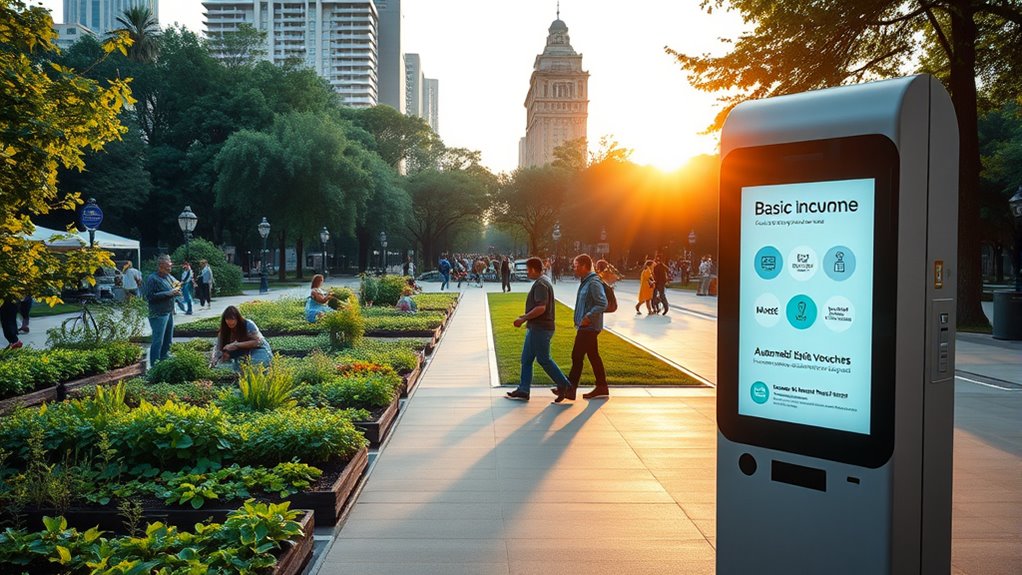
When considering ways to reduce poverty and improve living standards, you often face the choice between providing basic services or implementing a basic income. Both approaches aim to lift people out of hardship, but they tackle the problem differently. Basic services focus on ensuring everyone has access to essential needs like healthcare and transportation, while a basic income provides direct financial support that individuals can use as they see fit. Each option has its strengths, and understanding how they complement or compete can help you make better policy decisions.
Universal healthcare is a cornerstone of providing basic services. It guarantees that no one has to worry about exorbitant medical bills or skipping care because they can’t afford it. When healthcare is accessible, you reduce the financial strain on families, prevent health issues from worsening, and promote a healthier population overall. Universal healthcare also ensures that medical treatment is driven by need, not income, which helps to close health disparities. Complementing healthcare, public transportation plays a vital role by connecting people to jobs, education, and healthcare facilities. Reliable, affordable transit reduces transportation barriers, enables greater economic participation, and improves overall quality of life. When these services are available, people are less likely to fall into poverty due to unexpected medical costs or lack of mobility. Additionally, access to assisted living and elder care services can help support vulnerable populations and reduce long-term care costs for families and governments.
Universal healthcare and public transportation are essential services that reduce poverty and promote health and economic participation.
On the other hand, a basic income offers a different approach. It gives individuals cash that they can allocate toward their specific needs, whether that’s food, housing, education, or other essentials. This flexibility empowers people to make choices that suit their circumstances, fostering independence and dignity. However, critics argue that without accompanying services like universal healthcare and public transit, a basic income might fall short in addressing structural inequalities. If someone receives money but lacks access to healthcare or transportation, their financial stability can still be fragile.
Ideally, these strategies can work together. Providing essential services like universal healthcare and public transportation ensures that basic needs are met universally, creating a safety net that complements the financial support from a basic income. This combination can reduce poverty more effectively than relying on one approach alone. You get the stability of guaranteed services, which prevent catastrophic expenses, along with the flexibility of cash support that allows individuals to tailor assistance to their unique situations. Balancing these strategies might be the most practical way to create a resilient, equitable system that supports everyone, especially in times of economic uncertainty.
Frequently Asked Questions
How Do Basic Services Impact Economic Inequality?
Basic services reduce economic inequality by providing essential needs like healthcare, education, and housing, which promote social equity. When you support access to these services, you’re aiding wealth redistribution, ensuring that everyone has a fair chance to succeed. This approach diminishes disparities, making society more balanced. By investing in basic services, you help create a more inclusive economy where opportunity isn’t limited by income or background.
What Are the Funding Sources for Basic Income Programs?
Did you know that over 60 countries are exploring basic income programs? You can fund these through taxation models, such as progressive taxes on high incomes or wealth taxes, or through private funding sources like philanthropy and social impact investments. Governments often combine these methods, ensuring sustainable financing. By understanding these diverse funding options, you can see how basic income might become a viable, equitable solution for post-work security.
Can a Country Implement Both Basic Services and Income Simultaneously?
Yes, a country can implement both basic services and income simultaneously. You’ll find that public opinion often favors integrated approaches, seeing them as more all-encompassing. However, political feasibility depends on government priorities and resource allocation. You might face challenges convincing policymakers and citizens about funding. Still, combining both can create a more robust safety net, appealing to diverse needs and increasing overall support for post-work security measures.
How Do Cultural Differences Influence Acceptance of Basic Income?
You might find that cultural acceptance of basic income varies widely because societal norms shape perceptions of welfare. In some cultures, there’s a strong emphasis on individual responsibility, making basic income less accepted. Conversely, societies valuing equality and community tend to embrace it more readily. These differences influence how quickly and openly people support or resist basic income policies, highlighting the importance of understanding local values in policy design.
What Are Potential Long-Term Societal Effects of Universal Basic Services?
You might find that universal basic services strengthen social cohesion by ensuring everyone’s needs are met, fostering a more equitable society. Over time, this stability encourages technological innovation, as people are empowered to pursue education and creative endeavors without fear of hardship. By reducing disparities, you could see a society where collaboration flourishes, and long-term well-being becomes a shared priority, ultimately creating a more resilient and inclusive community.
Conclusion
Imagine a world where you rely on basic services, like healthcare and education, ensuring your needs are met regardless of work. Now picture a society with a universal basic income, giving you financial freedom to pursue passions without job dependency. Both paths aim to shield you from insecurity, yet they paint different images: one offers a safety net of services, the other a cushion of cash. Which vision feels more empowering to you?
Fall Picks
fall essentials
As an affiliate, we earn on qualifying purchases.