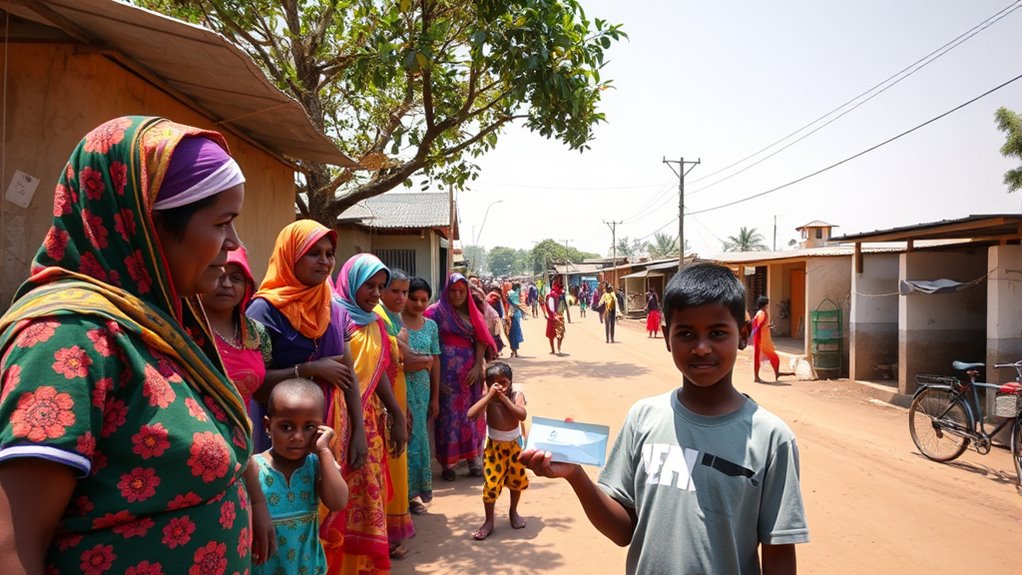

Implementing basic income in developing countries could help reduce poverty and boost economic resilience by providing regular, unconditional cash transfers that meet immediate needs and support long-term growth. However, you should consider the challenges like securing sustainable funding, managing administration effectively, and preventing misuse. While promising, these programs require thoughtful design and ongoing efforts. If you want to discover more about how these initiatives work and their real-world impacts, keep exploring this topic.
Key Takeaways
- Basic income initiatives provide unconditional cash transfers to improve financial security and reduce poverty in developing countries.
- These programs enhance health, education, and resilience, fostering long-term economic growth and human capital development.
- Challenges include high costs, administrative capacity, risk of dependency, and ensuring effective delivery without corruption.
- Successful implementation requires careful design, sustainable funding, and ongoing evaluation to adapt to local contexts.
- When effectively managed, basic income can promote dignity, stability, and sustainable development in vulnerable populations.

Have you ever wondered how providing a regular, unconditional income could transform lives in developing countries? Imagine a future where financial security isn’t a distant dream for millions but a reality for everyone. That’s the promise of basic income initiatives, and many believe they could revolutionize how developing nations tackle poverty. One of the most common ways governments and organizations are exploring this idea is through cash transfer programs. These programs deliver direct payments to individuals or families, aiming to provide immediate relief and support long-term development. Unlike traditional aid, which often comes with strings attached or is tied to specific conditions, cash transfer programs are straightforward, giving recipients the freedom to decide how to spend their money. This flexibility makes them especially effective for poverty alleviation because they address immediate needs like food, healthcare, and education, while also empowering individuals to make choices that improve their future.
By implementing regular, unconditional cash transfers, developing countries can create a safety net that reaches even the most vulnerable populations. When people have reliable access to income, they’re better equipped to withstand economic shocks, such as droughts, conflicts, or market downturns. This financial stability can reduce the cycle of poverty that traps many families for generations. Furthermore, cash transfer programs often lead to positive ripple effects. For instance, when families receive consistent support, children are more likely to attend school, and health outcomes improve as families can afford essential services. These benefits foster a more productive, healthier workforce, contributing to broader economic growth.
Unconditional cash transfers build resilience, improve health, and boost education, fostering economic growth in vulnerable communities.
However, adopting basic income models through cash transfer programs isn’t without challenges. Funding these initiatives requires significant investment, which may strain government budgets or donor resources. Ensuring that the money reaches the intended recipients without corruption or leakage can also be complex, especially in regions with limited administrative capacity. Additionally, there’s ongoing debate about whether providing unconditional cash payments might discourage work or create dependency, although evidence from pilot programs often suggests otherwise. Policymakers need to carefully design and evaluate these programs to balance immediate poverty alleviation with sustainable development goals.
In essence, cash transfer programs offer a promising pathway toward achieving basic income in developing countries. They provide a practical, scalable approach to tackling poverty and fostering economic resilience. Yet, success depends on thoughtful implementation, adequate funding, and continuous assessment. If these hurdles are addressed, the vision of a world where everyone has the financial security to live with dignity could become a reality, transforming societies from the ground up.
Frequently Asked Questions
How Can Basic Income Programs Be Sustainably Funded in Developing Countries?
You can sustainably fund basic income programs in developing countries by implementing effective taxation strategies that target wealth and high-income earners, ensuring fair contributions. Additionally, leveraging international aid can provide vital support, especially during initial phases. Combining domestic tax reforms with strategic international assistance creates a diversified funding base, helping to maintain programs long-term without overburdening local economies. This approach promotes financial sustainability and broad-based social benefits.
What Impact Does Basic Income Have on Local Economies and Employment?
Basic income can boost your local economy by increasing consumer spending, which stimulates economic growth. It may also influence the labor market by encouraging people to seek better jobs or start businesses, rather than accepting low-wage work. While some worry it could reduce work incentives, evidence suggests it often leads to a more dynamic labor market and higher economic activity, ultimately benefiting your community’s overall development.
How Do Cultural Differences Influence Basic Income Acceptance?
Cultural perceptions markedly influence your social acceptance of basic income, as values and traditions shape attitudes toward welfare. If your community views social support positively, you’re more likely to support and embrace basic income initiatives. Conversely, skepticism or stigma around government aid can hinder acceptance. Understanding these cultural differences helps policymakers tailor programs to resonate with local beliefs, increasing the likelihood of successful implementation and widespread social acceptance.
What Are the Risks of Inflation With Universal Basic Income?
You should be aware that implementing a universal basic income can raise inflation risks if it boosts consumer spending faster than the economy’s ability to produce goods and services. To mitigate this, policymakers need to carefully adjust monetary policy, such as controlling interest rates or money supply, to prevent inflation from spiraling. Staying vigilant about inflation risk guarantees that basic income benefits don’t lead to unintended economic instability.
How Can Basic Income Be Integrated With Existing Social Welfare Systems?
You can smoothly integrate basic income with existing social welfare by implementing targeted cash transfer programs that complement current efforts. This promotes social inclusion, ensuring vulnerable populations receive consistent support. Start by evaluating current systems, then create a unified framework that streamlines benefits, reduces duplication, and enhances efficiency. Emphasizing collaboration and coordination helps build a cohesive safety net, fostering greater stability and equality across communities.
Conclusion
Imagine a small village where a simple, steady stream of water transforms lives, just like a basic income can uplift developing communities. While challenges like funding and implementation exist, the potential to break the cycle of poverty is real. With careful planning, you can help turn this metaphor into reality, ensuring that everyone has the resources to thrive. Basic income isn’t a magic fix, but it’s a promising step toward a fairer future for all.