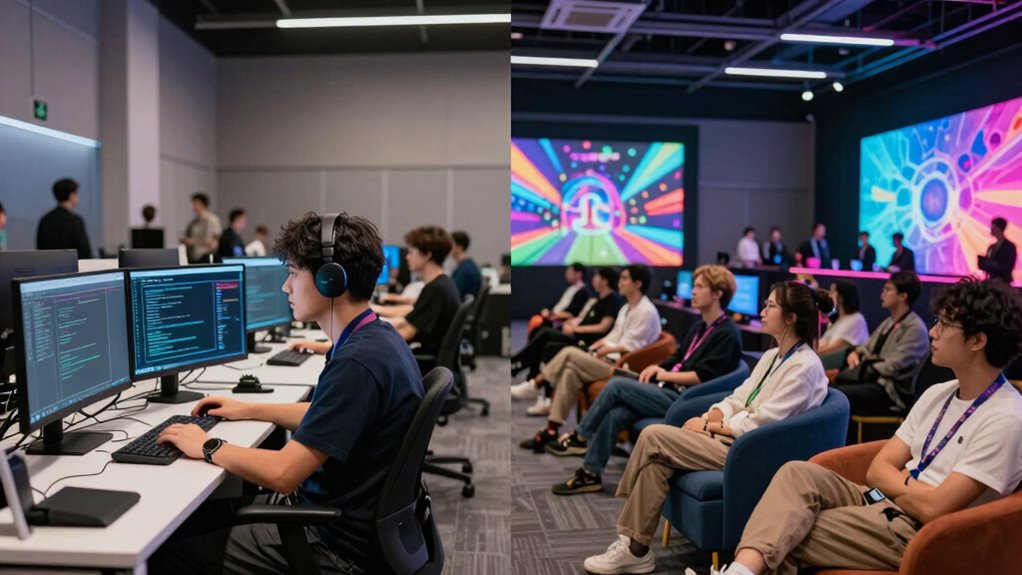

A divide is forming between those who design, control, and refine AI systems—referred to as operators—and those who observe and analyze AI’s societal impacts, known as spectators. Operators hold decision-making power and influence over AI’s future, while spectators monitor its societal effects from a distance. This split raises questions about ethics, bias, and control, shaping the future of responsible AI. To see how this evolving dynamic affects everyone, keep exploring these important shifts.
Key Takeaways
- The division highlights differing roles: operators actively develop and manage AI, while spectators observe its societal impact.
- Ethical responsibilities and decision-making authority primarily rest with operators, creating potential power imbalances.
- Spectators may lack technical expertise, limiting their influence but increasing reliance on regulation and oversight.
- As AI becomes more autonomous, the gap may deepen, emphasizing the need for collaboration and shared governance.
- Recognizing and balancing these roles is crucial for responsible AI development and societal trust.

As artificial intelligence becomes more integrated into our daily lives, a clear divide is emerging between those who actively operate and shape AI systems and those who simply observe their impact. You might find yourself in either camp, but the shift is undeniable. For operators, there’s a sense of responsibility and power—they’re the ones designing, training, and refining these systems. They understand the AI’s inner workings and face the AI ethical implications firsthand. These individuals grapple with questions about bias, fairness, and accountability, knowing that their decisions influence not just algorithms but real lives. Meanwhile, the spectators watch from a distance, witnessing the consequences without direct involvement. They analyze the automation impact on jobs, privacy, and societal structures, often reacting to news rather than shaping it. This separation creates a dynamic where operators hold the keys to AI development, and spectators rely on the outcomes.
For you as an operator, the duty extends beyond technical mastery. You must balance innovation with ethical considerations, ensuring AI decisions promote fairness and avoid harm. The AI ethical implications aren’t just theoretical; they demand practical solutions and ongoing oversight. You’re responsible for mitigating bias, safeguarding data, and maintaining transparency, knowing your work could influence public trust or distrust in AI. On the other hand, spectators may feel overwhelmed or disengaged, unsure of how much influence they truly have over AI’s trajectory. They observe automation impact in sectors like healthcare, finance, and law enforcement, often questioning whether AI benefits society or deepens inequalities. While spectators can advocate for regulations and ethical standards, they usually lack the technical expertise to intervene directly. As AI systems become more autonomous, public understanding will become even more crucial in shaping responsible development.
This divide deepens as AI systems become more autonomous, pushing the automation impact into uncharted territory. You, as an operator, navigate this landscape, balancing innovation with moral responsibility. The more AI evolves, the more complex the AI ethical implications become, demanding careful stewardship. Spectators, meanwhile, grapple with understanding these changes and their consequences. The tension between operation and observation might widen, but it also highlights a vital point: AI’s future depends on a collaborative effort. Whether you’re shaping AI or simply witnessing its ripple effects, recognizing your role in this evolving ecosystem is essential. The split isn’t just about who controls AI; it’s about how society collectively manages the ethical and practical challenges that come with it.
Bias, Privacy, and the Ethics of AI in Education
As an affiliate, we earn on qualifying purchases.
As an affiliate, we earn on qualifying purchases.
Frequently Asked Questions
How Will AI Regulations Differ for Operators Versus Spectators?
AI regulations will differ for operators and spectators mainly around ethical boundaries and accessibility disparities. Operators will face stricter rules to ensure responsible use, prevent harm, and uphold ethical standards. Spectators, meanwhile, might have fewer restrictions but will need guidelines to address accessibility disparities, guaranteeing fair access. You’ll likely see regulations aiming to balance innovation with safety, making sure both groups navigate AI’s benefits and risks responsibly.
What Skills Are Needed for AI Operators in the Future?
To excel as an AI operator in the future, you’ll need strong AI literacy to understand complex algorithms and their implications. Skill specialization will be vital, focusing on areas like model tuning, data management, and ethical considerations. You should stay adaptable, continuously updating your knowledge to keep pace with rapid advancements. Effective communication and problem-solving skills will also help you collaborate across teams and guarantee AI systems perform at their best.
Will Spectators Have Access to the Same AI Tools as Operators?
No, spectators likely won’t have the same access to AI tools as operators. Public engagement might be limited by ethical boundaries to prevent misuse or misinformation. Operators will use advanced, specialized tools to control and interpret AI outputs, while spectators may only access simplified versions for viewing or understanding. This divide helps protect ethical standards and guarantees responsible AI use, keeping complex decision-making within trained professionals’ hands.
How Will This Split Impact AI Innovation and Development?
As AI accessibility diverges, you might find innovation disparities grow wider, impacting development. When operators have advanced tools, they push boundaries faster, while spectators may lag behind, stifling diverse ideas. This split could foster a competitive gap, encouraging innovation in some areas but slowing progress elsewhere. Ultimately, the divide might shape a future where collaboration diminishes, and breakthroughs become exclusive, affecting the overall evolution of AI technology.
What Ethical Concerns Arise From Separating Operators and Spectators?
You face an ethical divide where separating operators from spectators can deepen the power imbalance, leading to misuse or manipulation of AI systems. This split raises concerns about accountability, transparency, and fairness, as operators hold significant control while spectators remain passive. You must consider how this divide might diminish collective responsibility and trust, potentially enabling unethical practices and undermining societal confidence in AI development.

AI-Powered Developer: Build great software with ChatGPT and Copilot
As an affiliate, we earn on qualifying purchases.
As an affiliate, we earn on qualifying purchases.
Conclusion
As you navigate the evolving AI landscape, remember that the divide between operators and spectators will grow clearer. If you actively develop or manage AI systems, you’re shaping their future—like a company customizing AI to improve customer service. Meanwhile, spectators will simply watch from the sidelines, missing out on influence. Embrace your role as an operator, for your actions today will determine whether you lead innovation or are left behind in the crowd.
Empire of AI: Dreams and Nightmares in Sam Altman's OpenAI
As an affiliate, we earn on qualifying purchases.
As an affiliate, we earn on qualifying purchases.

The AI Paradox: How to Make Sense of a Complex Future
As an affiliate, we earn on qualifying purchases.
As an affiliate, we earn on qualifying purchases.