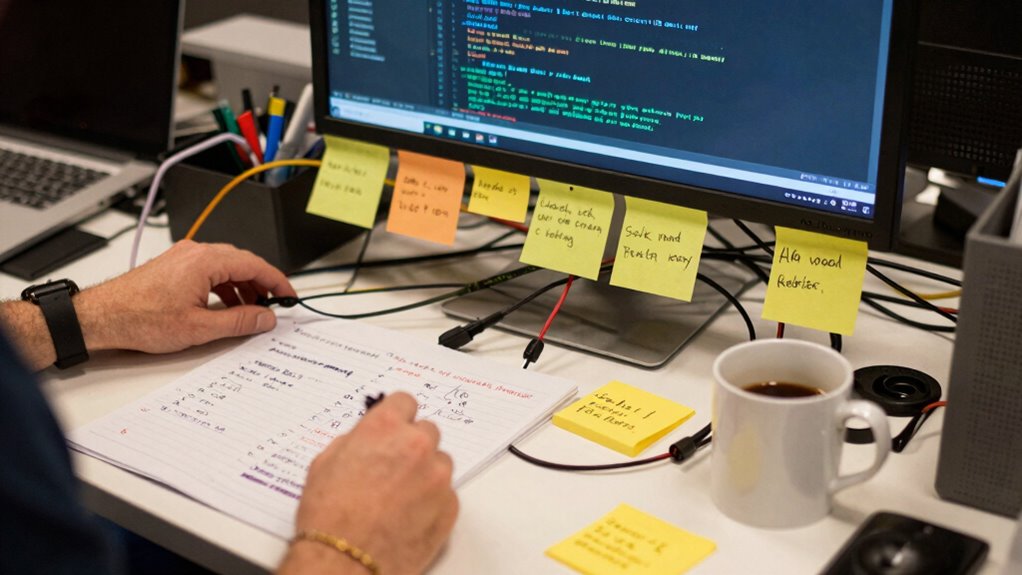

You often overlook that human workarounds are the missing piece in most AI forecasts. While AI relies on algorithms and past data, it can’t capture the nuances, cultural contexts, or recent events that humans understand intuitively. Your expert adjustments and creative insights help fill these gaps, improving accuracy. But these interventions can also introduce biases or reduce transparency. To understand how balancing AI and human input leads to better forecasts, keep exploring these key factors.
Open a free Amazon Business account
Business pricing, bulk buying and tax-exempt orders.
As an affiliate, we earn on qualifying purchases.
Key Takeaways
- Human workarounds incorporate contextual knowledge and cultural insights that AI models often overlook.
- Manual adjustments help address unpredictable variables and complex factors outside predefined algorithms.
- Human expertise bridges gaps in AI understanding, refining forecasts with nuanced judgment.
- Ethical considerations in human interventions impact transparency and fairness in AI-driven predictions.
- Balancing human intuition with AI enhances forecast accuracy while managing bias and accountability.
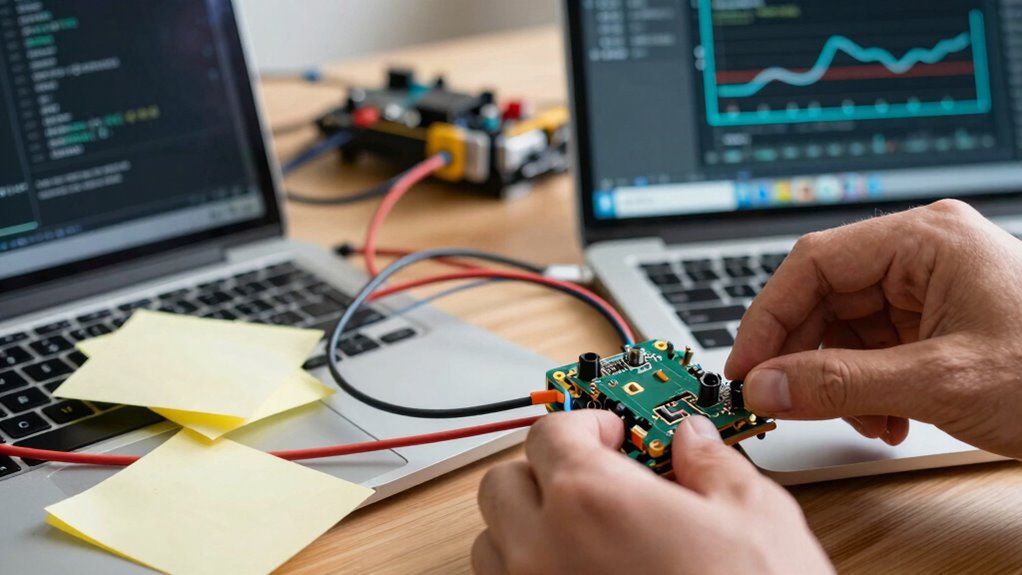
As AI systems become more integral to forecasting, humans often develop workarounds to bypass limitations or gaps in the technology. These workarounds are vital because AI models, no matter how advanced, can’t fully grasp the nuances and unpredictability of real-world situations. You might find yourself adjusting data inputs, applying intuition, or interpreting outputs differently to fill in the gaps. These human interventions are often overlooked but are crucial for accurate predictions, especially when AI falls short in capturing complex variables.
One significant aspect of these workarounds is algorithmic creativity. While AI relies on predefined algorithms and historical data, human ingenuity allows you to think outside the box. You may incorporate contextual knowledge, cultural insights, or recent events that the model hasn’t been trained on. This creative input helps refine forecasts but also introduces variability that the AI doesn’t account for. It’s a form of human intelligence that compensates for the rigidity of algorithms, enabling more nuanced and adaptive predictions.
Additionally, human workarounds often involve applying domain expertise, which helps bridge gaps in AI understanding by leveraging specialized knowledge. Recognizing the importance of human intuition in filling these gaps highlights how essential it is to balance automated and manual inputs. Incorporating contextual understanding further enhances the accuracy of forecasts by considering factors beyond raw data, which AI might overlook. For example, understanding the cultural context can significantly influence how data is interpreted, especially in diverse or unpredictable environments. Moreover, data interpretation by humans often involves synthesizing multiple sources of information to create a comprehensive picture, which AI alone might struggle to do effectively. However, integrating human workarounds into AI forecasting raises important ethical implications. You must consider issues of transparency and bias—how your interventions influence the model’s outputs and whether they introduce unintended distortions. When you manually adjust or interpret data, you risk embedding personal or systemic biases, which can skew results and undermine trust in the system. Moreover, there’s a moral responsibility to recognize when these workarounds are necessary and to document them transparently, so others can understand the basis for your modifications.
These ethical considerations become even more critical as algorithmic creativity blurs the lines between machine-driven and human-driven decision-making. You need to assess whether your interventions enhance the forecast’s accuracy or compromise its objectivity. In some cases, relying on human intuition may lead to more accurate predictions, but it can also open the door to subjective biases. Balancing the strengths of AI with human insight requires a careful ethical framework that respects fairness, transparency, and accountability.
Ultimately, human workarounds fill a vital missing variable in most AI forecasts, reflecting the complex interplay between technology and human judgment. Recognizing their importance isn’t just about improving accuracy; it’s about understanding the ethical landscape that accompanies the integration of human intuition with machine intelligence. Your role isn’t just to rely on algorithms but to thoughtfully navigate these ethical implications, ensuring that your interventions serve the broader goal of responsible and effective forecasting.
AI forecasting software with human input
As an affiliate, we earn on qualifying purchases.
As an affiliate, we earn on qualifying purchases.
Frequently Asked Questions
How Do Human Workarounds Impact AI Accuracy Over Time?
Human workarounds cause behavioral anomalies that can skew AI accuracy over time. When you implement shortcuts or ignore system limitations, AI models struggle to adapt to these cultural influences and unanticipated behaviors. These anomalies introduce inconsistencies, making predictions less reliable. As you rely on AI, you inadvertently shape its understanding, often reducing its effectiveness unless you address these human-driven factors and update the system regularly.
Can Human Workarounds Be Fully Automated in AI Systems?
You can’t fully automate human workarounds in AI systems, as they thrive on contextual adaptability and innovation challenges. While automation can mimic certain workarounds, it often falls short of capturing the nuanced judgment and creative problem-solving humans bring. This ongoing dance between automation and human insight is essential, ensuring AI remains flexible and effective. Embracing this balance helps navigate the complexities that pure automation alone can’t address.
What Industries Most Rely on Human Workarounds?
You’ll find industries like healthcare, manufacturing, and customer service heavily rely on human workarounds. Manual interventions are often necessary when AI systems encounter complex, unpredictable situations that require cultural adaptations or nuanced judgment. These sectors depend on human oversight to fill gaps, adjust processes, and guarantee accuracy, making it difficult to fully automate. Your awareness of these reliance points highlights where AI can complement, but not replace, human expertise.
How Can AI Forecasts Account for Unpredictable Human Behaviors?
Imagine AI as a sailor steering unpredictable seas. To better forecast human behaviors, you need behavior modeling that captures the nuances of human decision-making. Incorporate adaptive algorithms that learn and adjust to new patterns in real-time. By doing so, you enable AI to anticipate unpredictable human workarounds, much like a seasoned sailor steering through changing tides, making your forecasts more accurate and resilient against the chaos of human unpredictability.
Are There Ethical Concerns With Relying on Human Workarounds?
Yes, relying on human workarounds raises ethical dilemmas and trust implications. You might question whether these workarounds compromise transparency or fairness, as they can bypass AI systems’ intended design. This reliance could lead to inconsistent decision-making and erode confidence in AI’s objectivity. You should consider how to balance human intuition with ethical standards, ensuring trust remains intact while addressing unpredictable human behaviors.
As an affiliate, we earn on qualifying purchases.
Conclusion
You see, overlooking human workarounds is like trying to sail without a compass—you’re missing a vital piece. As you move forward, remember that humans instinctively adapt, often finding ways around AI’s blind spots. Don’t rely solely on algorithms—think of it as having a secret decoder ring in a world of telegrams. Ignoring this variable risks misreading the future, much like a knight wandering off-course without his trusty map. Keep humans in the loop; it’s your best strategy.
As an affiliate, we earn on qualifying purchases.
cultural context data analysis tools
As an affiliate, we earn on qualifying purchases.
As an affiliate, we earn on qualifying purchases.
Flea & tick season Picks
flea and tick prevention
As an affiliate, we earn on qualifying purchases.