

TL;DR
Russia has launched a satellite, Kosmos 2589, into geosynchronous orbit, where it is being monitored by US military satellites. This marks Russia’s entry into high-profile space reconnaissance in GEO, intensifying space-based surveillance competition.
Russia has launched a satellite, Kosmos 2589, into geosynchronous orbit, where it is now being observed by US military satellites, marking Russia’s first known deployment of a reconnaissance satellite in GEO.
According to data from COMSPOC, a commercial space situational awareness firm, Kosmos 2589 arrived in GEO in April after performing high-altitude maneuvers following its June 2025 launch. The satellite has been observed looping near US Space Force’s GSSAP satellite USA-325, coming within 8 miles (13 km) on May 1. The purpose of Kosmos 2589 remains uncertain, but analysts suspect it may be related to Russia’s Nivelir anti-satellite system, potentially designed for reconnaissance or signal interception. The US military has increased its focus on GEO activities, deploying satellites capable of close-up inspections of other spacecraft, often maneuvering within a few dozen miles of targets.
Why It Matters
This development indicates an escalation in space-based military reconnaissance, with Russia entering the high-value geosynchronous orbit arena alongside the US and China. Such activities increase the risk of space tensions and could impact military communications and national security for multiple countries.

LandAirSea 54 GPS Tracker – Made in the USA from Domestic & Imported Parts. Long Battery, Magnetic, Waterproof, Global Tracking. Subscription Required
Premium GPS Tracker — The LandAirSea 54 GPS tracker provides accurate global location, real-time alerts, and geofencing. Easily…
As an affiliate, we earn on qualifying purchases.
As an affiliate, we earn on qualifying purchases.
Background
Over the past decade, the US has operated GSSAP satellites for orbital surveillance, while China began deploying similar capabilities in 2018. Russia’s previous activities in GEO focused on eavesdropping on communications, with satellites like Olymp and Luch. The recent deployment of Kosmos 2589 signals a shift toward more active reconnaissance and possibly counter-space operations, reflecting broader geopolitical competition in space.
“One of the current tactics each side uses is to try to look at a potential target when it first arrives on orbit. It’s sort of like an airplane just coming off the runway, because it’s still trying to orient and get checked out for operations.”
— Retired Lt. Gen. John Shaw
“COSMOS 2589 spent the past few weeks circularizing its orbit before parking at ~98°E. USA 325 was watching the whole time. Things got interesting around April 19th when COSMOS 2589…”
— COMSPOC Operations
geosynchronous orbit satellite model
As an affiliate, we earn on qualifying purchases.
As an affiliate, we earn on qualifying purchases.
What Remains Unclear
Details about the exact purpose of Kosmos 2589 are still unclear. It is not confirmed whether it is solely for reconnaissance, signal interception, or other military functions. The full scope of Russia’s intentions remains unknown, and further activity or deployment is anticipated.

A Study of Dim Object Detection for the Space Surveillance Telescope
As an affiliate, we earn on qualifying purchases.
As an affiliate, we earn on qualifying purchases.
What’s Next
US military satellites are expected to continue tracking Kosmos 2589 and other Russian GEO assets. The US Space Force is likely to expand its reconnaissance fleet and develop countermeasures. Russia may launch additional satellites or conduct further maneuvers, escalating space activity in GEO.
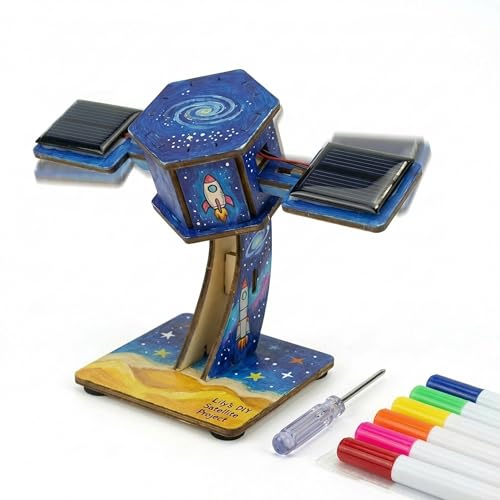
DIY Solar Power Satellite Model Kit, Alternative Energy & Space Science Building Project, Science Classroom Must Haves & Homeschool Teaching Supplies
Space Science & Alternative Energy Module Designed as an interactive science practice apparatus, this wooden solar satellite model…
As an affiliate, we earn on qualifying purchases.
As an affiliate, we earn on qualifying purchases.
Key Questions
Why is Russia’s satellite in geosynchronous orbit significant?
GEO is a strategic space zone used for communications and surveillance. Russia’s presence there indicates an interest in high-value reconnaissance and signals intelligence, increasing space security concerns.
How does the US monitor these satellites?
The US employs specialized satellites like GSSAP that can maneuver close to other spacecraft, using optical and radar tracking to observe their activities and capabilities.
Could this lead to conflicts in space?
While no conflicts have occurred, increased military activity in GEO raises the risk of misunderstandings or escalation, as nations seek to protect their space assets and gather intelligence.
What are the implications for global security?
Enhanced space reconnaissance capabilities may lead to an arms race in space, complicating international efforts to establish norms and treaties governing military activities in orbit.