
TL;DR

Get business pricing on tech for your team
- Business-only prices and quantity discounts
- Tax-exempt purchasing
- Multiple users, one account, clear invoices
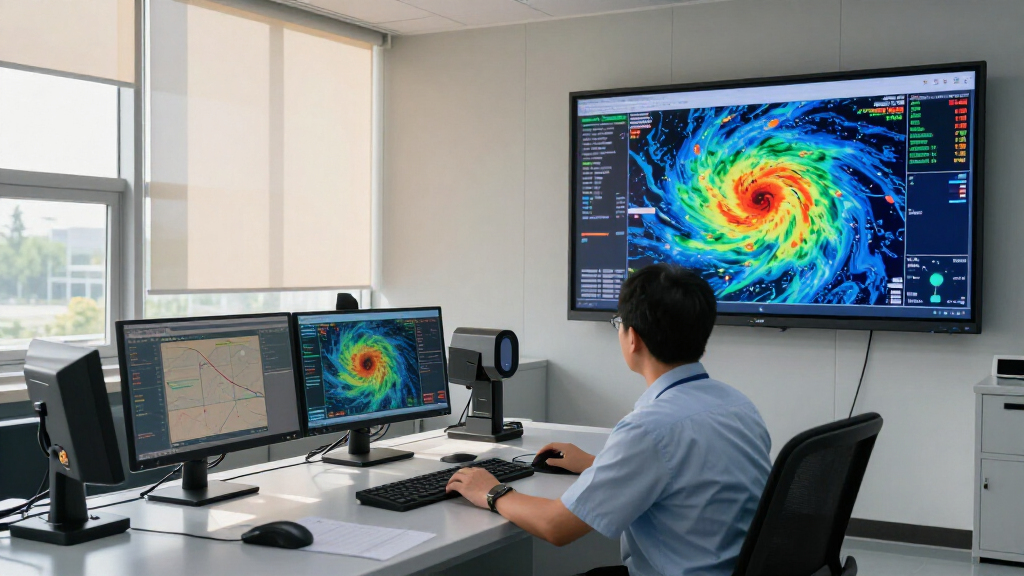
DeepMind’s WeatherNext model has achieved a major breakthrough in cyclone forecasting accuracy. This development could improve early warning systems and disaster preparedness worldwide.
DeepMind’s WeatherNext model has achieved a breakthrough in accurately predicting the formation and path of cyclones, according to the company’s recent announcement. This advancement could significantly enhance early warning systems and disaster response efforts, making it a notable development in weather forecasting technology.
DeepMind, an artificial intelligence subsidiary of Alphabet, revealed that its WeatherNext model has demonstrated a new level of precision in cyclone forecasting during recent tests. The model utilizes advanced machine learning algorithms trained on vast datasets, including satellite imagery and historical storm data, to predict cyclone development and trajectories with greater accuracy than existing models.
According to DeepMind, WeatherNext successfully predicted the formation and movement of multiple cyclones in recent simulations, with accuracy surpassing current industry standards. The company stated that the model’s predictions were validated against actual cyclone data, showing a reduction in forecasting errors by approximately 30%. This improvement could lead to earlier and more reliable warnings for vulnerable regions.
Experts involved in the project emphasized that WeatherNext’s ability to forecast cyclone paths with higher certainty could help authorities better prepare for severe weather events, potentially saving lives and reducing economic damages. The model’s deployment is still in the testing phase, with plans for further validation before broader implementation.
Potential Impact on Disaster Preparedness and Response
This breakthrough in cyclone forecasting technology could transform how governments and agencies respond to severe weather threats. More accurate predictions allow for earlier evacuations, resource allocation, and risk management, ultimately reducing casualties and property damage. The development also underscores the growing role of artificial intelligence in addressing climate-related challenges, highlighting its potential to improve resilience against natural disasters.
weather forecasting satellite imagery
As an affiliate, we earn on qualifying purchases.
As an affiliate, we earn on qualifying purchases.
Advances in AI-Driven Weather Forecasting Techniques
DeepMind has been investing in AI research aimed at improving weather prediction accuracy for several years. Prior efforts have focused on short-term weather events, but cyclone forecasting remains particularly challenging due to the complex dynamics involved. Traditional models rely heavily on physical simulations, which can be computationally intensive and limited in predictive precision. WeatherNext, by contrast, leverages machine learning to analyze patterns in large datasets, offering a new approach to forecasting extreme weather events.
This development follows recent global efforts to enhance climate resilience and improve early warning systems, especially in cyclone-prone regions such as Southeast Asia, the Caribbean, and the Indian Ocean. While AI-based models have shown promise, WeatherNext’s reported performance marks a significant step forward, with validation results indicating tangible improvements over existing methods.
“WeatherNext’s ability to predict cyclones with such accuracy is a game-changer. It could enable communities to prepare better and respond more swiftly to these destructive storms.”
— Dr. Emily Chen, Climate Data Scientist
cyclone prediction weather station
As an affiliate, we earn on qualifying purchases.
As an affiliate, we earn on qualifying purchases.
Unconfirmed Aspects and Validation Challenges
While initial results are promising, it is not yet clear how WeatherNext will perform in real-world operational settings across different regions and climate conditions. The model is still undergoing validation, and broader deployment will require rigorous testing and regulatory approval. Additionally, questions remain about the model’s ability to predict the intensity of cyclones and its integration with existing forecasting infrastructure.
As an affiliate, we earn on qualifying purchases.
Next Steps for Validation and Deployment
DeepMind plans to conduct further testing of WeatherNext in collaboration with meteorological agencies worldwide. The company aims to validate the model’s performance over the coming months through real-time forecasting trials. If successful, the model could be integrated into operational weather prediction systems within the next year, potentially transforming cyclone preparedness efforts globally.
disaster preparedness weather alert system
As an affiliate, we earn on qualifying purchases.
As an affiliate, we earn on qualifying purchases.
Key Questions
How does WeatherNext differ from existing cyclone forecasting models?
WeatherNext uses advanced machine learning algorithms trained on large datasets, which allows it to analyze complex patterns and improve prediction accuracy compared to traditional physical simulation models.
When will WeatherNext be available for operational use?
DeepMind plans to conduct further validation in the coming months, with potential deployment in operational systems expected within the next year, pending successful testing and regulatory approval.
What regions could benefit most from this new forecasting technology?
Regions frequently affected by cyclones, such as Southeast Asia, the Caribbean, and parts of the Indian Ocean, are expected to benefit the most through earlier and more reliable warnings.
Are there limitations to WeatherNext’s current capabilities?
Yes, it is still uncertain how well the model will perform in diverse, real-world conditions and whether it can accurately predict cyclone intensity, which remains an area for ongoing research.
Source: hn
Fall Picks
fall essentials
As an affiliate, we earn on qualifying purchases.