
TL;DR

Get business pricing on tech for your team
- Business-only prices and quantity discounts
- Tax-exempt purchasing
- Multiple users, one account, clear invoices
Import AI issue 479 covers a new benchmark finding that leading AI models struggle with tasks where delays affect outcomes, alongside a Defense Intelligence Agency report on threats to space systems. The supplied source also names Genie 4 in the issue title, but includes no details about it; its status and significance cannot be established from the available material.
Import AI issue 479 brings together results from Realtime-Bench, a new evaluation of AI systems making time-sensitive decisions, and the U.S. Defense Intelligence Agency’s assessment of threats to satellites. The newsletter says the strongest model tested passed 36% of tasks under the benchmark’s wall-clock condition, while success rates rose toward 70% or 80% when the environment clock was paused. Although the issue title also mentions Genie 4, the supplied report excerpt gives no information about that subject.
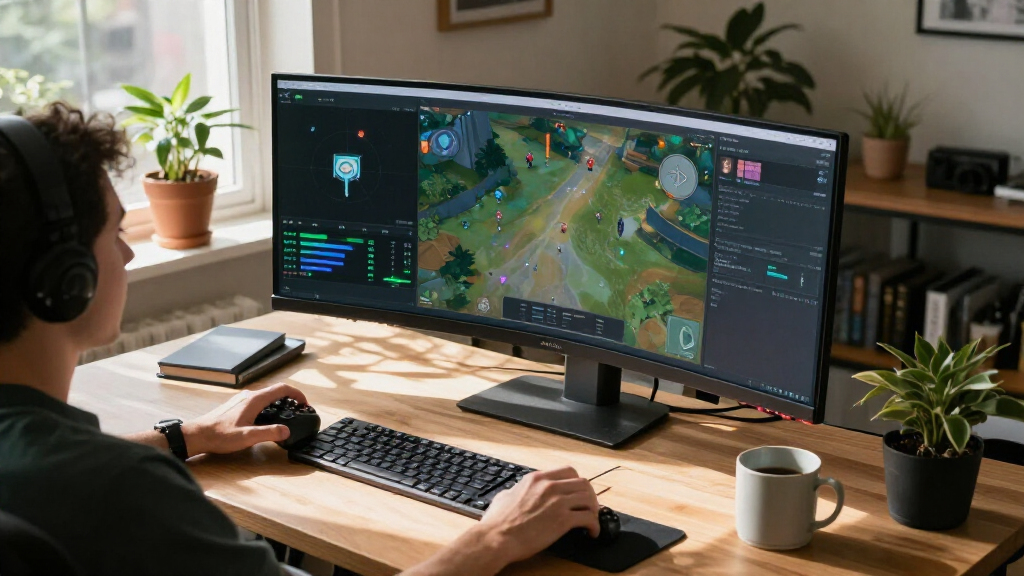
Realtime-Bench was developed by researchers affiliated with the University of Texas at Austin, Ohio State University, the University of Illinois Urbana-Champaign, NVIDIA, Northwestern University and Steadyworks. The benchmark contains 50 interactive tasks: 30 web tasks covering travel, e-commerce, services and security, and 20 games spanning arcade, puzzle, strategy and simulation categories. Its central test is whether an agent can make decisions while the situation changes, rather than simply produce a correct answer without a deadline.
The researchers assess state tracking, time-sensitive deliberation and action timing. Their example is an agent buying a ticket: it must track whether availability has changed, avoid spending too long reasoning as a sale window closes, and choose when to purchase. The benchmark offers a wall-clock setting intended to reflect real latency, a paused-clock setting that isolates capability from delay, and a token-clock setting in which generating more tokens advances the simulated environment before an action is taken.
According to the newsletter’s account of the paper, GPT-6 Astra in a high-reasoning configuration recorded the best wall-clock pass rate at 36%. With the clock paused, high-reasoning models approached 70% or 80% success. Those figures describe the reported benchmark conditions, not a general success rate for all real-world AI use. Separately, the DIA report describes a range of counterspace capabilities being developed or tested by countries including China and Russia, from jamming and cyber operations to systems that could interfere with or damage satellites.
Why Real-Time Agent Scores Matter
The benchmark focuses on a gap that can be hidden by evaluations where models have unlimited time to respond. In ticket purchasing, online auctions, games or other changing environments, a sound decision delivered too late may be useless. The contrast between the 36% wall-clock result and much higher paused-clock performance suggests that latency and decision timing can materially affect performance in these tests, even when a model can solve similar tasks without the clock running.
That matters for anyone considering AI agents for tasks that involve live websites or fast-moving information. Realtime-Bench does not show that every agent will fail in every such situation, nor does it establish performance across all services. It does offer a structured way to test a specific limitation before delegating actions with financial, operational or security consequences. The space-security material carries a different but related implication: satellite services face risks that can affect communications, navigation and military operations, though the newsletter excerpt does not quantify likely disruption or predict a specific conflict.
Products Worth Considering

Logitech MX Master 4 for Mac Wireless Ergonomic Mouse, Space Black

Samsung Galaxy Tab S10 Lite – 6 GB RAM, 128 GB storage, up to 2 TB microSD, 10.9‑inch LCD, Gray

LG UltraGear 34GX90SA-W 34-inch WQHD Curved OLED Gaming Monitor
As an affiliate, we earn on qualifying purchases.
Two Tests of AI and Security
Realtime-Bench’s three clock settings are designed to distinguish different sources of failure. The paused-clock condition provides a rough measure of what models can do when delay is removed; the wall-clock condition includes real inference latency; and the token-clock condition links simulated delay to the number of tokens generated. Comparing them can help researchers identify whether errors stem from reasoning limits, stale observations or actions arriving too late. The reported score gap is tied to this benchmark and should not be treated as a universal ranking of AI systems.
The issue also summarizes the DIA’s report, Challenges to Security in Space. The newsletter quotes the agency as saying that China and Russia are developing capabilities to degrade or destroy other countries’ space services, including kinetic, jamming and cyber methods. It reports that China’s annual space launches rose from 22 in 2016 to 93 in 2025, according to the DIA. The agency’s assessment, as presented in the newsletter, describes possible capabilities and strategic judgments; it does not mean every cited system is operational or that an attack is underway.
““A suite of carefully curated dynamic tasks where delayed actions directly affect success.””
— Realtime-Bench researchers, as quoted in Import AI
Limits of the Reported Evidence
The source excerpt does not provide the full Realtime-Bench paper, detailed results for each model, confidence intervals, or enough information to assess how representative the 50 tasks are of everyday agent use. The reported rates are benchmark outcomes under specified conditions; how they translate to particular products or live services remains unclear. The model names and results are presented as reported by Import AI, and the excerpt does not independently establish their release status.
The supplied material also ends partway through the discussion of satellite-on-satellite activity. It does not provide the full account of the DIA report, establish the operational status of all the systems mentioned, or describe any current attack. Genie 4 is named only in the issue title: no announcement, technical description, attribution or timing for it appears in the provided text. Its connection to the other topics cannot be confirmed from this source.
Further Results and Genie 4 Details
The next useful step for readers assessing the AI findings is to consult the Realtime-Bench paper and its official leaderboard for task-level scores, evaluation methods and model conditions. Further testing across different live environments would help establish whether the performance gap persists beyond the benchmark’s selected tasks. The source does not state a planned follow-up date or a new evaluation milestone.
For the space-security section, the full DIA report is needed to check the surrounding evidence and qualifications behind the capabilities described. No specific response, deployment or policy decision is identified in the excerpt. More information is also needed before Genie 4 can be reported as a substantive development; the supplied material contains no details about what it is or what may happen next.
Key Questions
What is Realtime-Bench?
Realtime-Bench is an evaluation of AI systems on 50 interactive web and game tasks where delay can change the outcome. It tests whether models track changing conditions, adjust deliberation to available time and time their actions appropriately.
How did the top reported model perform?
Import AI reports that GPT-6 Astra in a high-reasoning configuration had the highest pass rate in the wall-clock evaluation, at 36%. The newsletter says high-reasoning models approached 70% or 80% when the clock was paused; those results apply to the benchmark’s stated conditions.
Why compare wall-clock and paused-clock results?
The comparison helps separate performance when inference takes real time from performance when the environment is stopped during reasoning. In a changing task, delay can make an observation outdated or an action arrive too late.
What does the DIA report say about space threats?
As summarized by Import AI, the DIA describes Chinese and Russian efforts involving potential kinetic, jamming, cyber and directed-energy capabilities that could threaten satellites or space services. Some statements are assessments or projections, and the excerpt does not confirm that every capability is deployed.
What is Genie 4?
The supplied source names Genie 4 in the newsletter title but does not explain what it is, who developed it, or whether it was announced. No further details can be confirmed from the excerpt.
Source: importai.substack.com