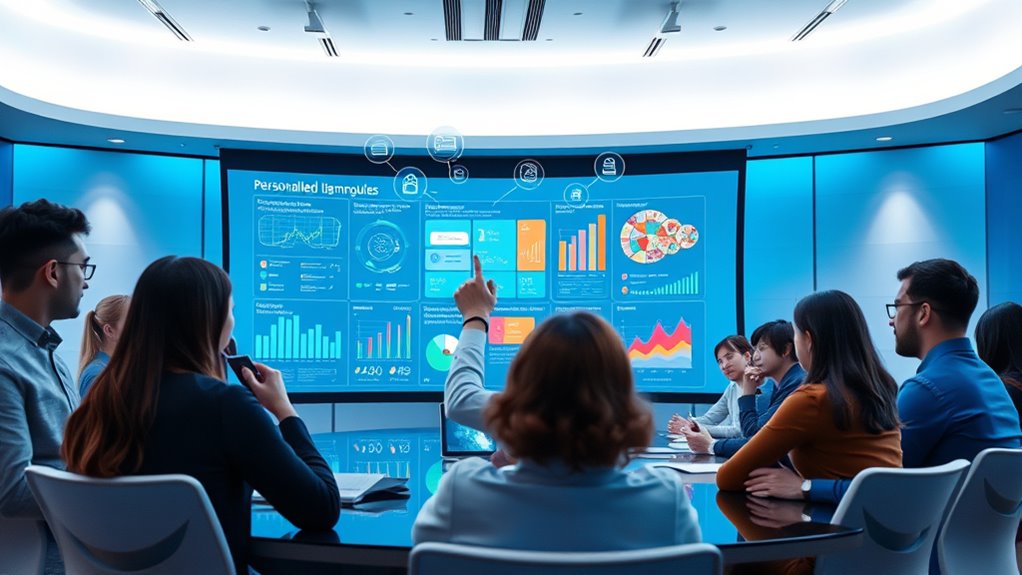

AI-driven corporate training personalizes learning by creating tailored programs that match your employees’ individual needs and preferences. It analyzes their learning styles, tracks progress, and provides real-time feedback, making training more engaging and effective. This adaptive approach boosts motivation, helps identify skill gaps quickly, and offers targeted development plans. As you explore further, you’ll discover how these intelligent solutions can transform workforce growth and keep your team ahead in today’s fast-changing industry.

Get business pricing on tech for your team
- Business-only prices and quantity discounts
- Tax-exempt purchasing
- Multiple users, one account, clear invoices
Key Takeaways
- AI personalizes training pathways by analyzing individual learning styles, preferences, and progress for more relevant content.
- It enhances engagement through interactive, tailored training materials that motivate employees and improve knowledge retention.
- Real-time AI assessments monitor performance continuously, identifying skill gaps and enabling targeted development interventions.
- Adaptive learning platforms adjust difficulty levels and content pacing to support ongoing growth and prevent overwhelm.
- Data-driven insights from AI predict future training needs, helping organizations proactively develop targeted skill enhancement programs.
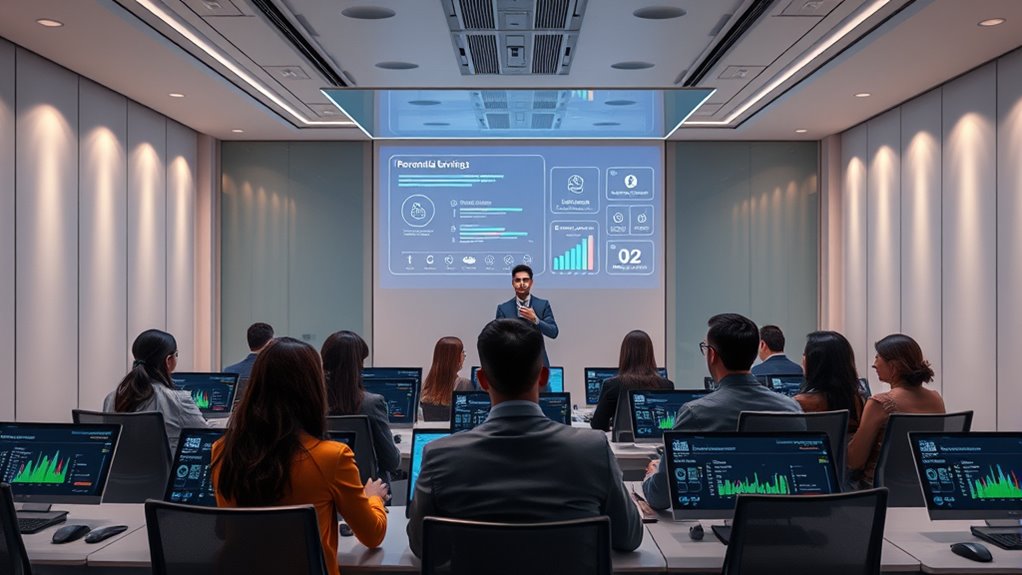
Artificial intelligence is transforming corporate training by making learning more personalized and efficient. With AI, you can craft tailored learning experiences that directly address each employee’s needs, boosting both engagement and productivity. One of the key benefits is enhanced employee engagement, as training programs become more relevant and interactive. Rather than forcing everyone into a one-size-fits-all approach, AI analyzes individual learning styles, preferences, and progress to deliver content that resonates. When employees find the material engaging and suited to their skill levels, they’re more likely to participate actively, retain knowledge, and stay motivated.
AI personalizes corporate training to boost engagement, retention, and motivation.
Additionally, AI streamlines skill assessment, allowing you to identify gaps and strengths accurately and quickly. Traditional assessments often rely on tests or quizzes that may not reflect real-world application, but AI-powered tools can monitor performance during training activities, providing real-time insights. This continuous evaluation helps you understand where each employee stands, enabling targeted interventions to reinforce weak areas or accelerate growth in areas of strength. As a result, you can develop personalized development plans that keep employees on the right track, enhancing overall workforce competence.
Moreover, AI-driven platforms adapt dynamically to individual progress, offering new challenges or revisiting foundational concepts as needed. This adaptive learning ensures that employees aren’t stuck on basics or overwhelmed by advanced topics prematurely. By continuously adjusting to their pace, AI fosters a sense of achievement and keeps motivation high, which is crucial for sustained engagement. This personalized approach not only improves learning outcomes but also reduces frustration and dropout rates, making training sessions more effective and enjoyable.
You also benefit from AI’s ability to analyze large volumes of data to identify trends and predict future learning needs. For example, if patterns show certain skill gaps emerging across teams, you can proactively address these issues with targeted training modules, preventing problems before they escalate. This proactive strategy keeps your workforce agile, responsive, and well-prepared for evolving industry demands. Furthermore, understanding the self-watering plant pots concept helps illustrate how targeted and adaptive solutions can optimize growth—whether for plants or employee skills—by providing the right resources at the right time.
AI-powered corporate training platform
As an affiliate, we earn on qualifying purchases.
As an affiliate, we earn on qualifying purchases.
Frequently Asked Questions
How Can AI Personalize Training for Diverse Employee Skill Levels?
You can personalize training for diverse skill levels by using skill assessments to identify each employee’s strengths and gaps. Then, leverage AI to customize content tailored to their needs, ensuring they receive appropriate challenges and support. This targeted approach helps employees stay engaged and grow at their own pace, making learning more effective and efficient. With continuous feedback, AI adapts training to keep everyone progressing ideally.
What Are the Costs Associated With Implementing Ai-Driven Training Systems?
You might worry about costs, but with a thorough cost analysis and careful budget planning, implementing AI-driven training systems becomes manageable. Initial expenses include software, hardware, and integration, but these often pay off through improved efficiency and employee engagement. Ongoing costs involve updates and support, yet many organizations find the long-term benefits outweigh the investment. Proper planning guarantees you maximize value without exceeding your budget.
How Do Companies Ensure Data Privacy With AI in Training Programs?
You guarantee data privacy in AI training by implementing strict data encryption protocols to protect sensitive information. Always obtain clear user consent before collecting or processing employee data, making sure they understand how their information will be used. Regularly review and update privacy policies, and limit data access to authorized personnel. These steps help maintain trust while complying with data protection regulations and safeguarding employee privacy.
Can AI Adapt Training Content in Real-Time During Sessions?
Yes, AI can adapt training content in real-time during sessions. It uses adaptive feedback to monitor your progress and engagement, then dynamically customizes the content to suit your learning pace and style. This personalized approach guarantees you receive relevant information and support exactly when needed, enhancing your understanding and retention. By continuously adjusting, AI creates a more effective and engaging training experience tailored specifically to you.
What Metrics Are Used to Measure AI Training Effectiveness?
You might notice that engagement metrics and skill proficiency scores are key indicators of AI training effectiveness. These metrics reveal how well participants stay involved and how much they’ve improved. When you track engagement, you see if learners are actively participating. Skill proficiency measures their mastery over time. Combining these metrics helps you understand if the AI is truly enhancing learning outcomes and adapting to your team’s needs effectively.
personalized employee learning software
As an affiliate, we earn on qualifying purchases.
As an affiliate, we earn on qualifying purchases.
Conclusion
Think of AI-driven corporate training as a tailored suit—perfectly fitted to your employees’ unique needs. It molds itself around each learner, guiding them smoothly along their growth path. As you embrace this technology, you’re not just investing in tools—you’re nurturing a workforce that’s agile, skilled, and ready to face tomorrow’s challenges. With personalized learning lighting the way, your company can navigate the future with confidence and clarity.
adaptive learning management system
As an affiliate, we earn on qualifying purchases.
As an affiliate, we earn on qualifying purchases.
real-time performance assessment tools
As an affiliate, we earn on qualifying purchases.
As an affiliate, we earn on qualifying purchases.
Fall Picks
fall essentials
As an affiliate, we earn on qualifying purchases.