
You might not realize it, but AI at work creates a hidden workforce performing essential tasks like data cleaning, tuning, and monitoring. These efforts keep AI systems running smoothly but often go unnoticed and unrecognized. This invisible labor raises ethical concerns, impacts wages, and deepens social inequalities. If you want to understand how this quiet work influences technology and society—and what can be done about it—there’s more to uncover ahead.
Key Takeaways
- Invisible AI labor involves essential but unnoticed tasks like data cleaning and model monitoring that support AI functionality.
- Workers performing these tasks often lack recognition, fair pay, and clear accountability, raising ethical concerns.
- Automation shifts routine tasks from visible roles to unseen labor, impacting wages and career progression.
- Unacknowledged labor can deepen social inequalities and erode public trust in AI systems.
- Recognizing and valuing this hidden work is crucial for ethical, fair, and sustainable AI integration in workplaces.

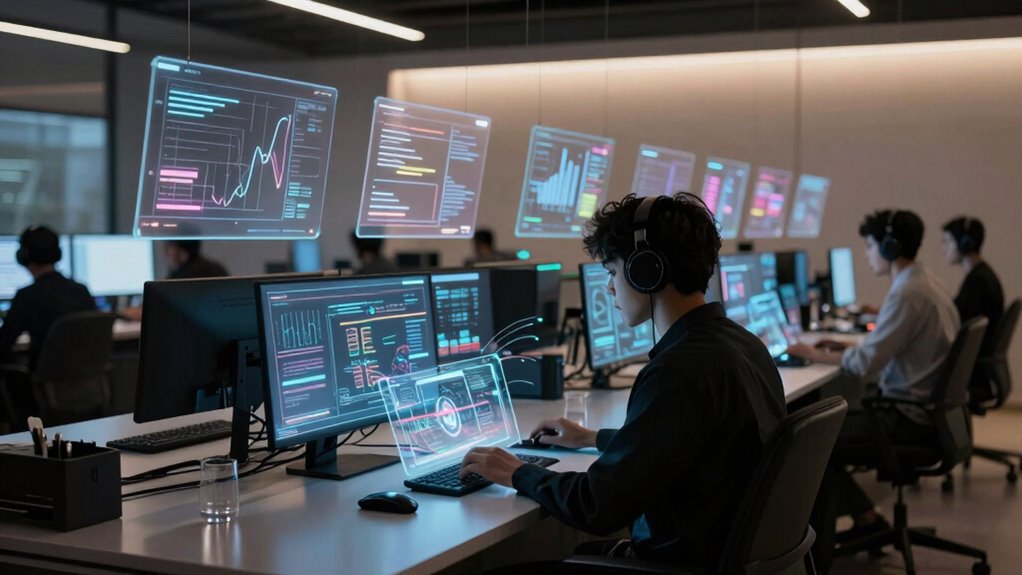
As artificial intelligence becomes more integrated into workplaces, a new form of invisible labor is emerging—tasks that often go unnoticed but are indispensable for keeping AI systems running smoothly. You might not see this work, but it’s the backbone of many AI operations, involving activities like data cleaning, model tuning, and constant monitoring. This hidden effort guarantees AI functions correctly, yet it raises significant ethical implications. Who is responsible when AI makes mistakes or perpetuates biases? Because this labor is often invisible, those performing it may lack recognition or fair compensation, raising questions about fairness and transparency. Without clear accountability, companies and workers alike could face moral dilemmas, especially as AI becomes more autonomous and complex. Recognizing the invisible labor involved in AI maintenance is crucial for fostering a fair and sustainable work environment.
Beyond ethical concerns, the economic impacts of this invisible labor are profound. You might think automation reduces jobs, but here’s the catch: it often shifts tasks from visible, traditional roles to these unseen jobs. Workers may find themselves performing repetitive, low-profile tasks that are essential but undervalued. This can depress wages and limit career progression, creating a new class of workers who are necessary yet marginalized. This shift also highlights how labor undervaluation can distort labor markets and hinder fair compensation. Additionally, as these tasks are less visible, companies may lack the incentives to invest in proper training or recognition. For organizations, neglecting to properly recognize or compensate this labor can lead to long-term issues, including decreased morale, higher turnover, and a public relations risk if these practices come to light. Properly recognizing and valuing this work can improve job satisfaction and retention among these workers. Conversely, properly valuing this work can enhance AI performance, leading to more efficient operations and economic gains. But the challenge remains: how do you assign value and responsibility to work that’s inherently invisible?
Invisible AI labor shifts jobs, depresses wages, and risks marginalizing essential yet overlooked workers.
You also need to contemplate the long-term societal effects. If this invisible labor isn’t acknowledged, it could deepen existing inequalities—where a small group benefits from AI advancements while the workers behind the scenes struggle with job insecurity and poor working conditions. This dynamic might widen the gap between those who control AI technology and those who maintain or support it. Furthermore, ignoring the ethical implications could undermine public trust in AI systems, especially if people suspect that biases or errors are rooted in overlooked human effort. Recognizing and addressing these issues isn’t just about fairness; it’s about safeguarding the integrity and sustainability of AI-driven workplaces. As AI continues to evolve, the importance of transparent policies around worker recognition and fair labor practices will only grow.
In the end, your role involves understanding that these unseen tasks are indispensable to AI’s success. By advocating for fair policies and transparent practices, you can help guarantee that the economic benefits of AI don’t come at the expense of ethical standards or worker dignity. Balancing innovation with responsibility isn’t easy, but it’s essential for creating a future where AI benefits everyone, not just those behind the scenes.

32 in 1 Cell Phone Cleaning kit with Charging Port Cleaner,Stylus Pen,SIM Tool,Keyboard Brush,Speaker Brush,Electronic Cleaning kit for iPhone,AirPods,iPad,Keyboard,MacBook,Earbud,Camera Lens(White)
Keyboard cleaner kit: equipped with a key remover to solve your trouble of difficult key removal, and a…
As an affiliate, we earn on qualifying purchases.
As an affiliate, we earn on qualifying purchases.
Frequently Asked Questions
How Does Invisible Labor Impact Employee Mental Health?
Invisible labor can profoundly impact your mental health by increasing emotional exhaustion and stress. When you’re expected to handle unseen tasks, it can lead to burnout and feelings of being undervalued. This makes mental health awareness essential, so you recognize the signs early. Prioritize self-care, set boundaries, and communicate openly with your team to reduce the negative effects of invisible labor on your mental well-being.
Are There Legal Protections for Invisible Workers?
You might wonder if there are legal protections for invisible workers. Currently, legal recognition of these workers varies, and many lack specific protections. Worker rights often focus on visible roles, leaving invisible labor unprotected. This gap means you may not get full legal safeguards for tasks done behind the scenes. Advocates are pushing for expanded laws to recognize and protect all workers, ensuring fair treatment regardless of visibility.
How Can Companies Measure Invisible Labor Contributions?
How can you effectively measure invisible labor contributions? You need to prioritize data transparency by tracking detailed performance metrics that reveal unseen efforts. Rhetorically, isn’t it unfair to overlook work that doesn’t appear in traditional metrics? By implementing thorough monitoring tools and encouraging open communication, you gain clearer insights into these contributions, ensuring recognition and fair evaluation. This approach helps you value all labor, visible or not.
What Industries Are Most Affected by Invisible Ai-Driven Labor?
You’ll find industries like customer service, healthcare, and finance are most affected by invisible AI-driven labor. Automation bias often leads you to overlook the unseen productivity AI provides, while the real work happens behind the scenes. As AI handles routine tasks, your focus shifts, making it harder to see the true value. Recognizing this invisible labor helps you understand how AI enhances efficiency without direct visibility.
How to Recognize and Value Invisible Work Ethically?
To recognize and value invisible work ethically, you should address recognition gaps by actively acknowledging contributions often overlooked. Foster a culture that appreciates all effort, guaranteeing fair compensation and acknowledgment. Practice ethical valuation by transparently measuring effort and impact, avoiding exploitation. By doing so, you respect workers’ dignity, promote fairness, and guarantee that invisible labor receives proper appreciation, ultimately creating a more inclusive and just work environment.

Agentic AI Unleashed: A guide to designing, building, and deploying autonomous AI systems (English Edition)
As an affiliate, we earn on qualifying purchases.
As an affiliate, we earn on qualifying purchases.
Conclusion
As you benefit from AI’s efficiency, remember it’s also creating a hidden workforce you seldom see. While invisible labor fuels progress, it often goes unnoticed and unrecognized, much like the air we breathe—essential yet invisible. You might enjoy seamless services today, but behind the scenes, countless unseen workers keep the system running. So, as technology advances, don’t forget the silent effort behind every convenient click, reminding you that progress often comes with unseen costs.

Pivo Equestrian Starter Pack Auto Tracking Phone Holder, Face, Body & Horse Tracker, 360° Rotation, 6 Speed, Stand for Video Recording (Blue)
AUTO TRACKING FOR ATHLETES: Perfect for atheltes and aspiring creators. With powerful app-driven motion tracking, faster 360° rotation,…
As an affiliate, we earn on qualifying purchases.
As an affiliate, we earn on qualifying purchases.

#1 AI FOR BEGINNERS GUIDE: AI Made Simple: Your Step-by-Step Guide to Understanding, Using, and Thriving with Artificial Intelligence in Everyday Life and Beyond
As an affiliate, we earn on qualifying purchases.
As an affiliate, we earn on qualifying purchases.