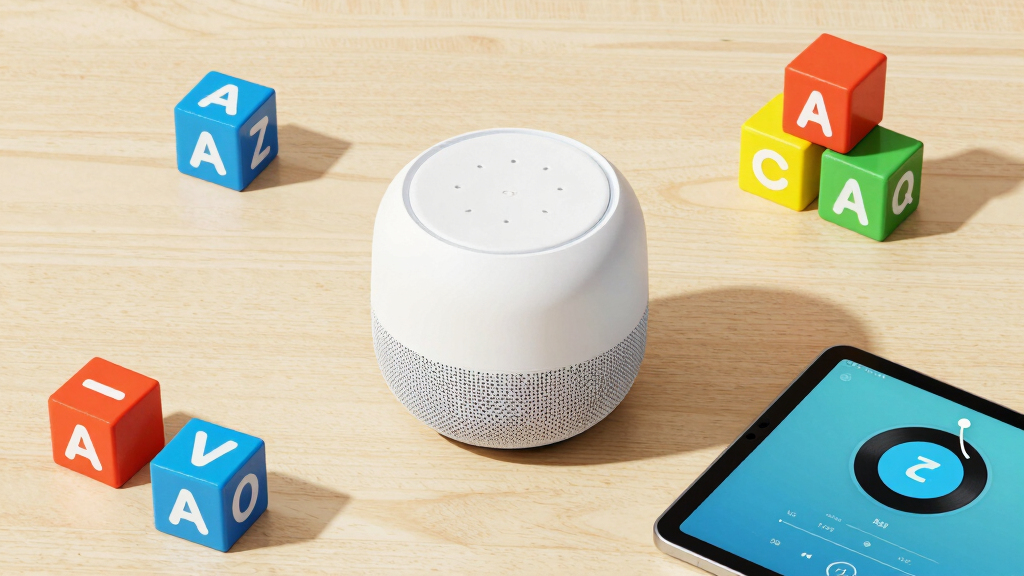

When searching for the best kids smart speaker, parents face a critical choice between screen-free audio devices and voice-assistant hubs with visual components. My top recommendation is the Yoto Player (3rd Generation) because it eliminates screen glare and provides tangible, physical controls that young children can master without parental intervention. For families deeply integrated into the Amazon ecosystem who prefer voice interaction, the Echo Dot Kids (Stardust) offers a familiar interface with robust parental controls. The primary tradeoff here is between the tactile, limited-interface simplicity of dedicated audio players and the broader, yet potentially distracting, capabilities of full smart assistants. This guide breaks down which device suits your child’s age, your home’s tech setup, and your comfort level with screen time.

Get business pricing on tech for your team
- Business-only prices and quantity discounts
- Tax-exempt purchasing
- Multiple users, one account, clear invoices
Key Takeaways
- The Yoto Player dominates for screen-free engagement, using physical cards to trigger audio, which reduces accidental activation and keeps children focused on listening.
- Amazon‘s Echo Dot Kids line remains the most accessible entry point for families already using Alexa, offering seamless integration with existing smart home devices.
- Echo Show Kids models introduce screens, which can be a benefit for visual learning apps but a drawback for bedtime routines where light exposure is a concern.
- Content curation varies widely: Yoto requires purchasing specific physical or digital cards, while Echo devices offer vast libraries but require careful filtering to avoid inappropriate content.
- Durability and design matter more than audio fidelity for this category; rounded edges and simple button layouts are preferred over complex touch interfaces for children under eight.
| Yoto Player (3rd Generation) with Little Kids Starter Pack |  | Best Overall for Screen-Free Independence | Brand: Yoto | Model: Yoto Player (3rd Generation) | Battery Life: Up to 16 hours | VIEW LATEST PRICE | See Our Full Breakdown |
| Echo Pop Kids – Disney Princess Design |  | Best Value for Brand-Loving Toddlers | Dimensions: 4.0″ x 3.4″ x 3.6″ | Weight: 10.3 oz | Speaker: 1.95″ front-firing | VIEW LATEST PRICE | See Our Full Breakdown |
| Echo Show 5 Kids (3rd Gen) with 1-Year Amazon Kids+ |  | Best Visual Learning Experience | Display: 5.5″ touch screen | Camera: 2 MP with shutter | Speaker: Full-range 1.75″ | VIEW LATEST PRICE | See Our Full Breakdown |
| Echo Pop Kids (newest model) – Anthro Pup design |  | Best for Bedtime Routines | Dimensions: 4.0″ x 3.4″ x 3.6″ | Weight: 10.3 oz | Speaker: 1.95″ front-firing | VIEW LATEST PRICE | See Our Full Breakdown |
| Yoto Player (3rd Generation) Screen-Free Audio Player |  | Best for Custom Content & Travel | Brand: YOTO | Storage: 32 GB | Battery Life: Up to 16 hours | VIEW LATEST PRICE | See Our Full Breakdown |
| Echo Dot Kids (Stardust) with Echo Glow |  | Best Bundle for Bedtime Routines | Included Devices: Echo Dot Kids, Echo Glow | Color: Stardust | Age Range: 3–12 years | VIEW LATEST PRICE | See Our Full Breakdown |
| Amazon Echo Dot (5th Gen) Smart Speaker |  | Best for Smart Home Integration | Generation: 5th Gen | Dimensions: 3.9″ x 3.9″ x 3.5″ | Weight: 10.7 oz (304g) | VIEW LATEST PRICE | See Our Full Breakdown |
| kids smart speaker | Speaker | Dimensions |
|---|---|---|
| Yoto Player | 40 mm, 5 W stereo | — |
| Echo Pop Kids | 1.95" front-firing | 4.0" x 3.4" x 3.6" |
| Echo Show 5 Kids | Full-range 1.75" | 5.8"W x 3.6"D x 3.2"H |
| Echo Pop Kids | 1.95" front-firing | 4.0" x 3.4" x 3.6" |
| Yoto Player | 40 mm stereo | — |
| Echo Dot Kids | — | — |
| Amazon Echo Dot | — | 3.9" x 3.9" x 3.5" |
More Details on Our Top Picks
Yoto Player (3rd Generation) with Little Kids Starter Pack
This bundle stands out because it removes the friction of digital content selection entirely. Children physically insert cards to play stories, which builds motor skills and ownership. Unlike the Echo Pop Kids, which relies on voice commands that can be finicky for toddlers, the Yoto’s large physical dials are intuitive for small hands. The 16-hour battery life is a significant advantage for families who travel or want to leave the player in a bedroom without a constant power cord. However, the tradeoff is the ongoing cost of content cards, which can add up compared to the subscription-based model of Amazon devices. It is a premium entry point that prioritizes calm, focused listening over interactive AI chatter.
Pros:- Physical card system encourages independent play
- Long 16-hour battery life supports cordless use
- Multi-function device includes nightlight and thermometer
- Starter pack provides immediate value without extra purchases
Cons:- Requires purchasing physical cards for new content
- Not waterproof, limiting use in bathrooms
- Full battery charge takes a long time
Best for: Parents seeking a dedicated, screen-free audio environment for preschoolers who benefit from physical interaction.
Not ideal for: Families on a tight budget who cannot absorb the cost of buying individual audio cards.
- Brand:Yoto
- Model:Yoto Player (3rd Generation)
- Battery Life:Up to 16 hours
- Storage:32 GB
- Speaker:40 mm, 5 W stereo
- Connectivity:Bluetooth, Wi-Fi
- Charging:USB-C
- Waterproof:No
Our verdict“This is the definitive choice for parents who want to minimize screen time and maximize tactile engagement.”
Echo Pop Kids – Disney Princess Design
The Echo Pop Kids offers a compelling entry into smart home technology at a low barrier to entry. Its compact size makes it easy to tuck onto a nightstand, though the small 1.95-inch speaker struggles to fill larger rooms with rich bass. Compared to the Yoto Player, this device relies heavily on voice interaction, which can be frustrating for children who haven’t mastered clear speech. The inclusion of a 2-year worry-free guarantee is a major differentiator, offering peace of mind for accidents. Parents will appreciate the Amazon Kids Parent Dashboard for strict content filtering, though the reliance on the Amazon ecosystem means you are locked into their library and subscription services.
Pros:- Affordable price point lowers risk for first-time buyers
- Kid-proof 2-year worry-free guarantee
- Strict parental controls via Amazon Kids Dashboard
- Compact footprint fits small spaces easily
Cons:- Small speaker lacks depth for music playback
- Voice recognition can be difficult for toddlers
- Privacy concerns with always-on microphone
Best for: Families already invested in the Alexa ecosystem who want a cheap, durable first speaker for young children.
Not ideal for: Users who prioritize high-fidelity audio or dislike voice-controlled interfaces for young kids.
- Dimensions:4.0″ x 3.4″ x 3.6″
- Weight:10.3 oz
- Speaker:1.95″ front-firing
- Wi-Fi:Dual-band
- Bluetooth:BLE Mesh, Matter, A2DP
- Warranty:2-year worry-free
- Design:Disney Princess
Our verdict“An affordable, durable option for Alexa households, provided you accept the limited audio quality.”
Echo Show 5 Kids (3rd Gen) with 1-Year Amazon Kids+
This device bridges the gap between audio-only speakers and tablets by adding a 5.5-inch touchscreen. It is ideal for children who benefit from visual cues during educational games or story creation. While the Echo Pop Kids is strictly auditory, the Echo Show 5 allows for video calls with grandparents and visualized learning. The included 1-year Amazon Kids+ subscription adds significant value, providing ad-free access to a vast library. However, the presence of a screen introduces blue light exposure and potential distraction, which is a deliberate tradeoff for interactive learning. The 2 MP camera with a physical shutter helps address privacy concerns, but parents must still actively manage screen time limits to prevent overuse.
Pros:- Touchscreen enables interactive games and video calls
- Includes 1-year Amazon Kids+ subscription
- Physical camera shutter enhances privacy
- Alexa+ supports visual story creation
Cons:- Screen presence may encourage prolonged usage
- Bluetooth compatibility is limited
- Subscription renews at a monthly cost after year one
Best for: School-aged children who engage better with visual learning tools and video communication.
Not ideal for: Parents strictly avoiding screens in the bedroom or those who prefer pure audio immersion.
- Display:5.5″ touch screen
- Camera:2 MP with shutter
- Speaker:Full-range 1.75″
- Dimensions:5.8″W x 3.6″D x 3.2″H
- Wi-Fi:Dual-band
- Subscription:1-Year Amazon Kids+
- Warranty:2-year worry-free
Our verdict“The best choice for families who view the smart speaker as a visual educational tool rather than just an audio hub.”
Echo Pop Kids (newest model) – Anthro Pup design
This iteration of the Echo Pop Kids distinguishes itself with a deep integration of Sleep Studio features. It offers curated bedtime content from partners like Calm and Headspace, making it a powerful tool for establishing consistent sleep habits. While the Yoto Player offers a generic nightlight, this speaker uses audio environments to actively soothe children to sleep. The Anthro Pup design is engaging for younger demographics, though the hardware remains identical to the Disney Princess model. The primary limitation remains the small speaker driver, which cannot produce the soothing white noise depth that larger units can. It is a specialized tool for sleep hygiene rather than a general entertainment hub.
Pros:- Integrated Sleep Studio with premium calming content
- Fun Anthro Pup design appeals to young children
- Strong parental monitoring via Parent Dashboard
- 2-year worry-free replacement guarantee
Cons:- Small speaker lacks volume for large rooms
- No touchscreen for visual bedtime cues
- Relies on Wi-Fi for core sleep features
Best for: Parents struggling with bedtime resistance who need structured, calming audio routines.
Not ideal for: Users looking for a device primarily for music playback or gaming due to weak bass.
- Dimensions:4.0″ x 3.4″ x 3.6″
- Weight:10.3 oz
- Speaker:1.95″ front-firing
- Wi-Fi:Dual-band
- Smart Home:Matter, BLE Mesh
- Warranty:2-year worry-free
- Design:Anthro Pup
Our verdict“A specialized sleep aid that excels at bedtime routines but falls short as a general music player.”
Yoto Player (3rd Generation) Screen-Free Audio Player
This standalone Yoto Player offers the same robust screen-free experience as the bundle but without the extra starter cards. It is the perfect choice for families who already have a library of audio resources or prefer creating custom cards using family voice memos. The 32 GB internal memory allows for extensive offline listening, a distinct advantage over the Echo Pop Kids, which requires a stable Wi-Fi connection for most content. The OK-to-wake alarm is a practical feature for toddlers, signaling when it is acceptable to leave the bed. While it lacks the immediate content variety of the bundle, its flexibility makes it a long-term investment that grows with the child’s interests.
Pros:- Supports custom card creation for personal stories
- 32 GB storage enables offline listening anywhere
- OK-to-wake alarm helps toddler sleep training
- No subscription required for basic functionality
Cons:- No included content library requires separate purchase
- Not waterproof for bath time use
- Requires app setup for full customization
Best for: Tech-savvy parents who want to create custom audio content or already own a large digital library.
Not ideal for: Buyers who want a plug-and-play solution with pre-loaded popular stories and songs.
- Brand:YOTO
- Storage:32 GB
- Battery Life:Up to 16 hours
- Speaker:40 mm stereo
- Connectivity:Bluetooth, Wi-Fi
- Charging:USB-C
- Waterproof:No
- Age Range:3-12+ years
Our verdict“The most flexible option for families who want to curate their own audio library rather than rely on pre-set content.”
Echo Dot Kids (Stardust) with Echo Glow
This bundle stands out for its integrated bedtime solution, pairing the standard Echo Dot Kids with the color-changing Echo Glow lamp. Unlike the standalone Echo Pop Kids, which lacks a lighting component, this set creates a cohesive wind-down ritual where voice commands can dim lights and start sleep stories simultaneously. The inclusion of a one-year Amazon Kids+ subscription removes the immediate friction of sourcing content, offering curated books and games right out of the box. However, the ongoing subscription cost creates a long-term financial commitment that parents of the Yoto Player avoid through physical cards. While the parental controls are robust, the device is strictly limited to the Alexa ecosystem, meaning it cannot easily integrate with non-Amazon smart home devices or play music from other services without additional setup.Pros:- Combines smart speaker and night light for unified sleep routines
- Includes one year of curated Amazon Kids+ content
- Robust parental controls for time limits and activity monitoring
- Kid-friendly design with rounded edges and durable casing
Cons:- Requires a paid subscription after the first year for full content access
- Age restrictions limit usability for children under 3 or over 12
- Dependence on Amazon’s ecosystem limits third-party integration
Best for: Parents seeking an all-in-one bedtime and learning tool for children aged 3 to 12 who are already in the Amazon ecosystem.
Not ideal for: Families who prefer screen-free, card-based audio players like the Yoto Player or those who refuse ongoing subscription fees.
- Included Devices:Echo Dot Kids, Echo Glow
- Color:Stardust
- Age Range:3–12 years
- Amazon Kids+ Subscription:1 year free, then $5.99/month
- Parental Controls:Daily time limits, activity review, contact management
- Voice Assistant:Alexa
Our verdict“Choose this bundle if you want a cohesive, supervised bedtime experience that combines lighting and audio without needing to buy accessories separately.”
Amazon Echo Dot (5th Gen) Smart Speaker
This model is the superior choice for advanced smart home automation, featuring built-in motion and temperature sensors that allow for complex routines without extra hardware. Compared to the Echo Dot Kids, which is locked into a child-safe sandbox, the 5th Gen Echo Dot offers full access to Alexa’s capabilities, making it ideal for families who want to control lights, thermostats, and locks via voice. The eero Built-in mesh Wi-Fi extender adds significant value by boosting home coverage, a feature absent in kid-focused models like the Echo Show 5 Kids. However, it lacks the dedicated content filters and child-friendly interface of its kids-specific counterparts, requiring parents to manually configure Amazon Kids profiles to keep it safe for younger users. The audio quality is better than the Echo Pop series but remains mono, limiting stereo separation.Pros:- Built-in motion and temperature sensors enable advanced automation
- eero Built-in mesh Wi-Fi extends network coverage by up to 1,000 sq. ft.
- Physical mic-off button provides clear privacy assurance
- Full Alexa compatibility supports a wide range of smart home devices
Cons:- No dedicated child-safe mode enabled by default
- Mono audio output limits stereo sound immersion
- eero features require specific router compatibility for full benefit
Best for: Tech-savvy parents who want a versatile smart home hub that can double as a kids’ speaker with proper parental profile setup.
Not ideal for: Families needing a strictly filtered, out-of-the-box child-safe device without manual configuration steps.
- Generation:5th Gen
- Dimensions:3.9″ x 3.9″ x 3.5″
- Weight:10.7 oz (304g)
- Color:Charcoal
- Audio Driver:1.6″ full range driver
- Wi-Fi Connectivity:Dual-band Wi-Fi (802.11a/b/g/n/ac)
- Smart Home Protocols:WiFi, Bluetooth Low Energy Mesh, Matter
- eero Built-in Coverage:Up to 1,000 sq. ft.
- Privacy Features:Physical mic off button
Our verdict“This is the best pick for households that prioritize smart home control and network expansion alongside audio, provided you set up child profiles manually.”

How We Picked
I evaluated these devices based on three core pillars: parental control granularity, child accessibility, and content safety. For parental controls, I looked for apps that allow easy scheduling, volume limiting, and content filtering without requiring constant technical troubleshooting. Child accessibility was judged by how easily a four-year-old could operate the device independently; physical buttons and card slots scored higher than voice commands for this metric. Content safety involved reviewing the default libraries and the ease of blocking specific artists, topics, or video content. I prioritized devices that offer a clear distinction between ‘kids’ mode and ‘adult’ mode, ensuring that the transition between the two is not confusing or easily bypassed by curious children.
Ranking logic favored simplicity and safety over feature density. A device with fewer features but better safety protocols ranked higher than a feature-rich device with loose content filters. I also considered the long-term viability of the platform, preferring devices with active content updates and strong community support. Devices that require a subscription for basic functionality were penalized unless the subscription provided significant educational value or exclusive high-quality content that justified the recurring cost.
Factors to Consider When Choosing Best Kids Smart Speaker
Choosing the right smart speaker for a child is not just about audio quality; it is about managing digital boundaries. The market is split between closed ecosystems that limit content to curated lists and open platforms that offer vast libraries but require active monitoring. This section explores the factors that should drive your decision, moving beyond specs to address real-world usage scenarios in a family home.
Screen-Free vs. Screen-Based Interaction
Deciding between a screen-free device like the Yoto Player and a screen-equipped model like the Echo Show 5 Kids is the first major fork in the road. Screen-free devices are ideal for bedtime and quiet time because they eliminate blue light exposure and visual overstimulation. They encourage imagination by forcing the child to visualize the story rather than watch it. Conversely, screen-based speakers offer interactive learning apps, video calls, and visual timers, which can be valuable for educational purposes or for children who are visual learners. However, these screens can become a source of distraction or conflict if not managed strictly. If your goal is to reduce overall screen time, a screen-free option is the safer bet. If you need a device that doubles as a kitchen timer or a video chat station, a screen model might be worth the extra management effort.
Content Curation and Safety Filters
The depth of content filtering is a decisive factor in this category. Amazon’s Amazon Kids+ service provides a curated library of books, videos, and apps, but it still requires parents to regularly review the content their children access. Some users report that certain songs or videos slip through filters, requiring manual blocking. In contrast, devices like Yoto operate on a ‘walled garden’ model where content is only accessible if the parent has explicitly purchased or downloaded it. This drastically reduces the risk of exposure to inappropriate material but limits spontaneous discovery. Consider how much time you have to manage content. If you prefer a ‘set it and forget it’ safety model, choose a device with strict, non-negotiable content locks. If you enjoy co-discovering new music and stories with your child, a platform with a vast, searchable library like Alexa may be more engaging.
Ease of Use for Different Age Groups
A device that is intuitive for a seven-year-old may be frustrating for a three-year-old. Physical interaction, such as inserting a card into a Yoto Player or pressing a large button on the Echo Dot Kids, builds motor skills and independence. Voice commands, while convenient, can be unreliable for young children with developing speech patterns. If your child is under five, prioritize devices with large, tactile buttons and simple interfaces. For school-aged children who can read and speak clearly, voice assistants offer greater freedom and faster access to information. Additionally, consider the learning curve for the companion app. A complex app with buried settings will lead to frustration and potentially unsafe defaults. Look for apps with clear, icon-driven interfaces that allow quick changes to volume limits and sleep timers.
Ecosystem Integration and Future Proofing
If your home already uses Alexa or Google Assistant, sticking with the same ecosystem simplifies management. You can add a Kids Echo to your existing routines, allowing you to announce dinner time or control smart lights from the child’s room. However, mixing ecosystems can lead to fragmentation, where you need multiple apps to manage different devices. For families starting from scratch, consider the longevity of the platform. Dedicated audio players like Yoto are less likely to become obsolete due to software updates because their core function is simple. Smart speakers, however, rely on ongoing software support and cloud connectivity. Check if the manufacturer commits to long-term security updates and app support. A device that loses app support becomes a useless brick, whereas a standalone audio player remains functional.
Subscription Costs and Hidden Fees
Budgeting for a kids’ smart speaker extends beyond the initial purchase price. Many devices, particularly those from Amazon, rely on subscription services like Amazon Kids+ to unlock their full potential. Without a subscription, the content library may be severely limited. Yoto operates differently, using a model where you buy individual audio cards or digital packs, which can add up over time but offers more control over spending. Evaluate your consumption habits. If your child listens to a new story every day, a subscription model might be more economical. If they listen to the same favorite stories repeatedly, a pay-per-content model might be cheaper. Always factor in the recurring costs when comparing the total cost of ownership over three to five years.
Frequently Asked Questions
Can kids bypass parental controls on Echo devices?
While Amazon provides robust parental controls, no system is entirely foolproof against a determined older child. Young children are unlikely to bypass restrictions on Echo Dot Kids devices because the interface is simplified and settings are managed via the parent’s phone. However, older kids may figure out how to change the time zone to extend sleep timers or attempt to access adult content through voice commands if filters are not strictly enforced. Regularly reviewing the activity history in the Amazon Kids app is recommended to catch any unusual usage patterns. For maximum security, keep the device in a common area where usage can be casually monitored.
Do Yoto Players work without Wi-Fi?
Yes, Yoto Players can function offline once the audio content is downloaded or if physical cards are used. This makes them excellent for travel or for households with unstable internet connections. The device stores content locally, so the playback does not rely on a live stream. However, to purchase new digital content or update the device’s firmware, you will need to connect it to Wi-Fi. This offline capability is a significant advantage over streaming-dependent smart speakers, which become useless during an internet outage unless pre-downloaded content is available.
Is the Echo Show Kids screen bad for bedtime routines?
The screen on the Echo Show Kids can be a double-edged sword for bedtime. While it can display calming visuals or bedtime stories, the blue light emitted can disrupt sleep cycles if used right before bed. Amazon offers a ‘Night Light’ mode and screen dimming features, but the physical presence of a screen can still be stimulating for some children. If your child struggles with winding down, a screen-free device like the Yoto Player or a standard Echo Dot Kids with a separate night light is often a better choice to promote healthier sleep hygiene.
How durable are these speakers for rough handling?
Most kids’ smart speakers are designed with durability in mind, featuring rubberized exteriors and rounded edges to withstand drops and bumps. The Echo Pop Kids and Echo Dot Kids models are particularly robust due to their compact, spherical shapes. However, screens, as found on the Echo Show, are more vulnerable to cracking if dropped. Yoto Players have moving parts like the card slot and volume knob, which can wear out over time with heavy use. While these devices are built to be tougher than standard electronics, they are not indestructible. Using a protective case is advisable for younger children who are still developing fine motor control.
Can I use these speakers for white noise or sleep aids?
Yes, all the listed devices support white noise and sleep timers, but the implementation varies. Amazon Echo devices offer a vast library of white noise sounds and can be programmed via routines to start at a specific time. Yoto Players typically require you to purchase specific ‘sleep’ cards or download audio files that include white noise tracks. The advantage of Echo devices is the ease of adjusting volume and timers via voice or app, whereas Yoto requires physical interaction. For consistent sleep aids, Echo devices provide more flexibility and customization options for parents.
Conclusion
Selecting the best kids smart speaker depends largely on your family’s specific needs regarding screen time and content control. For parents prioritizing a completely screen-free, tactile experience with strict content boundaries, the Yoto Player (3rd Generation) is the superior choice. It offers a calm, focused listening environment that supports imaginative play without digital distractions. For families already invested in the Amazon ecosystem who want voice interaction and a wide variety of content, the Echo Dot Kids (Stardust) provides the best balance of features and parental controls. If you need a visual component for educational apps or video calls, the Echo Show 5 Kids is the most capable option, provided you manage screen time diligently. Ultimately, the right device is the one that fits your household’s digital habits and supports your child’s developmental stage.