![Self-Distillation Enables Continual Learning [pdf]](https://artificialintelligencemax.com/wp-content/uploads/2026/05/self-distillation-enables-continual-learning-pdf-featured-200x110.jpg)
TL;DR

Get business pricing on tech for your team
- Business-only prices and quantity discounts
- Tax-exempt purchasing
- Multiple users, one account, clear invoices
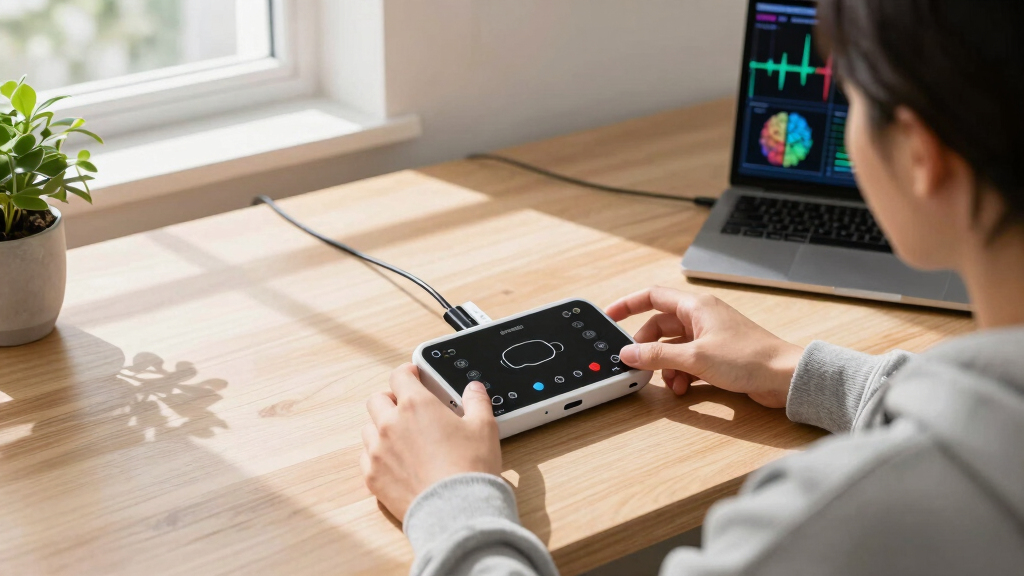
Cerelog introduced the ESP-EEG, an open-source 8-channel EEG board based on the ADS1299 chip, designed for affordability and improved signal quality. It is currently USB-only, with wireless support forthcoming. The project aims to serve researchers and developers seeking a low-cost biosensing solution.
Cerelog has unveiled the ESP-EEG, an open-source 8-channel biosensing board built around the Texas Instruments ADS1299 chip, offering a more affordable alternative to existing EEG devices for researchers and hobbyists.
The ESP-EEG features the same 24-bit, 8-channel analog-digital converter used in the OpenBCI Cyton, but aims to deliver cleaner signals through true closed-loop active bias circuitry. It is designed to be open-source, with firmware and schematic files licensed under MIT License and CC-BY-NC-SA 4.0 respectively, although some licensing details have caused initial confusion.
Development was led by former SpaceX hardware engineer Simon Hakimian. The device supports Bluetooth and WiFi hardware, but current firmware only allows USB connection, which does not provide electrical isolation. This limits safe use to USB connections, particularly avoiding use with charging laptops or desktops.
The project includes a fork of the OpenBCI GUI via Lab Streaming Layer and Brainflow, facilitating integration with existing biosignal processing software. The design emphasizes high-bandwidth WiFi streaming and onboard features like LiPo charging, with plans for wireless support still in development.
Why It Matters
The ESP-EEG’s affordability and open-source nature could democratize EEG research, enabling more widespread experimentation and development outside commercial constraints. Its design choices reflect a focus on high performance, flexibility, and community-driven innovation, which could influence the landscape of biosensing hardware.
By offering a lower-cost alternative with comparable or improved signal quality, it may challenge more expensive proprietary systems, potentially accelerating advancements in neurotechnology, brain-computer interfaces, and related fields.
As an affiliate, we earn on qualifying purchases.
Background
The open-source EEG hardware market has been dominated by devices like OpenBCI’s Cyton, which, while popular, remain relatively costly for individual researchers and hobbyists. The Cerelog ESP-EEG aims to fill a gap for affordable, high-quality biosensing devices. Prior efforts have struggled with balancing cost, signal integrity, and ease of use; this project seeks to address those issues through open hardware and software design.
The device’s development follows a trend of open-source neurotech tools, with community interest in accessible, customizable biosensing solutions. The project is still in early stages, with wireless firmware support pending, and some licensing ambiguities being clarified by the developer.
“I wanted to handle everything natively on the ESP32 for high-bandwidth WiFi streaming, which required a ground-up redesign.”
— Simon Hakimian
“The firmware is licensed under MIT License, and the hardware schematics are under CC-BY-NC-SA; I split the licenses to protect hardware from commercial clones while keeping schematics source-available.”
— Simon Hakimian
As an affiliate, we earn on qualifying purchases.
What Remains Unclear
Wireless firmware support is still under development, so the device currently only supports USB connection. The licensing details have caused some confusion, though they have been clarified by the developer. The availability of PCB layout files remains restricted, which may limit full replication or modification by the community.
As an affiliate, we earn on qualifying purchases.
What’s Next
Future updates will likely include wireless firmware support, broader community testing, and potential hardware revisions. Additional documentation and user guides are expected to facilitate wider adoption. Monitoring the project’s GitHub and official channels will provide updates on progress and new features.
As an affiliate, we earn on qualifying purchases.
Key Questions
How does the ESP-EEG compare to OpenBCI’s Cyton?
The ESP-EEG uses the same ADS1299 chip as the Cyton and aims to offer similar or improved signal quality at a lower cost. Its architecture is redesigned to support high-bandwidth WiFi streaming and onboard features, differentiating it from Cyton’s design.
Can the ESP-EEG be used wirelessly now?
No, currently the firmware only supports USB connection. Wireless support is planned but has not yet been released.
Is the device open-source and modifiable?
Yes, the firmware and schematics are licensed under open-source licenses (MIT License and CC-BY-NC-SA 4.0), but PCB layout files are not publicly available. The hardware schematics are non-commercial licensed to prevent low-effort clones.
Who developed the ESP-EEG?
The device was developed by Simon Hakimian, a former SpaceX hardware engineer, with the goal of creating a high-performance, affordable biosensing platform.
What are the main advantages of the ESP-EEG?
It offers a lower price point, open-source hardware and software, high-bandwidth WiFi streaming (planned), and a design focused on flexibility and community-driven development.
Fall Picks
fall essentials
As an affiliate, we earn on qualifying purchases.