
TL;DR

Get business pricing on tech for your team
- Business-only prices and quantity discounts
- Tax-exempt purchasing
- Multiple users, one account, clear invoices
Thorsten Meyer AI has presented IdeaNavigator AI, a public idea engine that mines online complaints and publishes one scored software idea per day. The project is described as a spin-off of IdeaClyst, but its scoring method and real-world demand accuracy have not been independently verified.
Thorsten Meyer AI has introduced IdeaNavigator AI, a public-facing system that says it mines online complaints, converts them into scoped software ideas, scores each idea from 0 to 100, and publishes one idea per day, a development aimed at reducing the risk of building products without clear demand.
The source material describes IdeaNavigator AI as a spin-off of IdeaClyst, a private validation workspace. Thorsten Meyer AI says the public product sits between an automated content system and a decision layer, turning complaint signals into daily software ideas with evidence scores and verdicts such as rethink, research, validate, or build.
According to the source, the system draws signals from five areas: App Store reviews, Hacker News discussions, GitHub issues, Stack Overflow questions, and a trend bridge meant to read whether a topic is rising or fading. The published version releases one idea per day, while the underlying pipeline is said to produce two daily ideas.
Thorsten Meyer AI also says the generate, validate, deploy, and syndicate loop runs autonomously from a single Mac mini. The project is described as local-first and provider-agnostic, meaning the source says the pipeline is not tied to one model provider. Those operational claims come from the project’s own materials and have not been independently tested here.
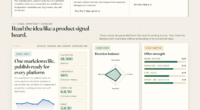
IdeaNavigator AI — one evidence-mined idea a day
Idea generation is cheap; validation is the bottleneck. Mine real complaints, scope an idea, score it 0–100 — and let the verdict tell you when not to build.
Verdict: Validate. Promising — but a high score is a prior, not a proof. The point of the gauge is the verdicts that say not yet.
Independent commentary, produced with AI assistance under human editorial oversight. The views are the author’s own and may change. IdeaNavigator AI generates, mines and scores ideas via automated pipelines; scores and verdicts are programmatic priors that may contain errors or bias and are not validated demand — verify independently before building. As an Amazon Associate the author earns from qualifying purchases; pages may contain affiliate links. Product and company names are trademarks of their respective owners; mention does not imply endorsement.
Evidence Scores Before Building
The project targets a common early-stage software risk: spending months building a product before confirming that users have the problem it claims to solve. By starting with public complaints rather than founder brainstorming, IdeaNavigator AI is positioned as a way to filter ideas before development begins.
For builders, the practical value would depend on whether its scoring system can separate durable demand from noisy online frustration. A one-star review, GitHub issue, or repeated support question can point to a real pain point, but it does not by itself prove buyers exist or that a new product can reach them.
The source is careful on that point, saying scores and verdicts are “programmatic priors” rather than validated demand. That caveat matters: the system may help decide which ideas deserve more research, but it does not replace user interviews, market testing, pricing work, or competitive analysis.
As an affiliate, we earn on qualifying purchases.
Part Of A Product Series
IdeaNavigator AI was presented in the Built in Public series as Day 5 of 19 on ThorstenMeyerAI.com, described as part of an operator portfolio. The source places it in a wider group of products, with IdeaNavigator linked to IdeaClyst as the public idea engine and private decision layer, respectively.
The update frames IdeaNavigator AI as a response to what the author calls the cheapness of idea generation and the higher cost of validation. The source argues that useful product ideas should begin with observable demand signals, such as complaints, workarounds, feature requests, and repeated unanswered questions.
The project also fits a wider theme in the source material: local-first, provider-agnostic automation run without a development team behind it. Those claims describe the stated design thesis of the portfolio, not a third-party audit of the software.
"Scores and verdicts are programmatic priors that may contain errors or bias and are not validated demand."
— Thorsten Meyer AI disclosure
As an affiliate, we earn on qualifying purchases.
Scoring Method Still Unverified
It is not clear from the supplied material how the 0-to-100 scores are weighted, how duplicate complaints are handled, how the system filters low-quality signals, or how it distinguishes a loud niche issue from a broad market opportunity.
It is also unclear whether IdeaNavigator AI has been benchmarked against past product outcomes, tested by external users, or compared with manual validation workflows. The source says the pipeline runs autonomously and produces more ideas than it publishes, but no independent performance data is provided.
Commercial access, pricing, public archives, and user controls are not specified in the material provided. The current evidence supports reporting that Thorsten Meyer AI has announced and described the system, not that its validation scores predict product success.
As an affiliate, we earn on qualifying purchases.
Daily Ideas Face Testing
The next test is the daily publishing cadence itself. If IdeaNavigator AI continues releasing one scored idea per day, readers will be able to see whether the outputs are specific, evidence-based, and useful enough to guide further research.
For the project to move beyond an internal portfolio announcement, the key milestones would be clearer scoring documentation, examples of mined evidence, follow-up results from ideas that were researched or built, and feedback from users outside Thorsten Meyer AI’s own workflow.
trend analysis software for developers
As an affiliate, we earn on qualifying purchases.
As an affiliate, we earn on qualifying purchases.
Key Questions
What is IdeaNavigator AI?
IdeaNavigator AI is described by Thorsten Meyer AI as a public system that mines online complaints, turns them into scoped software ideas, scores each idea from 0 to 100, and publishes one idea per day.
Where does the system get its signals?
The source says it mines App Store reviews, Hacker News, GitHub issues, Stack Overflow questions, and a trend bridge that checks whether a topic appears to be rising or fading.
Do the scores prove an idea will work?
No. Thorsten Meyer AI describes the scores as programmatic priors, not validated demand. The material says users should verify ideas independently before building.
How is IdeaNavigator AI related to IdeaClyst?
The source calls IdeaNavigator AI a public-facing spin-off of IdeaClyst, which is described as the private validation workspace behind the decision layer.
What remains unknown about the launch?
The supplied material does not provide independent testing, detailed scoring weights, pricing, access terms, or proof that the automated verdicts predict market demand.
Source: Thorsten Meyer AI
Fall Picks
fall essentials
As an affiliate, we earn on qualifying purchases.