
TL;DR

Get business pricing on tech for your team
- Business-only prices and quantity discounts
- Tax-exempt purchasing
- Multiple users, one account, clear invoices
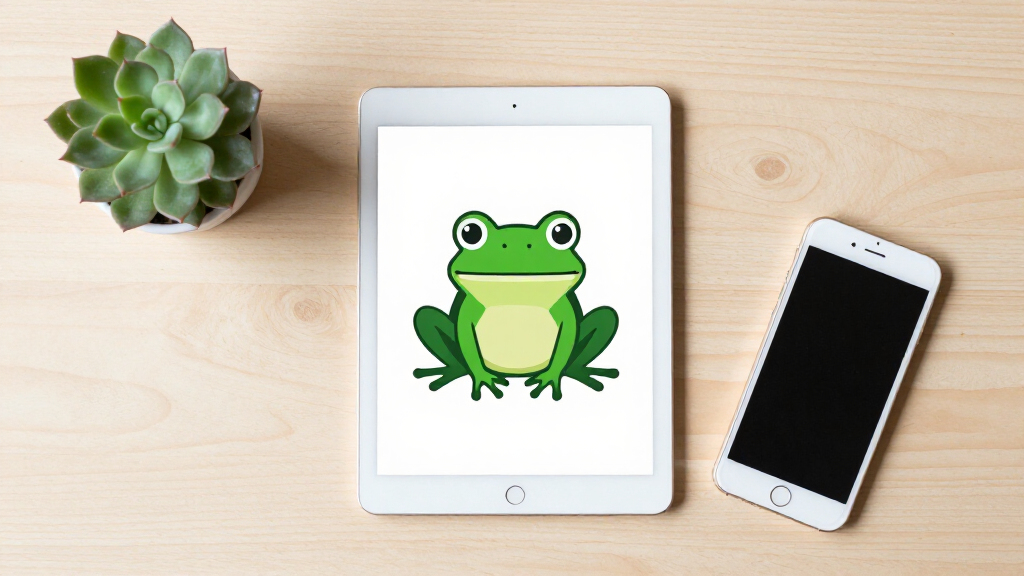
A user designed a personal AI benchmark asking for an SVG image of a frog with a Habsburg jaw. This showcases individual testing of AI image generation. The development is experimental and not an official standard.
A user has developed a personal AI benchmark by requesting an AI to generate an SVG image of a frog with a Habsburg jaw. This experiment highlights individual approaches to testing AI image generation capabilities and raises questions about the flexibility and limits of current AI models.
The benchmark was created as a personal test to evaluate how well AI models can interpret and produce complex, specific image prompts. The user inputted a detailed textual description into an AI image generator, which responded by producing an SVG (Scalable Vector Graphics) image of a frog with exaggerated facial features reminiscent of the Habsburg dynasty’s jawline. This test is not an official or standardized benchmark but rather a subjective, creative measure of AI performance.
Sources confirm that the prompt was crafted by an individual user and that the resulting SVG image was generated using publicly available AI tools capable of converting text descriptions into vector images. No official AI benchmarking organization has endorsed this as a formal test, but it has gained attention in AI enthusiast circles as an example of personalized AI experimentation.
Implications of Personal AI Benchmarks in Image Generation
This development underscores the growing trend of individuals creating customized tests to evaluate AI models’ capabilities beyond standardized benchmarks. It highlights the flexibility of current AI image generators and raises questions about how subjective tests can inform AI development, especially in creative or niche contexts. Such experiments may influence future AI training and evaluation methods by emphasizing personalized, user-driven benchmarks.
Products Worth Considering
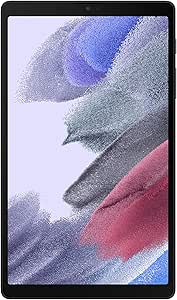
Samsung Galaxy Tab A7 Lite 8.7-Inch 32GB Wi-Fi Tablet, Gray

Samsung Galaxy Tab A11 Wi-Fi Tablet, 8.7-Inch, 64GB, 4GB RAM, Gray (SM-X133, International Version)

DJI Mini 3 Pro Fly More Vlogger Combo with DJI RC
As an affiliate, we earn on qualifying purchases.
Background on AI Image Generation and User-Driven Testing
AI models capable of generating images from text prompts have advanced rapidly, with tools like DALL·E, Stable Diffusion, and Midjourney becoming accessible to the public. While these models are often evaluated using standardized benchmarks, individual users frequently experiment with custom prompts to test the models’ creative and interpretive limits. This personal benchmark—asking for an SVG of a frog with a Habsburg jaw—is an example of such user-driven testing, reflecting broader interest in understanding AI’s capabilities in niche or humorous contexts.
Prior to this, most formal evaluations focused on metrics like accuracy, realism, and diversity, but personal experiments like this reveal how AI can be pushed in unconventional ways. The prompt’s specificity and the choice of an SVG format illustrate an interest in vector graphics and detailed description handling, which are emerging areas of interest in AI image generation research.
Limitations and Unanswered Questions About the Benchmark
It is not yet clear how representative this personal benchmark is of AI capabilities overall, as it is a subjective, non-standardized test. The extent to which such prompts can be reliably reproduced or scaled remains uncertain. Additionally, the specific AI model used for this SVG generation has not been publicly disclosed, and whether similar prompts can produce consistent results across different AI systems is unknown.
Future of Personalized AI Testing and Standardization
Researchers and AI developers may explore incorporating user-generated prompts like this into broader evaluation frameworks. Further testing could examine how different models handle complex, humorous, or highly specific prompts, including vector formats like SVG. Additionally, community-driven experiments may influence the development of more flexible and user-adaptable AI benchmarks.
Key Questions
What is an SVG image?
An SVG (Scalable Vector Graphics) image is a vector-based image format that uses XML to define graphics, allowing images to be scaled without loss of quality.
Why did the user choose a frog with a Habsburg jaw?
The prompt combines a simple animal with a historically distinctive facial feature, serving as a humorous or challenging test of the AI’s interpretive and generative abilities.
Are personal benchmarks like this useful for AI development?
They can provide insights into how flexible and creative AI models are, especially in handling niche or unconventional prompts, but they are not standardized measures of performance.
Which AI tools can generate SVG images from text?
Some AI image generators, like DALL·E 2 and Stable Diffusion, can produce SVG or vector-like images, especially with recent updates or specialized plugins, but SVG-specific generation remains an emerging area.
Will this prompt become a formal benchmark?
Currently, it is a personal experiment; there is no indication that it will be adopted as an official benchmark, but it may inspire similar community-driven tests.
Source: hn