TL;DR
South Korea announced a $576 billion investment in AI chip manufacturing, involving Samsung and SK Hynix. This aims to boost domestic tech capacity and reduce reliance on foreign suppliers. The initiative marks a significant government-industry partnership.
South Korea has announced a $576 billion investment to develop AI chip manufacturing facilities, with major industry players Samsung and SK Hynix leading the initiative. This government-backed plan aims to bolster the country’s position in the global semiconductor market and address supply chain vulnerabilities.

Get business pricing on tech for your team
- Business-only prices and quantity discounts
- Tax-exempt purchasing
- Multiple users, one account, clear invoices
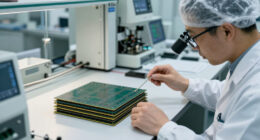
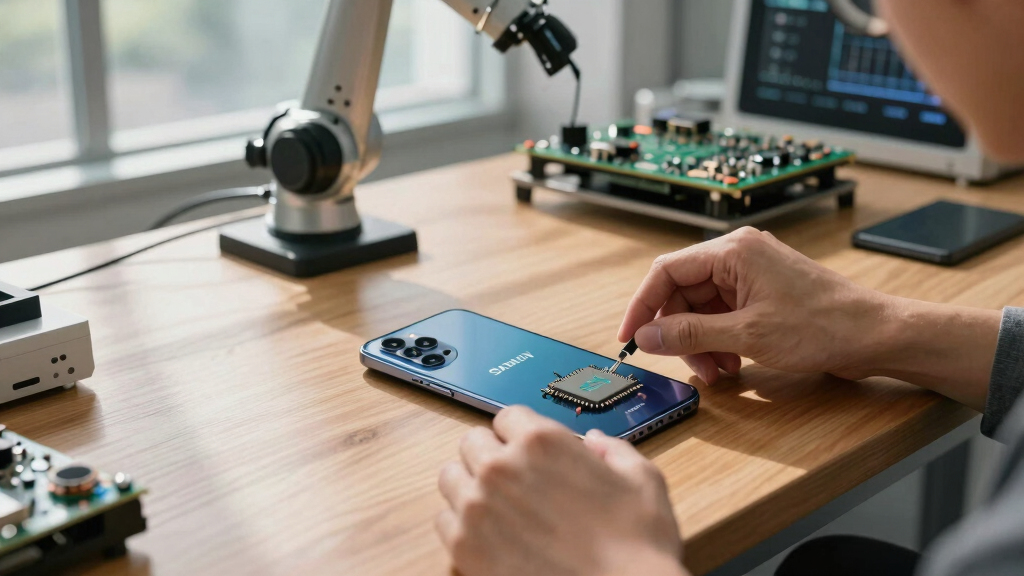
The Korean government revealed its plan to allocate $576 billion over the next decade toward establishing advanced AI chip production lines. Samsung and SK Hynix, South Korea’s leading semiconductor companies, are confirmed partners in this effort, with both firms pledging to expand their existing manufacturing capacities. The investment will focus on cutting-edge fabrication technology to produce chips optimized for artificial intelligence applications.
Officials from the Ministry of Trade, Industry, and Energy stated that the initiative is part of South Korea’s broader strategy to become a global leader in AI hardware and reduce dependence on foreign suppliers, especially amid ongoing geopolitical tensions and supply chain disruptions. The government aims to create thousands of new jobs and stimulate related tech sectors through this initiative. Specific deployment timelines and locations are still under discussion, but the plan is expected to accelerate in the coming months.
Implications for South Korea’s Tech Industry
This investment is a significant step for South Korea to solidify its position as a key player in the global semiconductor and AI hardware markets. By funding domestic AI chip production, the country aims to reduce reliance on imports from regions like Taiwan and China, which currently dominate the industry. The move could reshape global supply chains, influence chip prices, and accelerate AI development worldwide. Additionally, the partnership with Samsung and SK Hynix highlights the importance of private-sector collaboration in achieving national tech ambitions.
Products Worth Considering

LG UltraGear 34G600A-B 34-Inch Curved WQHD Gaming Monitor

Apple Watch SE 3 GPS 40mm Smartwatch

DJI Mic 2 Wireless Microphone System with 2 Transmitters, 1 Receiver, and Charging Case
As an affiliate, we earn on qualifying purchases.
Background on South Korea’s Semiconductor Ambitions
South Korea has long been a leader in semiconductor manufacturing, with Samsung and SK Hynix among the world’s top chip producers. The country has invested heavily in memory chip technology but has been slower to develop advanced AI-specific chips compared to China, the US, and Taiwan. Recent global chip shortages and geopolitical tensions have prompted South Korea to prioritize domestic chip manufacturing. Previous government initiatives have aimed to support the industry, but this new $576 billion plan represents a major escalation in investment and strategic focus.
Prior to this announcement, South Korea’s semiconductor industry faced challenges from supply chain disruptions and rising competition. The government has signaled a desire to transition from being primarily a memory chip producer to a leader in AI and high-performance computing chips, which are critical for future technologies like autonomous vehicles, robotics, and cloud computing.
“This investment will position South Korea at the forefront of AI hardware development, ensuring our industry’s resilience and global competitiveness.”
— South Korean Minister of Trade, Industry, and Energy
Details of Implementation and Timeline Still Unclear
While the investment amount and partner commitments are confirmed, specific details about the project’s implementation, locations, and exact timelines remain unclear. It is also uncertain how the funds will be allocated across different phases of development and whether additional private investments will complement the government funding.
Next Steps in Project Development and Policy Details
In the coming months, South Korea’s government is expected to finalize project locations and detailed plans. Industry leaders like Samsung and SK Hynix will likely outline their expansion strategies. Monitoring announcements on funding disbursement, infrastructure development, and technological milestones will be key to understanding the project’s progress. The government may also introduce supportive policies or incentives to facilitate rapid deployment.
Key Questions
What is the main goal of South Korea’s $576 billion investment?
The main goal is to develop domestic AI chip manufacturing capacity to strengthen the country’s position in the global tech industry and reduce reliance on foreign suppliers.
Which companies are involved in this initiative?
Samsung and SK Hynix are the primary industry partners confirmed to participate in the project, with the government providing significant funding support.
When will the new AI chip production facilities be operational?
Specific timelines have not yet been announced; the government expects detailed plans to be finalized in the coming months.
How does this investment compare to previous South Korean tech initiatives?
This is a substantially larger commitment, representing a major escalation in government support for the semiconductor industry, focusing specifically on AI hardware development.
What impact could this have on global chip markets?
If successful, the project could increase South Korea’s share of AI chip production, influence global supply chains, and potentially lower prices for AI hardware worldwide.
Source: google-trends