
📊 Full opportunity report: When One Agent Isn’t Enough: Claude Now Builds Its Own Team of Agents on the Fly on ThorstenMeyerAI.com — validation score, market gap, and execution plan.
TL;DR
Anthropic’s Claude AI now autonomously assembles teams of sub-agents for complex tasks, addressing limitations of single-agent workflows. This new feature aims to improve performance on high-value, multi-step projects.
Anthropic’s Claude AI now has the ability to dynamically build and manage its own team of agents for complex, high-value tasks, a feature called dynamic workflows. This development allows Claude to orchestrate multiple specialized sub-agents on the fly, addressing common limitations faced by single-agent approaches in large-scale projects. The feature is designed for tasks that require nuanced coordination, verification, and parallel processing, marking a significant step in autonomous AI capabilities.
The dynamic workflows feature enables Claude to generate small JavaScript programs that orchestrate sub-agents, each with isolated contexts and specific goals. These sub-agents can be assigned different models based on task complexity, from quick, low-cost models for routine work to more powerful models for judgment and verification. The system can also decide whether agents operate independently or in sequence, and it can manage workflows seamlessly.
According to Anthropic, this approach addresses key failure modes of single-agent tasks, such as agentic laziness, self-preferential bias, and goal drift. By dividing work into focused, independent units, Claude improves accuracy, thoroughness, and reliability on complex projects. The feature has been demonstrated in applications like rewriting the Bun runtime, deep research routines, fact-checking, and ranking large datasets, showcasing its versatility beyond purely technical tasks.
Anthropic emphasizes that dynamic workflows are particularly useful for high-value projects where precision and thoroughness outweigh the increased token consumption. The company notes that these workflows are not intended for simple requests like fixing typos but excel in orchestrating multi-step, parallel, or adversarial tasks.
When one agent isn’t enough: Claude now builds its own team on the fly
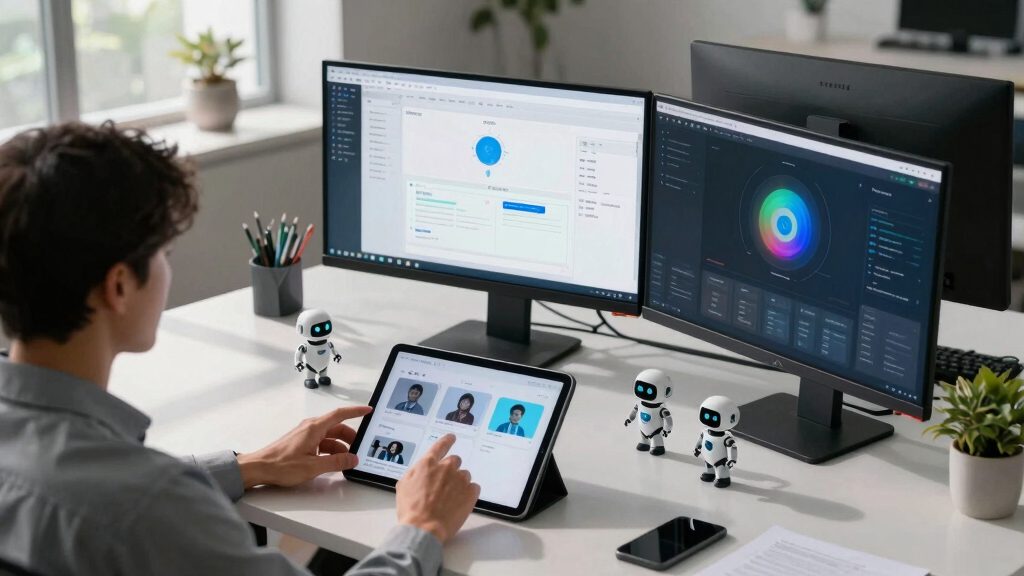
Skills package what you know; loops decide how far you delegate over time. Dynamic workflows are the third axis — within a single task, Claude writes its own harness and assembles a temporary team of subagents. Think of it as Claude drawing an org chart for one job.
The shift is from prompting a worker to commissioning a team — more output, more cost, and a manager’s judgment required. Reach for a workflow when a task is big, parallel, adversarial, or judgment-heavy — and when you can feel a single agent getting lazy, grading its own homework, or losing the plot. Bound it (token budgets, pilot first) — workflows can spawn hundreds of agents and burn far more tokens. For everything else, don’t hire five people to change a lightbulb.
Implications for Autonomous AI Task Management
The ability for Claude to autonomously assemble and manage teams of sub-agents represents a major advancement in AI orchestration, enabling the handling of complex, multi-faceted projects without extensive human oversight. This development could significantly improve AI performance in research, software development, and verification processes, where coordination and thoroughness are critical. It also signals a shift toward more self-sufficient AI systems capable of managing their own workflows, reducing reliance on manual programming of orchestration logic.
For organizations, this means more scalable and flexible AI deployment, capable of tackling tasks previously limited by single-agent constraints. However, it also raises questions about oversight, safety, and control, especially as AI systems gain more autonomy in decision-making and task execution.

AI Task Orchestration: Coordinating Complex Agent Workflows. A Comprehensive Guide to Building, Deploying, and Operating Multi-Agent AI Systems
As an affiliate, we earn on qualifying purchases.
As an affiliate, we earn on qualifying purchases.
Evolution of AI Workflow Capabilities
Anthropic’s introduction of dynamic workflows builds on previous developments where Claude could perform multi-step reasoning and task delegation. Earlier iterations involved static workflows, where orchestration had to be manually programmed. The new feature automates this process, allowing Claude to generate tailored harnesses for specific projects, a capability made possible by the recent release of Claude Opus 4.8, which enhances reasoning and planning.
This development completes a trilogy of advancements aimed at making Claude more capable of handling complex, high-value tasks with minimal human input. Prior efforts focused on skills packaging and loop-based delegation, but dynamic workflows introduce a new level of autonomous orchestration, akin to a team lead assigning and overseeing specialists in real time.
“Dynamic workflows allow Claude to write and execute its own orchestration scripts, effectively building its own team of agents tailored to the task at hand.”
— Thorsten Meyer, AI researcher at Anthropic
Designing Multi-Agent Systems: Principles, Patterns, and Implementation for AI Agents
As an affiliate, we earn on qualifying purchases.
As an affiliate, we earn on qualifying purchases.
Unanswered Questions About Safety and Control
It is not yet clear how robust the oversight mechanisms are for autonomous workflow generation, or how well the system can prevent unintended behaviors as complexity increases. The long-term safety implications of AI managing its own team of agents remain under evaluation, and detailed safety protocols have not been fully disclosed.
Building AI Agents for Network Operations: Design LLM-powered NetOps workflows with Python, Ollama, MCP, and tool calling
As an affiliate, we earn on qualifying purchases.
As an affiliate, we earn on qualifying purchases.
Next Steps in Deployment and Testing
Anthropic plans to roll out the dynamic workflows feature in beta, inviting select partners to test its capabilities on real-world projects. Further research will focus on safety, control, and optimizing efficiency. Monitoring how organizations adopt and adapt to this autonomous orchestration will inform future enhancements and safety measures.

Successful Construction Project Management: The Practical Guide
As an affiliate, we earn on qualifying purchases.
As an affiliate, we earn on qualifying purchases.
Key Questions
How does the dynamic workflow feature improve AI performance?
It allows Claude to create and manage multiple specialized sub-agents, improving accuracy and thoroughness on complex tasks by dividing work and enabling parallel processing.
Is this feature available for all types of tasks?
No, Anthropic specifies that dynamic workflows are best suited for high-value, complex, multi-step projects rather than simple requests like fixing typos.
What are the safety concerns with autonomous agent teams?
While not fully detailed, safety concerns include ensuring the system does not generate unintended behaviors or lose control as it manages multiple agents independently. Ongoing research aims to address these issues.
Can users customize the workflows?
Yes, users can trigger workflows by requesting them explicitly or using keywords like ‘ultracode,’ and Claude writes tailored harnesses for specific tasks.
Source: ThorstenMeyerAI.com