

📊 Full opportunity report: Who Really Processes Documents In The Age Of AI? on ThorstenMeyerAI.com — validation score, market gap, and execution plan.
TL;DR
Recent AI models demonstrate the ability to automate document processing tasks, leading to layoffs in sectors like BPO. However, employment levels remain stable for now, with complex future implications.
Recent advances in AI, including models capable of reading and extracting data from complex documents, have confirmed that automation is now capable of replacing many traditional data-entry roles. This development directly impacts sectors employing millions globally, such as business process outsourcing (BPO) and IT support, where jobs have historically involved manual document processing. The question is how these sectors will adapt as AI displaces routine tasks, and what this means for employment in the near term.
On Tuesday, a new AI model capable of reading a 40-page PDF in a single pass was announced, demonstrating that automation can now handle tasks previously performed by human data-entry clerks at near-zero marginal cost. This technological milestone confirms that AI can effectively replace large volumes of routine document processing work, which has historically absorbed millions of workers worldwide, especially in India and the Philippines. In these countries, BPO sectors generate billions annually and employ millions for tasks like reading, extracting, and organizing data from documents.
Despite these technological capabilities, current employment data shows mixed signals. Major Indian firms such as TCS and Oracle have announced layoffs totaling around 24,000 roles in April 2026, attributed explicitly to AI automation. However, overall employment in BPO and related sectors in India and the Philippines has continued to grow slightly, with hundreds of thousands of new jobs added in 2025. Industry projections suggest that while routine roles are shrinking, higher-value roles—such as data curation and quality assurance—may absorb only a fraction of displaced workers, leading to potential geographic and skill mismatches.
The gap between paper and databases
employed millions. It’s closing.
Data entry, claims, KYC, coding, BPO back offices — a global labor category built on moving information between formats. A free local model now does the routine tier at marginal cost ≈ watts. The honest numbers on what happens next.
Augmentation at the task level is displacement at the headcount level — spread over budget cycles instead of press releases.
The measured numbers — not projections
Also measured: both countries still ADDED BPO jobs in 2025 (~120K India, ~80K PH); only ~20% of customer-service leaders report AI-driven cuts (Gartner). Both truths hold — displacement follows the task, not the job title.
What shrinks vs what holds
Automates first
- Data entry and form processing
- Transaction handling, routine QA
- The entry-level on-ramp itself — hiring pipelines close before layoffs begin
Holds — for now, honestly
- Exceptions: the crumpled scan, the ambiguous field
- Liability and compliance-sensitive judgment
- Escalations and fraud patterns — growing faster than the routine tier shrinks (so far)
OCR accuracy ≠ process automation: 93% benchmarks still leave the hard 7% — and the liability — to humans. Fewer of them, at a different skill level.
Analyst estimate: GCCs and AI-adjacent roles can absorb 10–30% of displaced traditional BPO workers. “Move up the value chain” is arithmetic before it is policy — and new jobs don’t appear in the same cities, buildings, or skill brackets as the old ones. Beratervorsicht: the 2–3M-disruption / 1M-by-2030 projections circulating are analyst claims; the measured facts above are stark enough.
Google Docs 2026 Handbook for Beginners and Seniors: Step-by-Step Process to Master Offline Editing, Voice Typing, Document Organization, Gemini AI Features, and Troubleshooting
As an affiliate, we earn on qualifying purchases.
As an affiliate, we earn on qualifying purchases.
Impacts of AI on Global Document Processing Jobs
This development matters because it signals a fundamental shift in how routine administrative and data-entry tasks are performed worldwide. While some workers are being laid off, overall employment remains stable for now, but the industry faces a significant challenge in absorbing displaced workers into higher-value roles. The geographic and skill mismatches could lead to localized unemployment and economic disruption, especially in regions heavily dependent on BPO jobs. Policymakers and industry leaders need to consider strategies for workforce transition and training to mitigate potential economic fallout.

Entry and Exit Confessions of a Champion Trader: 52 Ways A Professional Speculator Gets In And Out Of The Stock, Futures And Forex Markets (Essential Algo Trading Package)
As an affiliate, we earn on qualifying purchases.
As an affiliate, we earn on qualifying purchases.
Historical Dependence on Manual Document Processing
For over fifty years, manual data entry and document processing have been central to administrative, financial, and customer service sectors globally. Countries like India and the Philippines built large industries around these roles, which were seen as low-cost, reliable employment sources. The high error rates in manual work—1-4% per field—made automation attractive despite the sector’s reliance on human labor. The advent of AI models capable of reading and extracting data at marginal cost now threatens to disrupt this longstanding employment model, raising questions about the future of these jobs.
Recent reports show that large firms in India, such as TCS, have already begun significant layoffs, while overall employment in BPO sectors has not yet declined sharply. Industry projections estimate that 2–3 million workers could face disruption over the next decade, with only a fraction likely to transition into new roles. The industry has historically been concentrated in specific regions, making geographic displacement a critical concern.
“The technology now exists to automate routine document processing at a scale and cost previously unimaginable, which will inevitably reshape employment patterns.”
— Thorsten Meyer, AI researcher
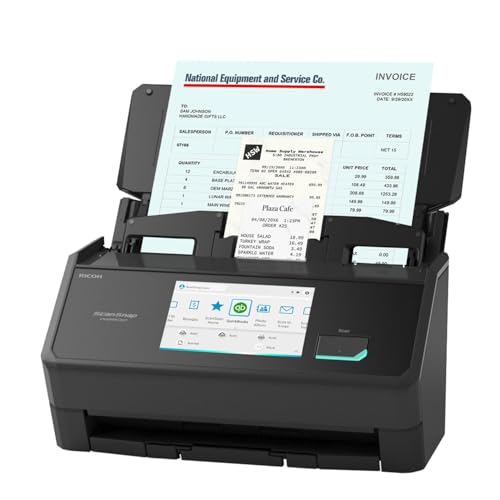
ScanSnap iX2500 Receipt Edition, Works with QuickBooks, Wireless or USB High-Speed Cloud Enabled Invoices & Receipts Scanner, 100 Page Auto Document Feeder for Mac or PC, Black
MAKE BOOKKEEPING A BREEZE. Scan invoices and receipts into QuickBooks directly from the preconfigured touchscreen
As an affiliate, we earn on qualifying purchases.
As an affiliate, we earn on qualifying purchases.
Unclear Future of Displaced Workers and Job Transition
It remains uncertain how many displaced workers will successfully transition into higher-value roles, given the limited absorption capacity of the industry. The actual pace and scale of future layoffs depend on technological progress, industry adaptation, and policy responses. Additionally, the geographic and skill mismatches pose significant challenges that are still being understood and addressed.

CZUR Aura Pro Book & Document Scanner, Capture A3 & A4
Compatibility: Work with macOS 10.13 or later AND Windows XP/7/8/10/11
As an affiliate, we earn on qualifying purchases.
As an affiliate, we earn on qualifying purchases.
Monitoring Employment Trends and Policy Responses
Next steps include tracking employment data across sectors, assessing the effectiveness of workforce retraining programs, and analyzing how industry and governments respond to displacement risks. Industry projections suggest that between 1 and 2 million workers could be directly impacted by 2030, but the actual outcome will depend on technological adoption and policy measures. Stakeholders should prepare for ongoing shifts in job roles and regional employment patterns.
Key Questions
Will AI completely replace human document processors?
While AI can automate many routine tasks, complete replacement is unlikely in the near term. Complex, judgment-based, or compliance-sensitive work still requires human oversight, and some roles may evolve rather than disappear.
What regions are most at risk from AI-driven displacement?
Regions heavily dependent on BPO jobs, such as parts of India and the Philippines, face higher displacement risks, especially in cities and districts where routine data processing dominates employment.
How are companies and governments responding to these changes?
Some companies are laying off workers explicitly due to AI automation, while others are investing in upskilling and shifting workers into higher-value roles. Governments are exploring policies for workforce retraining and regional economic support.
Source: ThorstenMeyerAI.com