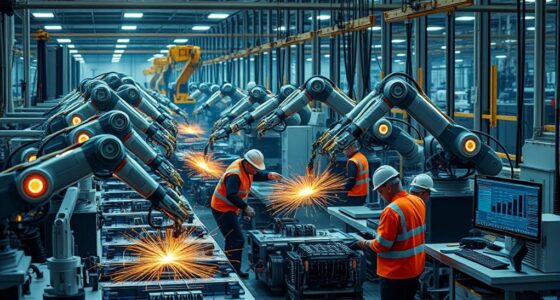

As AI takes over tasks once managed by humans, wages for low-skilled and routine jobs may decline or stagnate, while highly skilled workers like developers and data scientists see wage increases. Automation tends to widen wage gaps, especially if workers lack access to training or resist change. Your earning potential depends on how well you adapt and upgrade your skills. Keep exploring to understand how to navigate this shifting job landscape and protect your income.
Key Takeaways
- AI integration may reduce wages for low-skilled and routine jobs due to automation.
- Skilled workers in AI development and maintenance often see wage increases.
- Workers resistant to change or lacking training risk wage stagnation or decline.
- Continuous upskilling is essential for workers to maintain or improve wages amid AI advances.
- Industry-specific impacts depend on automation levels and workers’ adaptability to technological shifts.
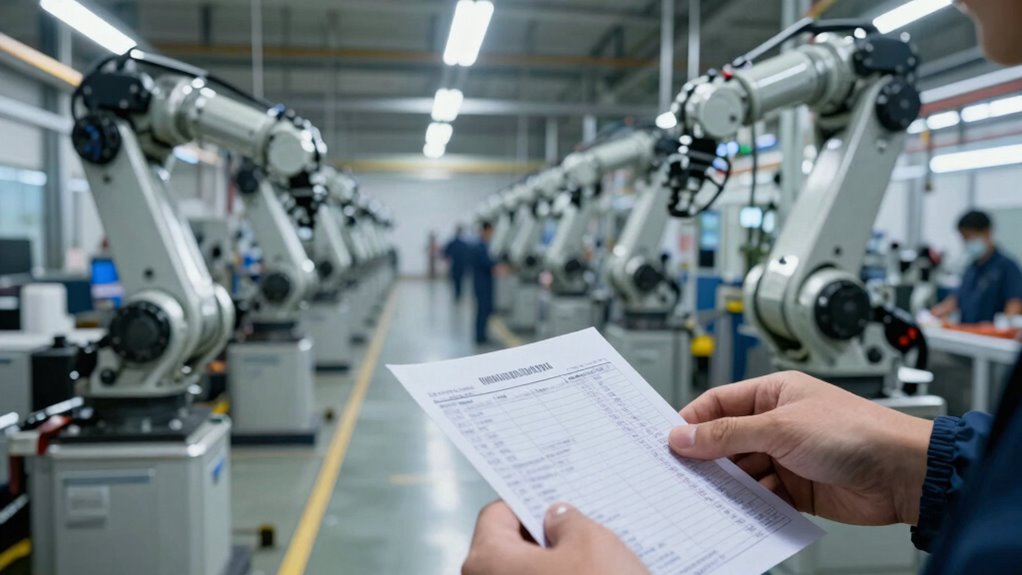
Have you ever wondered how artificial intelligence is shaping wages across industries? The AI impact on wages is becoming more evident as automation and machine learning technologies grow more sophisticated. When AI takes over tasks that once required human skill, the wage dynamics in many sectors shift. The core question is: how does AI influence the value of human labor?
AI transforms wages by automating tasks, creating new opportunities, and emphasizing the need for continuous skill development.
In many industries, AI reduces the need for manual or repetitive tasks, which historically supported lower wages. As machines become capable of performing these functions more efficiently, employers may cut back on labor costs by replacing human workers or offering lower wages for roles that are now automated. This shift can contribute to increased economic inequality if not managed carefully. This wage disparity can exacerbate social and economic challenges if left unaddressed. This downward pressure on wages affects those in entry-level or routine jobs most notably. On the flip side, AI’s influence can also lead to wage increases for highly skilled workers who design, maintain, and improve these systems. These professionals, often in tech and data science fields, see their wages rise as demand for their expertise surges.
The wage dynamics driven by AI impact not just individual workers but entire industries. For example, in manufacturing, the automation of assembly lines has reduced the number of assembly-line jobs, often leading to wage stagnation or decline for factory workers. Conversely, in tech and data-driven sectors, wages are climbing for those who can develop and implement AI solutions. The overall effect depends on how well workers can adapt and acquire new skills aligned with AI advancements. If workers resist change or lack access to training, they risk being left behind, with wages stagnating or falling. As AI continues to evolve, its influence on wages will likely accelerate, emphasizing the importance of future workforce preparedness as a key factor in economic stability. Companies that leverage AI effectively can boost productivity and profits, but they may also widen the wage gap between high-skilled and low-skilled workers. Recognizing the importance of upskilling and reskilling becomes crucial for workers seeking to stay relevant in this shifting landscape. A broader understanding of labor market shifts is essential for policymakers aiming to create inclusive growth. For workers, understanding the AI impact on wage dynamics means recognizing the importance of continuous learning and skill development. Those who adapt quickly can position themselves for higher wages, even as the landscape shifts. Ultimately, AI’s role in wage changes isn’t static; it’s a dynamic process that rewards flexibility and innovation while challenging workers to keep pace or face diminished earning potential.

DOUBLE YOUR INCOME | The Strategic Paradigm of Upskilling: A Step-by-Step Guide to High-Income Tech Transitions, AI Mastery, and Doubling Your Salary … for High-Income Tech Careers in 2026
As an affiliate, we earn on qualifying purchases.
As an affiliate, we earn on qualifying purchases.
Frequently Asked Questions
How Quickly Will Wages Change With AI Integration?
You’ll likely see wages change quickly as AI integration accelerates automation impact across industries. Some jobs will face wage polarization, with high-skill roles thriving and low-skill roles declining. This shift could happen within a few years, depending on how fast companies adopt AI technology. Staying adaptable and upgrading your skills will be essential, as the pace of wage changes will be driven by how effectively AI replaces or complements human labor.
Will AI Create New Job Opportunities or Eliminate Them?
AI will create more job opportunities than it eliminates, with studies estimating up to 85% of jobs evolving rather than disappearing. You’ll face economic displacement, but skill adaptation becomes essential. As AI takes over routine tasks, you’ll need to upskill in areas like data analysis or AI management. Embracing these changes can open doors to new, higher-paying roles, ensuring you stay relevant in this rapidly shifting job landscape.
How Can Workers Prepare for Ai-Driven Wage Shifts?
To prepare for AI-driven wage shifts, you should focus on upskilling strategies that enhance your expertise and adaptability. Embrace continuous learning to stay relevant and competitive. Additionally, develop strong wage negotiation skills to advocate for fair compensation as your role evolves. By proactively upgrading your skills and confidently negotiating, you can better navigate changes, secure better wages, and turn AI’s impact into an opportunity rather than a setback.
Are Certain Industries More Affected by AI Wage Impacts?
Like a storm sweeping across a landscape, AI wage disparities hit some industries harder than others. You’ll find manufacturing, customer service, and administrative sectors face more significant industry-specific impacts, where automation replaces many roles. Conversely, creative and strategic fields might see less disruption. To stay ahead, you need to understand these shifts, adapt your skills, and prepare for evolving AI-driven wage impacts across different sectors.
What Policies Can Mitigate Negative Wage Effects of AI?
To mitigate AI’s negative wage effects, you should support policies like Universal Basic Income, which offers financial security amid job shifts, and prioritize Workforce Retraining programs, helping workers shift into new roles. These strategies guarantee that workers aren’t left behind as AI transforms industries. Encouraging lifelong learning and flexible job opportunities can also ease the economic disruptions, fostering resilience in the face of technological change.

Heart Rate Variability: Science and Strategies for Peak Performance
As an affiliate, we earn on qualifying purchases.
As an affiliate, we earn on qualifying purchases.
Conclusion
As AI takes off its training wheels, your wages might ride a rollercoaster—sometimes soaring, sometimes stumbling. Think of your paycheck as a river carving its path through a canyon; with AI shaping the landscape, you’ll need to navigate the shifting waters carefully. Embrace the change like a gardener tending new growth—pruning old skills to make space for fresh opportunities. In this evolving landscape, your adaptability becomes the steady compass guiding you through the dawn of this new era.

Agentic Spec-Driven Development: A Practical Method for Using AI to Build Complete Specifications for Software, Products, and Knowledge Work
As an affiliate, we earn on qualifying purchases.
As an affiliate, we earn on qualifying purchases.

AWS Certified Machine Learning Engineer Study Guide: Associate (MLA-C01) Exam (Sybex Study Guide)
As an affiliate, we earn on qualifying purchases.
As an affiliate, we earn on qualifying purchases.