
Automation speeds up how prices are constantly adjusted across industries, making markets more dynamic and competitive. Advanced algorithms analyze market data in real-time, driving rapid price changes and reducing the need for manual updates. This intensifies the repetition of pricing cycles, ensuring companies stay ahead. As automation evolves, you’ll see markets becoming more responsive and volatile. If you’re curious about how this shift impacts the economy, there’s more to explore ahead.
Key Takeaways
- Automation uses advanced algorithms to continuously adjust prices, creating repetitive, real-time repricing across various markets.
- Rapid, frequent price changes driven by automation enhance competitiveness but can increase market volatility.
- Automated systems streamline pricing strategies, reducing manual effort and enabling consistent, repetitive price updates.
- Feedback loops from market responses improve algorithm accuracy, reinforcing ongoing automated repricing cycles.
- Workforce roles shift from manual pricing to overseeing and refining automated algorithms, influencing employment patterns.
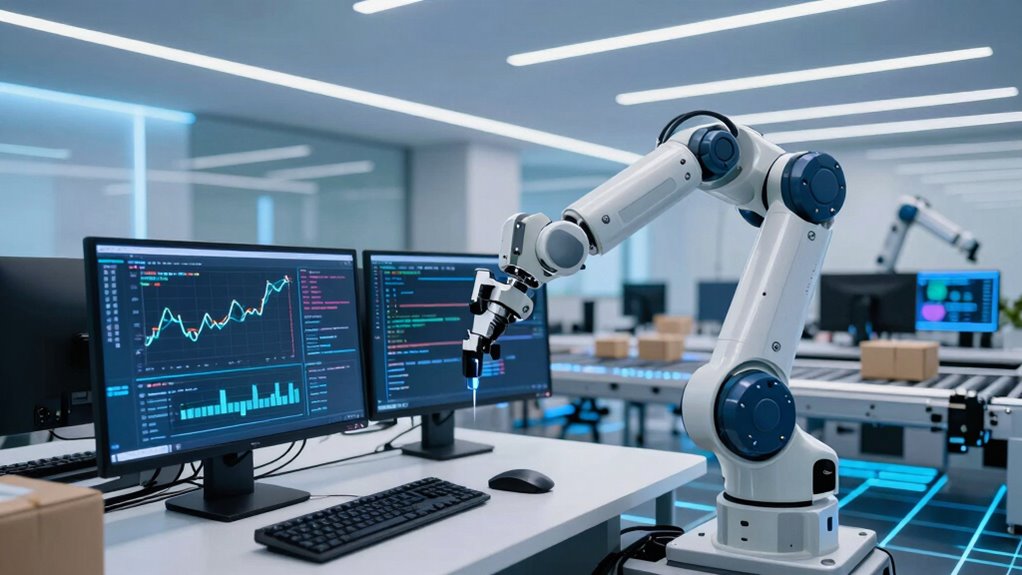
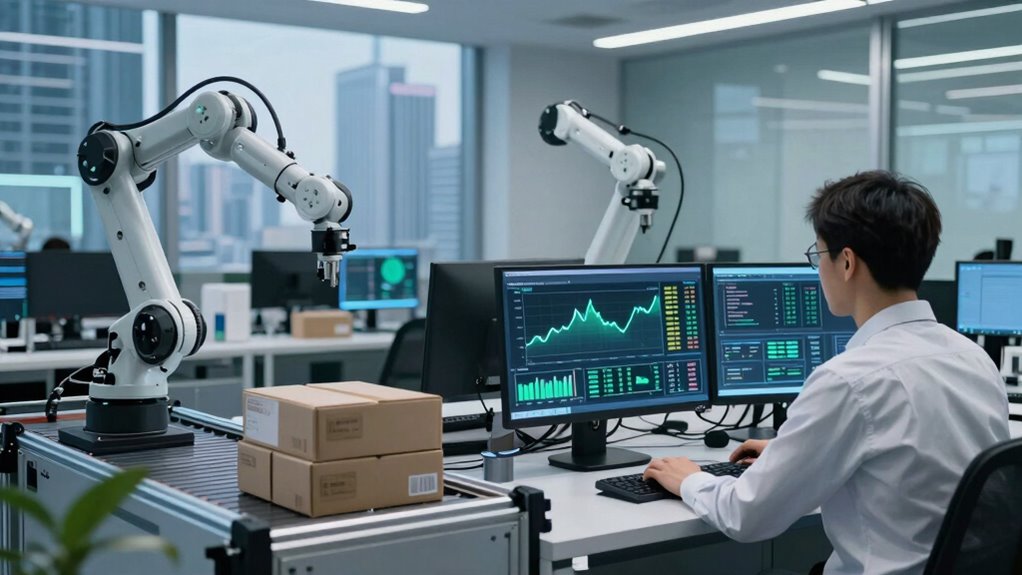
Automation is transforming how businesses approach pricing, leading to a rapid cycle of repricing that extends across various sectors of the economy. This shift is driven by advanced algorithms that quickly analyze market data, optimize pricing strategies, and adjust prices in real-time. The key to this process is algorithm efficiency, which enables companies to react swiftly to changes in demand, competition, or costs. As a result, prices no longer remain static for long periods; instead, they fluctuate frequently, reflecting the latest market conditions. This continuous repricing creates a more dynamic marketplace, where companies compete not just on product quality or service but also on their ability to set ideal prices at any given moment.
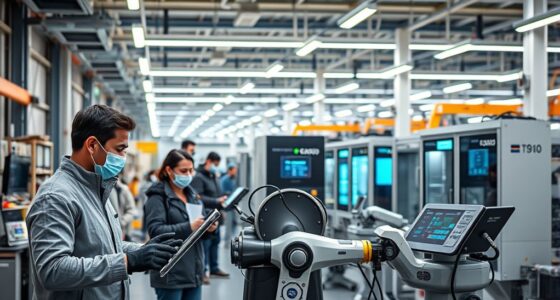
With automation handling much of the repricing process, you might notice a significant impact on labor displacement. Traditional roles involving manual price adjustments or market analysis are shrinking, replaced by systems that operate with minimal human intervention. This doesn’t mean jobs disappear overnight, but it does shift the focus of many roles toward overseeing and refining algorithmic strategies rather than performing routine tasks. Workers who once did manual pricing may now find themselves managing automated systems, analyzing data outputs, or developing new algorithms. This shift can lead to increased efficiency, but it also raises concerns about employment stability in sectors heavily reliant on manual input. Additionally, the rise of automated pricing systems is prompting a reevaluation of workforce skills across various industries.
You’ll observe that the speed and scale of repricing are fundamentally changing how businesses compete. Companies can now maintain a competitive edge by constantly updating prices to reflect current market realities, instead of relying on outdated or slow manual processes. This heightened responsiveness benefits consumers through more competitive prices but can also lead to market volatility if prices fluctuate excessively. In the long run, the efficiency of algorithms reduces the cost of pricing adjustments, which can be passed on to consumers or reinvested in other areas of the business.
Furthermore, as automation becomes more sophisticated, the reliance on algorithm efficiency accelerates, leading to even faster repricing cycles. This creates a feedback loop where improved algorithms lead to better market responses, which in turn prompt further advancements in automation. You’ll see that labor displacement is an inevitable consequence, but it also pushes the workforce toward developing new skills aligned with these technological shifts. Overall, automation’s influence on repricing is reshaping the economy—making markets more responsive, competitive, and, at times, more unpredictable. Moreover, the focus on algorithm efficiency is crucial, as it directly impacts the speed and accuracy of these repricing cycles.
As an affiliate, we earn on qualifying purchases.
Frequently Asked Questions
How Does Automation Impact Employment in Repetitive Industries?
Automation impacts employment in repetitive industries by causing job displacement, as machines replace manual tasks. You might see fewer entry-level roles, but it also drives skill transformation, requiring workers to adapt and learn new technical abilities. While some jobs vanish, new opportunities emerge for those willing to reskill. Overall, automation reshapes the workforce, emphasizing the need for continuous learning to stay relevant and thrive in evolving industries.
What Are the Ethical Considerations of Automated Repricing?
Imagine a tightrope walker balancing between innovation and integrity. Automated repricing raises ethical concerns like algorithm bias, which can unfairly skew prices, and data privacy, risking sensitive information leaks. You must guarantee algorithms stay neutral and transparent, respecting customers’ privacy. By doing so, you safeguard fairness, prevent discrimination, and maintain trust, ensuring automation enhances the market without crossing ethical boundaries.
How Do Small Businesses Adapt to Automation-Driven Pricing Changes?
You adapt to automation-driven pricing changes by embracing dynamic pricing strategies that respond quickly to market shifts. Use customer segmentation to tailor your prices, ensuring you meet different customer needs without sacrificing profit. Keep an eye on competitors and market trends, and leverage automation tools to adjust prices efficiently. This approach helps you stay competitive, attract diverse customers, and maximize revenue amid rapid pricing shifts.
What Are the Risks of Over-Reliance on Automation for Pricing?
Think of relying heavily on automation for pricing as sailing a ship through stormy seas. You risk losing control amid market volatility, causing pricing errors and reduced pricing accuracy. Over-reliance can lead to missed opportunities or costly mistakes if algorithms fail to adapt swiftly. While automation helps streamline, you must stay alert, continuously monitor, and adjust strategies to avoid being tossed off course by unpredictable market waves.
How Does Automation Influence Consumer Trust and Brand Reputation?
Automation can positively influence consumer perception by offering consistent, quick, and transparent pricing, which builds trust. When you use automation effectively, it can enhance brand loyalty, as customers appreciate fair and accurate prices. However, if automation leads to errors or perceived unfairness, it can damage your reputation and erode consumer trust. To maintain a strong brand, you must balance automation with personalized oversight to guarantee positive perception and loyalty.
As an affiliate, we earn on qualifying purchases.
Conclusion
Automation is transforming repetitive tasks across industries, making processes faster and more efficient. You might be surprised to learn that nearly 60% of jobs involve some level of automation, reshaping how work gets done. As machines handle routine tasks, you’ll find yourself focusing on more strategic and creative aspects. Embracing this change means staying adaptable and open to new roles—because, in this evolving economy, repetition is being redefined, and you have the opportunity to thrive in it.
As an affiliate, we earn on qualifying purchases.
real-time price adjustment system
As an affiliate, we earn on qualifying purchases.
As an affiliate, we earn on qualifying purchases.