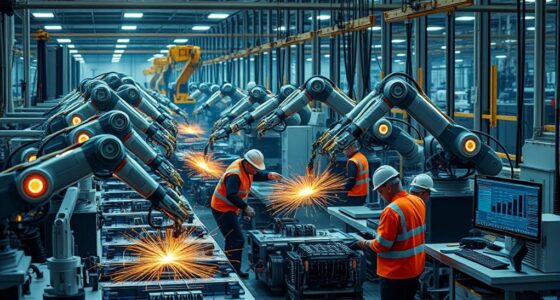

You face a shifting job landscape where automation and the gig economy threaten your security. It’s no longer just about policies but about redesigning systems that provide stability in this new terrain. By focusing on adaptable, resilient employment models—like portable benefits and digital safety nets—you can create a future where security is built into how work is structured. Keep exploring how innovative designs can turn uncertain work into sustainable careers.
Key Takeaways
- Automation replaces traditional roles, requiring employment systems to be designed for adaptability and resilience.
- Gig economy workers lack safety nets, highlighting the need for security to be embedded in employment structures.
- Digital infrastructure enables scalable solutions like income guarantees and retraining programs for job security.
- Designing resilient employment systems involves integrating re-skilling, safety nets, and adaptive mechanisms proactively.
- Reimagining work involves policies and models that prioritize stability and embed security into future workplaces.

Have you ever wondered whether job security is something we should actively design for? It’s a question that becomes more pressing as the nature of work shifts rapidly. The rise of automation challenges traditional employment models, threatening to replace many roles with machines and algorithms. These technological advancements aren’t just about efficiency; they’re reshaping the very fabric of job stability. As automation progresses, many workers face the unsettling reality that their positions could vanish overnight. This unpredictability calls for a rethink—how do we create systems that provide genuine security in an era dominated by constant technological change?
Designing job security for an automated future is essential in a rapidly changing world.
At the same time, the gig economy is redefining employment in ways that often undermine traditional notions of job security. Many gig workers operate without the safety nets of benefits, steady income, or long-term contracts. They enjoy flexibility, yes, but at the cost of stability and protection from economic shocks. This shift demands that we consider security not just as an individual responsibility but as a design problem embedded in the structure of the economy itself. If the gig economy becomes the dominant form of work, then the challenge becomes how to provide safety nets, health coverage, and income stability within this adaptable, often precarious framework. Recognizing the importance of digital infrastructure can help in developing scalable solutions for these new employment models. Additionally, understanding the role of technological resilience is essential to ensure that these systems can adapt to ongoing changes. Building digital resilience into these frameworks ensures they can withstand technological disruptions and continue supporting workers.
You might think that these issues are primarily about individual resilience or policy fixes, but they’re fundamentally about how we design work itself. Job security isn’t just a matter of labor laws or social safety nets; it’s about creating systems that anticipate and adapt to technological and economic shifts. The rise of cloud server solutions and digital infrastructure plays a critical role in shaping future employment models, enabling more resilient systems. Implementing cloud-based employment platforms can help facilitate adaptive work arrangements that respond swiftly to automation trends. The challenge lies in designing employment models that are resilient — models that can absorb automation’s impacts without leaving workers vulnerable. This could involve innovative approaches like portable benefits, income guarantees, or retraining programs integrated into employment ecosystems. By thinking proactively about these issues, you can influence the way workplaces evolve, making security a built-in feature rather than an afterthought.
Ultimately, addressing automation challenges and the gig economy isn’t just about protecting existing jobs; it’s about reimagining how work is structured for the future. You have the power to influence policies, business models, and organizational practices that prioritize stability and adaptability. Recognizing job security as a systemic issue pushes us to think beyond piecemeal solutions and toward all-encompassing systems that safeguard workers in a rapidly changing landscape. It’s a call to action: if we want meaningful security, we need to embed it into the very design of our economic and technological futures.

Hedge: A Greater Safety Net for the Entrepreneurial Age
As an affiliate, we earn on qualifying purchases.
As an affiliate, we earn on qualifying purchases.
Frequently Asked Questions
How Can Individuals Proactively Adapt to Job Security Challenges?
To proactively adapt to job security challenges, focus on building your career resilience by continuously updating your skills and staying adaptable. Diversify your skill set across different areas to make yourself more valuable and less vulnerable to industry shifts. Stay informed about market trends, network actively, and seek opportunities for growth. This proactive approach helps you stay relevant, resilient, and prepared for change, ensuring your job security remains within your control.
What Role Do Policymakers Play in Designing Job Security Frameworks?
Policymakers play a vital role in closing policy gaps and strengthening social safety nets, ensuring job security frameworks adapt to changing work landscapes. You can trust that effective policies proactively support workers through unemployment benefits, retraining programs, and flexible employment laws. By designing resilient systems, they help you navigate economic shifts confidently, reducing insecurity. Ultimately, their work creates a more stable environment where your job security isn’t left to chance.
How Does Technological Innovation Influence Job Stability Across Industries?
Technological innovation considerably impacts the future workforce by transforming industries and redefining job roles. You need to stay adaptable, continuously updating your skills to keep pace with these changes. When you embrace skill adaptation, you enhance your job stability, even as automation and new technologies threaten traditional jobs. Ultimately, your ability to adapt ensures your relevance and security in a rapidly evolving job market driven by technological progress.
What Are the Ethical Considerations in Designing Job Security Systems?
Designing job security systems is like walking a tightrope—you must balance ethical concerns carefully. You need to address trust dilemmas and fairness concerns, ensuring transparency and equal treatment for all employees. It’s essential to involve diverse perspectives and prioritize employee well-being, so the system doesn’t favor some at the expense of others. By doing so, you create a fair, trustworthy structure that supports stability without compromising integrity.
How Can Companies Balance Automation With Employee Job Preservation?
You can balance automation with employee job preservation by prioritizing workforce resilience and skill development. Invest in training programs that equip employees with new skills, making them adaptable to technological changes. Foster open communication about automation plans, involving staff in decision-making. This approach not only preserves jobs but also enhances overall organizational agility, ensuring your team remains valuable and secure amid evolving automation trends.
![Express Schedule Free Employee Scheduling Software [PC/Mac Download]](https://m.media-amazon.com/images/I/41yvuCFIVfS._SL500_.jpg)
Express Schedule Free Employee Scheduling Software [PC/Mac Download]
- User-friendly drag & drop interface: Simple shift planning
- Manage time-off and holidays: Add sick leave, breaks, holidays
- Email schedules to employees: Send schedules directly via email
As an affiliate, we earn on qualifying purchases.
As an affiliate, we earn on qualifying purchases.
Conclusion
Imagine a world where your job isn’t just a safety net, but a carefully crafted space that adapts with you, like a sturdy bridge underfoot, guiding you across shifting waters. When job security becomes a design problem, you’re invited to shape that bridge—making it resilient, flexible, and built with your future in mind. It’s not just about survival; it’s about creating a foundation where you can truly thrive, no matter what storms come your way.
As an affiliate, we earn on qualifying purchases.

KAERYHET Safety Rope Net Kids Pet Stairs Balcony Railings Protection Rope Netting Playground Net Sports Netting Baseball Softball Backstop Nets
- Material: High-strength polyester, weather-resistant
- Mesh Size: 4 cm diameter, 4 mm thickness
- Edge Rope: 8 mm thick, double-needle knotless weave
As an affiliate, we earn on qualifying purchases.
As an affiliate, we earn on qualifying purchases.