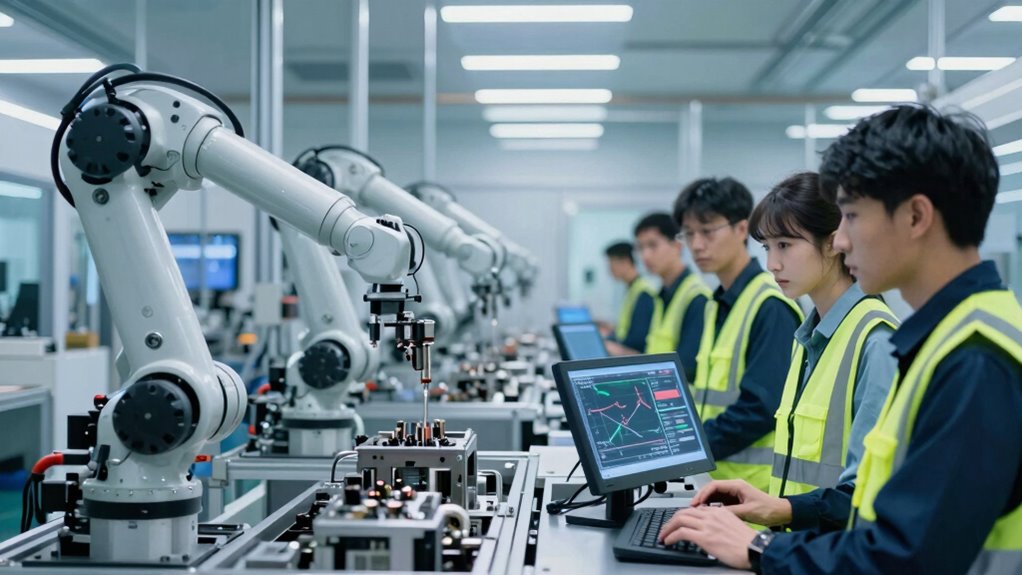

Labor data often misses early signs of automation because it mainly tracks surface-level figures like employment, wages, and hours, which respond slowly to subtle work shifts. As companies adopt new tools gradually, workers often adapt roles or develop new skills quietly, masking real changes. This means automation’s true impact remains hidden until it’s well advanced. If you want to understand how these hidden shifts occur, keep exploring the deeper dynamics behind workforce changes.

Get business pricing on tech for your team
- Business-only prices and quantity discounts
- Tax-exempt purchasing
- Multiple users, one account, clear invoices
Key Takeaways
- Traditional labor metrics focus on employment levels, overlooking subtle shifts in work quality and task complexity.
- Workforce adaptations, like role adjustments and skill development, mask actual employment declines.
- Gradual, phased automation implementation delays immediate observable effects in employment data.
- Changes in skills and processes often occur quietly, before they are reflected in official employment statistics.
- Deeper analysis of skill evolution and organizational changes is necessary to detect early automation signals.
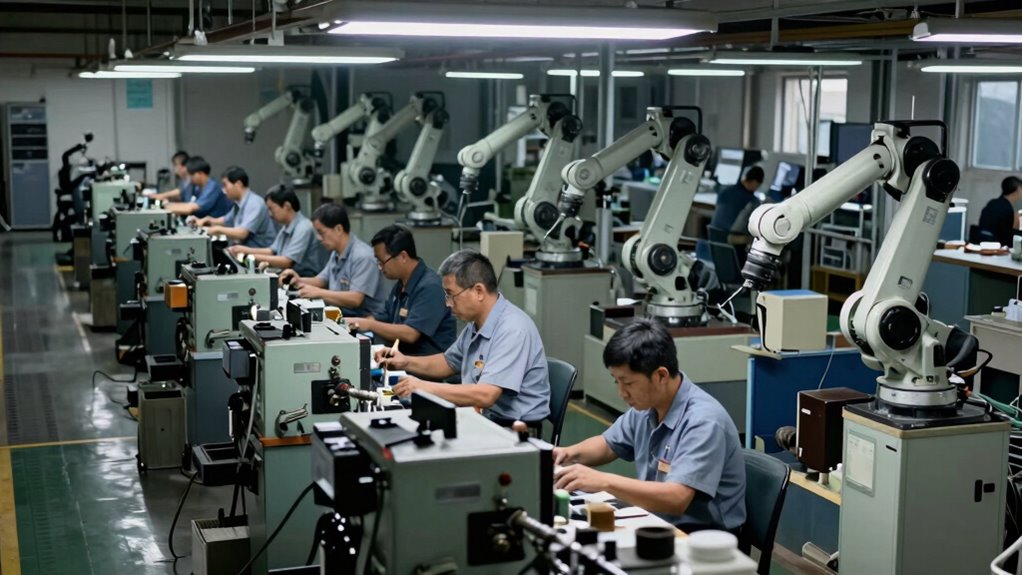
As automation continues to reshape industries, analyzing labor data can reveal early signs of how jobs are evolving. But despite its importance, labor data often misses these initial signals. That’s because the way workforces adapt and how technological adoption occurs can mask the real shifts happening behind the scenes. When new technologies are introduced, companies and workers tend to focus on immediate operational needs, often overlooking subtle changes in employment patterns. This means the data you see might not yet reflect the full impact of automation, especially in its early stages.
Workforce adaptation plays a significant role in this blind spot. Employees often adjust their roles or shift responsibilities to accommodate new tools, without necessarily changing the overall employment numbers. For example, if automation reduces some manual tasks, workers might take on higher-level responsibilities or learn new skills to stay relevant. These adjustments can hide the true effects of technological adoption, making it seem like jobs remain stable when, in fact, the nature of work is already transforming. Consequently, labor data might show steady employment levels, but the quality and type of work are shifting quietly.
Workforce shifts often hide automation’s true impact, with roles evolving but employment levels remaining steady.
Technological adoption itself isn’t always immediately visible in labor data either. When companies introduce automation, they often do so gradually, integrating new systems alongside existing processes. This phased approach delays measurable changes in employment figures. Additionally, organizations may hesitate to lay off workers early on, fearing backlash or loss of morale, even as they start automating certain tasks internally. As a result, the early indicators of automation, such as declining demand for certain skill sets or changes in work processes, aren’t captured promptly in official labor statistics. Recognizing the gradual nature of technological integration can help in understanding these delayed effects. Furthermore, understanding labor market dynamics can shed light on how these phased adoptions influence employment trends over time.
Moreover, the lag between technological implementation and observable labor market effects complicates detection. Data collection methods tend to focus on employment numbers, wages, and hours worked, which are slow to reflect nuanced shifts in job functions or skill requirements. These traditional metrics miss the subtler signs of workforce adaptation and technological adoption, especially in the initial phases. By the time labor data does show a change, the automation process might already be well underway, making it harder to predict or prepare for its full impact.
In essence, labor data often fails to catch the early signs of automation because it isn’t designed to detect the nuanced, gradual shifts driven by workforce adaptation and phased technological adoption. To truly understand how automation influences employment, you need to look beyond surface-level numbers and analyze deeper patterns of skill development, task redefinition, and organizational change. Recognizing that technological adoption can be gradual and subtle is crucial for interpreting employment trends accurately.
employee skill development courses
As an affiliate, we earn on qualifying purchases.
As an affiliate, we earn on qualifying purchases.
Frequently Asked Questions
How Do Different Industries Vary in Automation Adoption?
You’ll notice that industry-specific automation varies widely; manufacturing often adopts new tech faster, while healthcare and education are more cautious. Your workforce’s adaptability plays a vital role in this process, shaping how quickly industries integrate automation. As each sector navigates these changes, understanding industry-specific automation helps you anticipate shifts and prepare your workforce for evolving demands, ensuring smoother progressions and sustained productivity across different fields.
What Role Does Government Policy Play in Automation Trends?
Imagine you’re in a sci-fi novel, where government policy influences automation trends just like a director guides a film. Policy influence can accelerate or hinder automation adoption, while regulatory barriers act as hurdles. When policies are supportive, businesses invest in new tech. Conversely, strict regulations slow progress. You must stay aware of these factors, as they shape how quickly automation becomes part of your industry’s landscape.
Can Automation Impact Employment Quality and Job Satisfaction?
Automation can positively impact employment quality and job satisfaction by boosting worker morale and encouraging skill development. As automation handles repetitive tasks, you’re freed up to focus on more engaging, strategic work, which can increase your sense of achievement. Additionally, new technologies provide opportunities to learn new skills, making your job more fulfilling and helping you grow professionally. This progress often leads to higher job satisfaction overall.
How Do Small Businesses Detect Early Automation Signals?
Imagine spotting a telegram in a sea of emails—that’s how small businesses can detect early automation signals. You should observe operational changes, like new software adoption or workflow shifts, before labor data shows it. Overcoming automation barriers requires small business strategies such as monitoring industry trends, investing in staff training, and staying alert to emerging tech. These proactive steps help you catch automation early and adapt swiftly.
What Are the Ethical Considerations of Increased Automation?
You should consider AI ethics and worker displacement as automation increases. It’s essential to guarantee ethical AI use, avoiding biases and maintaining transparency. You might also face moral questions about job loss and how to support displaced workers. Balancing technological progress with social responsibility helps create fair opportunities. By prioritizing ethical standards, you can mitigate negative impacts, foster trust, and promote sustainable growth amid rising automation.
workforce automation analysis tools
As an affiliate, we earn on qualifying purchases.
As an affiliate, we earn on qualifying purchases.
Conclusion
Labor data often misses the early signs of automation, like a blurry mirror that reflects only part of the picture. You might think you’re seeing the whole story, but behind the scenes, technological shifts are quietly reshaping industries. To truly grasp these changes, you must look beyond the surface, reading between the lines. After all, in the dance of progress, the quiet steps often lead the way, even when the data remains silent.
labor market data analysis software
As an affiliate, we earn on qualifying purchases.
As an affiliate, we earn on qualifying purchases.
organizational change management books
As an affiliate, we earn on qualifying purchases.
As an affiliate, we earn on qualifying purchases.
Halloween Picks
halloween
As an affiliate, we earn on qualifying purchases.