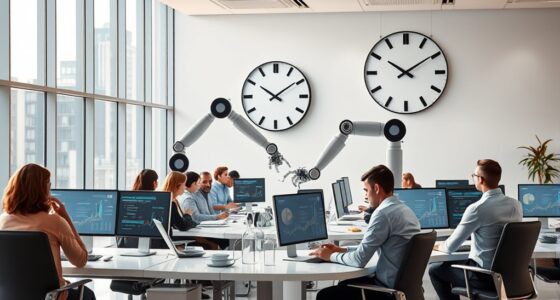
Your office setup quietly influences how clients perceive your professionalism and trustworthiness. A clean, organized, and thoughtfully designed space shows attention to detail and commitment to quality, making clients feel more comfortable and confident in your abilities. Small details like furniture placement and lighting subtly shape their impressions. These environmental cues reinforce transparency and reliability, fostering stronger relationships. Keep exploring how each element plays a role in building lasting client trust without even saying a word.
Key Takeaways
- A well-maintained, organized office signals professionalism, building client confidence and trust.
- Thoughtful design and cleanliness reflect attention to detail, reinforcing credibility.
- Open, inviting layouts foster better communication, making clients feel valued.
- Visual appeal and environment consistency project control, enhancing perceived reliability.
- Small environmental details influence client perceptions, strengthening long-term relationships.
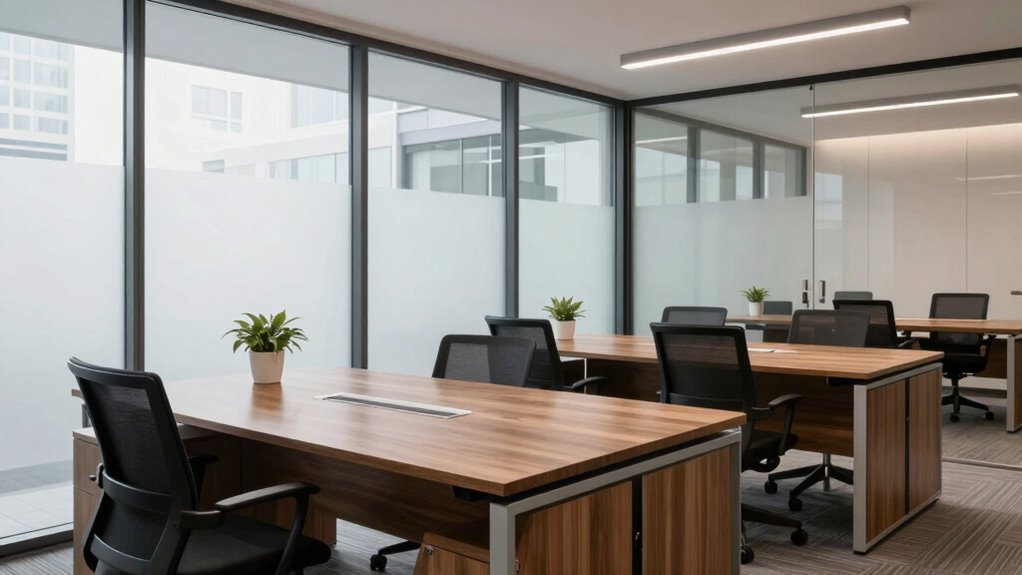
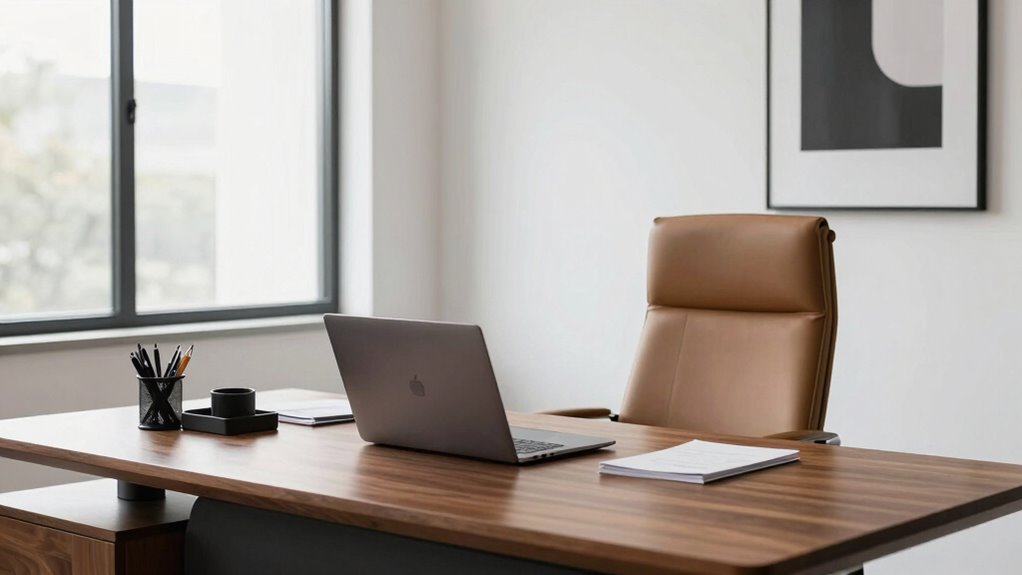
The environment where you conduct your business often speaks volumes about your professionalism, even if clients don’t realize it at first. Your office setup plays a vital role in shaping their perception of your credibility and reliability. When clients step into your workspace, they immediately pick up on cues related to workplace aesthetics—the cleanliness, organization, and overall design. A well-maintained, thoughtfully arranged space signals that you value quality and attention to detail, which naturally fosters trust. Conversely, a cluttered or neglected environment can raise doubts about your competence or commitment to your work.
A tidy, well-designed workspace builds trust and showcases your professionalism effortlessly.
Beyond appearance, the communication environment you create within your office impacts how clients feel and how effectively you connect. An open, inviting layout encourages dialogue and makes clients more comfortable sharing their needs or concerns. If your space is too sterile or cramped, it could inhibit conversation or create a barrier that makes interactions feel formal or distant. The placement of furniture, lighting, and even background noise all influence the tone of your exchanges. When your office promotes clear, comfortable communication, clients sense that they’re valued and understood, strengthening their confidence in your professionalism. Creating a positive communication environment can also help reduce misunderstandings and foster long-term relationships. Additionally, paying attention to environmental cues can subtly influence clients’ feelings and perceptions without them even realizing it.
Furthermore, a well-designed communication environment can help you project confidence and control. When your workspace is organized and visually appealing, you demonstrate that you’re prepared and attentive. This not only reassures clients but also makes meetings more productive. They won’t have to worry about distractions or inconsistencies; instead, they’ll focus on your message, which enhances your credibility. A professional office setup can serve as a silent yet powerful tool to elevate your reputation and reinforce your expertise.
In essence, your office setup silently influences how clients perceive and trust you. It’s more than just aesthetics—it’s about creating a communication environment that fosters openness, confidence, and professionalism. Paying attention to details such as workplace aesthetics and the overall environment can significantly impact the strength of your client relationships. When you pay attention to these details, you’re not just making your workspace look good—you’re actively building stronger, more trusting relationships with those who walk through your door.
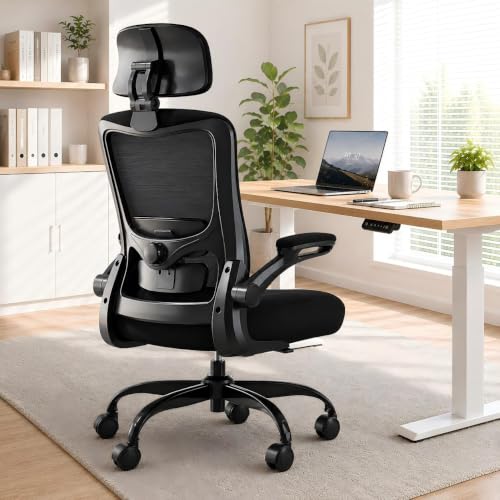
Ergonomic Office Chair for Long Hours, Adjustable Padded Lumbar Support for Lower Back Relief, 330 lb Capacity, Comfortable Computer Desk Chair for Home Office, Work & Study
- All-Day Comfort: Adjustable headrest and padded lumbar support
- Back Pressure Relief: Supports natural spine curve for better posture
- Customizable Fit: Adjustable headrest, lumbar, and seat height
As an affiliate, we earn on qualifying purchases.
As an affiliate, we earn on qualifying purchases.
Frequently Asked Questions
How Does Office Lighting Impact Client Perceptions of Professionalism?
Office lighting directly influences how clients perceive your professionalism. When you incorporate natural lighting, it creates a bright, welcoming environment that suggests transparency and openness. A well-designed ambient atmosphere, with balanced lighting, makes your space feel polished and comfortable, reflecting your attention to detail. These lighting choices subtly communicate your commitment to quality, making clients feel confident in your capabilities and fostering trust from the moment they walk in.
What Color Schemes Best Foster Trust in Office Environments?
Blue hues are your best bet to foster trust in office environments, as they evoke calmness and reliability through color psychology. Imagine a client walking into a sleek, blue-accented space that aligns perfectly with your branding consistency; they instantly feel reassured about your professionalism. Using consistent color schemes not only boosts your branding but also subconsciously builds trust, making clients more comfortable and open to collaboration.
How Often Should Office Furniture Be Updated for Optimal Client Impression?
You should update office furniture every 5 to 7 years to maintain a positive client impression. Prioritize ergonomic design and furniture durability to guarantee comfort and longevity. Regular updates reflect your commitment to a professional environment and show clients you value quality. Keep an eye on signs of wear and tear, and don’t hesitate to refresh key pieces when they start to look outdated or uncomfortable, reinforcing trust through a polished workspace.
What Role Does Technology Play in Office Setup Quality?
Technology plays a vital role in office setup quality by enabling seamless virtual collaboration and supporting ergonomic design. When you invest in reliable tools and high-speed internet, your team can work efficiently from anywhere, impressing clients with professionalism. Ergonomic equipment reduces fatigue and boosts productivity, making your workspace more comfortable. Together, these elements create a polished, functional environment that fosters trust and confidence in your business.
How Can Small Offices Improve Setup Without Significant Expenses?
You can improve your small office setup by focusing on ergonomic design and acoustic treatment without spending much. Invest in adjustable chairs and desks to promote comfort and reduce strain. Use simple acoustic solutions like rugs, curtains, or dividers to minimize noise and distractions. These small changes enhance your workspace’s functionality and professionalism, boosting client trust and creating a more productive environment without significant expenses.
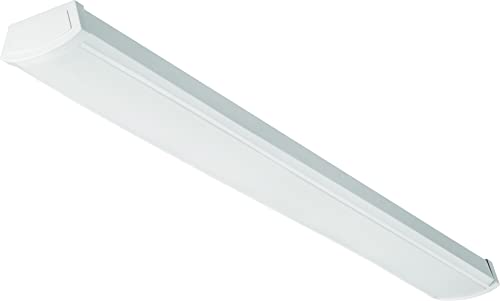
Lithonia Lighting 4' Low-Profile LED Wraparound Light Fixture, 4000K, 120V
- Versatile Ceiling Light: Suitable for various spaces
- High-Quality LED Lights: Produces 3,000 lumens of 4000K light
- Long-Lasting Illumination: Features durable, flicker-free LEDs
As an affiliate, we earn on qualifying purchases.
As an affiliate, we earn on qualifying purchases.
Conclusion
Think of your office like a trusted handshake—firm, clean, and inviting. When your setup reflects professionalism and attention to detail, clients sense reliability without a word spoken. I once visited a startup with a cluttered desk and outdated furniture; I immediately doubted their stability. Conversely, a sleek, well-organized space reassures clients, much like a sturdy bridge that supports every step. Your office isn’t just a space—it’s the silent ambassador of your brand’s trustworthiness.

WALI Desk File Organizer, 4 Tier Desktop Paper Letter Tray Organizer with Drawer and 2 Pen Holders, Office Desk Accessories & Workspace Organizers for Office, Home Supplies(DO005DH-B), 1 Pack, Black
- All-in-One Desk Organizer: Includes 4 letter trays, drawer, and pen holders
- Premium Metal Construction: Made from thickened steel wire mesh for durability
- Space-Saving Design: Vertical file organizer and tiered trays maximize space
As an affiliate, we earn on qualifying purchases.
As an affiliate, we earn on qualifying purchases.

ModernMate Home Office Furniture Set, 71" L Shaped Executive Standing Desk
- Perfect Workstation: This l shape executive standing…
- Powerful Storage System:The cabinet part of this executive…
- Long-term Use: Crafted from optimal P2 engineered…
As an affiliate, we earn on qualifying purchases.
As an affiliate, we earn on qualifying purchases.