
📊 Full opportunity report: AI compliance brief generator for small clinics on IdeaNavigator AI — validation score, market gap, and execution plan.

Get business pricing on tech for your team
- Business-only prices and quantity discounts
- Tax-exempt purchasing
- Multiple users, one account, clear invoices
TL;DR
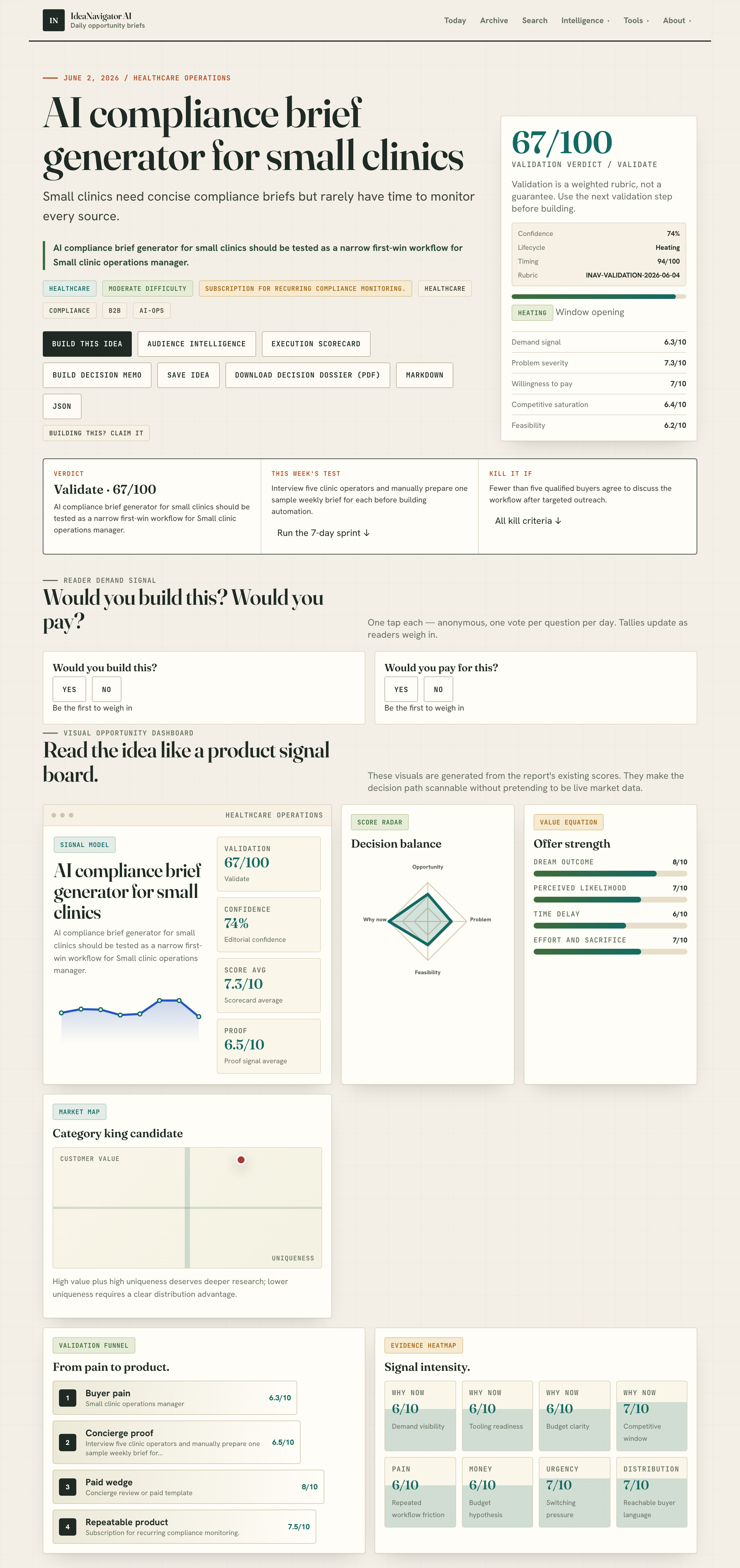
A new AI tool designed for small clinics is entering testing to produce weekly compliance briefs. It aims to help clinic managers stay updated on regulations efficiently. The development is in early validation, with broader rollout pending success.
Small clinics are preparing to test an AI-powered compliance brief generator aimed at providing concise, weekly regulatory updates to clinic managers. The tool is designed to address the challenge of limited time and resources for monitoring evolving healthcare regulations, offering a streamlined solution that could improve operational efficiency and compliance management.
The AI compliance brief generator is being developed as a minimum viable product (MVP) by IdeaNavigator AI, targeting small clinic operations managers who struggle to keep up with frequent regulatory updates. The initial plan involves a weekly brief that includes source links, a review checklist, and actionable items, all generated automatically based on recent regulatory sources.
Validation efforts include interviewing five clinic operators and manually preparing sample briefs for each to assess the tool’s accuracy and usefulness before automating the process. The project aims to create a subscription-based service, providing recurring compliance monitoring tailored to small healthcare providers.
Potential Impact on Small Clinic Operations
This development could significantly reduce the compliance burden on small clinics, which often lack dedicated legal or regulatory teams. Automating the creation of concise, actionable briefs can help clinics stay compliant, avoid penalties, and focus more on patient care. If successful, the tool may set a precedent for similar automation in other healthcare operational areas, improving overall efficiency and regulatory adherence.
Products Worth Considering

Jackery Solar Generator 1000 V2 with 200W Solar Panel, 1,070Wh, 1,500W, Dune White

LG UltraGear 27GX700A-B 27-Inch QHD OLED Gaming Monitor

Samsung Odyssey G55C 32-Inch QHD 1000R Curved Gaming Monitor
As an affiliate, we earn on qualifying purchases.
Growing Need for Automated Regulatory Updates in Healthcare
Small clinics face increasing regulatory complexity, with frequent updates across multiple sources. Traditionally, staff manually monitor these sources, a time-consuming task prone to oversight. Advances in AI summarization and automation have made it feasible to develop tools that distill complex regulatory information into manageable briefs, especially relevant as healthcare regulations continue to evolve rapidly.
IdeaNavigator AI’s initiative aligns with broader trends toward automation in healthcare operations, aiming to fill a gap for small clinics that cannot afford dedicated compliance teams or extensive legal resources.
“Automating compliance updates could transform how small clinics manage regulatory requirements, saving time and reducing errors.”
— an anonymous researcher
Uncertainties in Validation and Adoption
It is not yet clear how accurately the AI will summarize complex regulations or how well clinic managers will adopt and trust the automated briefs. The validation process involves only five clinics initially, so broader effectiveness and scalability remain uncertain. Additionally, regulatory sources and updates vary, which could impact the tool’s comprehensiveness and reliability.
Next Steps for Testing and Deployment
Following initial interviews and sample brief preparations, IdeaNavigator AI plans to develop the MVP for pilot testing with selected clinics. The goal is to refine the tool based on user feedback and accuracy assessments over the coming months. If validated successfully, a subscription model will be launched, with plans to expand to more clinics and potentially other healthcare operational functions.
Key Questions
How will the AI generate compliance briefs?
The AI will analyze recent regulatory updates from multiple sources, summarize key points, and produce a weekly brief with source links and actionable checklists, tailored for small clinics.
What are the main benefits for small clinics?
The tool aims to save time, reduce manual monitoring efforts, improve compliance accuracy, and help clinics avoid penalties related to regulatory violations.
When will the AI compliance brief generator be widely available?
The project is still in validation, with pilot testing underway. If successful, a broader rollout could occur within the next year, pending further validation and refinement.
What challenges might the AI face in implementation?
Challenges include ensuring accurate summarization of complex regulations, gaining trust from clinic managers, and integrating the tool into existing workflows effectively.
Source: IdeaNavigator AI