
📊 Full opportunity report: Where Can You Find GLP-1 Medications? Track Stock And Prices on IdeaNavigator AI — validation score, market gap, and execution plan.

Get business pricing on tech for your team
- Business-only prices and quantity discounts
- Tax-exempt purchasing
- Multiple users, one account, clear invoices
TL;DR
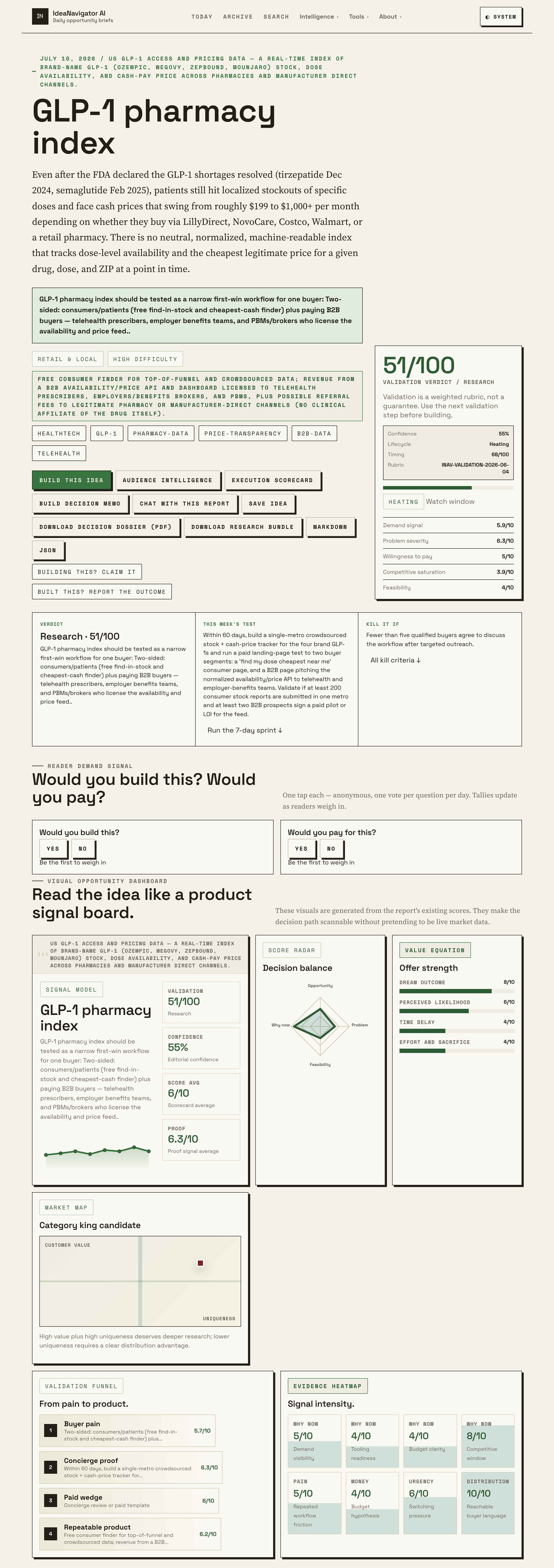
A proposal from IdeaNavigator AI for a GLP-1 pharmacy index would let patients compare reported dose availability and cash prices by ZIP code, while selling normalized data to health care and benefits buyers. The proposal describes a market where prices can range from about $199 to more than $1,000 per month, but those figures and reported availability would need ongoing verification.
IdeaNavigator AI has proposed a pharmacy index to help patients find brand-name GLP-1 medications by dose and ZIP code, while offering availability and price data to health care and benefits organizations. The concept responds to a fragmented market in which local stock gaps and differing cash prices can make it difficult to find a specific dose at a predictable cost, according to the proposal.
IdeaNavigator AI’s proposal would list four medicines: Ozempic and Wegovy, which contain semaglutide, and Mounjaro and Zepbound, which contain tirzepatide. Patients would search by drug, dose and ZIP code for reported stock and cash prices. The plan says it would combine crowdsourced availability reports with public pricing from manufacturer-direct channels, Costco, Walmart and pharmacy discount listings.
IdeaNavigator AI estimates cash prices can range from roughly $199 to more than $1,000 per month, depending on the product and where it is purchased. The proposal presents this as an approximate range, not a verified, current price quote for every medication or dose. It says the index would show when prices were checked and distinguish available listings from confirmed stock.
The proposal’s business model would offer consumer searches for free and charge telehealth prescribers, employers, benefits brokers or pharmacy benefit managers for access to an availability and price feed or dashboard. It also suggests referral fees involving pharmacies or manufacturer-direct channels. IdeaNavigator AI does not report that a product has launched, that buyers have agreed to pay, or that any pharmacy has committed to provide inventory data.
Finding a Dose at a Clear Price
For patients prescribed these medicines, the challenge described in IdeaNavigator AI’s proposal is locating the right product and dose at a price they can pay. A general drug listing may not establish whether a particular dose is on hand nearby. A regularly updated, dose-level index could make comparisons easier and help patients identify where to ask about availability.
The proposal also targets organizations involved in prescribing and coverage decisions. Employers and benefits teams may want better information about cash prices and supply as they manage pharmacy spending. IdeaNavigator AI says GLP-1 medicines account for roughly 20% of employer pharmacy spend, but its proposal gives no survey, date range or calculation method for that estimate. It should be treated as a claim in the proposal rather than a broadly established measure.
Any consumer value would depend on the completeness and freshness of the data. Crowdsourced reports can become stale when inventory changes, while listed prices may depend on eligibility, dose, supply duration or other terms. The proposal says the index would need to make those limits clear for comparisons to be useful.
From Shortages to Scattered Listings
IdeaNavigator AI’s proposal says federal shortage determinations for the active ingredients in these medicines ended with tirzepatide in December 2024 and semaglutide in February 2025. The end of a listed shortage does not establish that every pharmacy has every dose in stock. The proposal says patients continue to encounter localized gaps, but it provides no independent inventory survey to quantify them.
The proposal describes cash-pay routes including LillyDirect and NovoCare, retail pharmacies and discount channels. It also refers to the TrumpRx portal in February 2026 and to compounding deadlines that affected compounders. It provides no details about the portal’s operation, specific deadline rules or effects on individual patients, so those references do not establish current access or eligibility.
IdeaNavigator AI frames the index as an MVP to test, rather than a service that already covers the market. The proposal calls for starting in one metro area, collecting stock reports for the four branded medicines, and comparing consumer interest with demand from potential business customers.
Inventory and Pricing Need Verification
IdeaNavigator AI reports no index launch or pilot results. Its proposal does not identify a launch date, participating pharmacies, current coverage area, data-refresh schedule or completed agreements with business buyers. It also does not show that two prospects have signed a paid pilot or letter of intent.
The proposal leaves open how the service would confirm pharmacy inventory, handle inaccurate or expired reports, and determine which cash prices apply to a patient’s circumstances. Its approximate price range has no measurement date and does not list every product, dose and purchase condition. The cited employer spending share also lacks a stated baseline or methodology.
Availability and price data would not establish whether a medication is medically appropriate or whether a patient qualifies for a particular price program. The proposal describes an access and comparison concept, not a clinical recommendation or a guarantee that a listed dose can be dispensed.
A Single-Metro Pilot Would Test Demand
IdeaNavigator AI proposes a 60-day test in one metro area. The proposal sets two suggested validation thresholds: at least 200 consumer stock reports and at least two business prospects signing a paid pilot or letter of intent for the data feed. These are proposed targets, not completed milestones.
The proposal identifies the next evidence to watch as whether the team builds the tracker, how it verifies and timestamps price and inventory reports, and whether patients and business buyers use the service. It names no specific metro, pilot start date or participating buyer, and gives no timeline for announcing those details.
Source: IdeaNavigator AI proposal
Key Questions
Is the GLP-1 pharmacy index available now?
No launch is reported in IdeaNavigator AI’s proposal. It describes a proposed tool and suggested pilot; it does not say that consumers can currently use an index.
Which medicines would it track?
IdeaNavigator AI’s proposal names Ozempic, Wegovy, Mounjaro and Zepbound, searchable by drug, dose and ZIP code.
What prices does the proposal cite?
IdeaNavigator AI gives an approximate range of $199 to more than $1,000 per month, depending on purchase channel. Its proposal does not provide a date-stamped price list or confirm that a particular price applies to every patient.
How would the proposed index make money?
Under IdeaNavigator AI’s proposal, the consumer finder would be free. Telehealth prescribers and health benefits organizations would pay for access to a normalized availability and price feed or dashboard. The proposal also suggests possible referral fees from pharmacy or manufacturer-direct channels.
Source: IdeaNavigator AI
Fall Picks
fall essentials
As an affiliate, we earn on qualifying purchases.