
📊 Full opportunity report: Track Your TRT Journey: Labs, Symptoms, And Changes on IdeaNavigator AI — validation score, market gap, and execution plan.

Get tech for your team delivered free — and shop member deals
- Fast, free delivery on millions of items
- Access to Prime Big Deal Days deals on October 6–7
- Prime Video, Amazon Music and more included
TL;DR
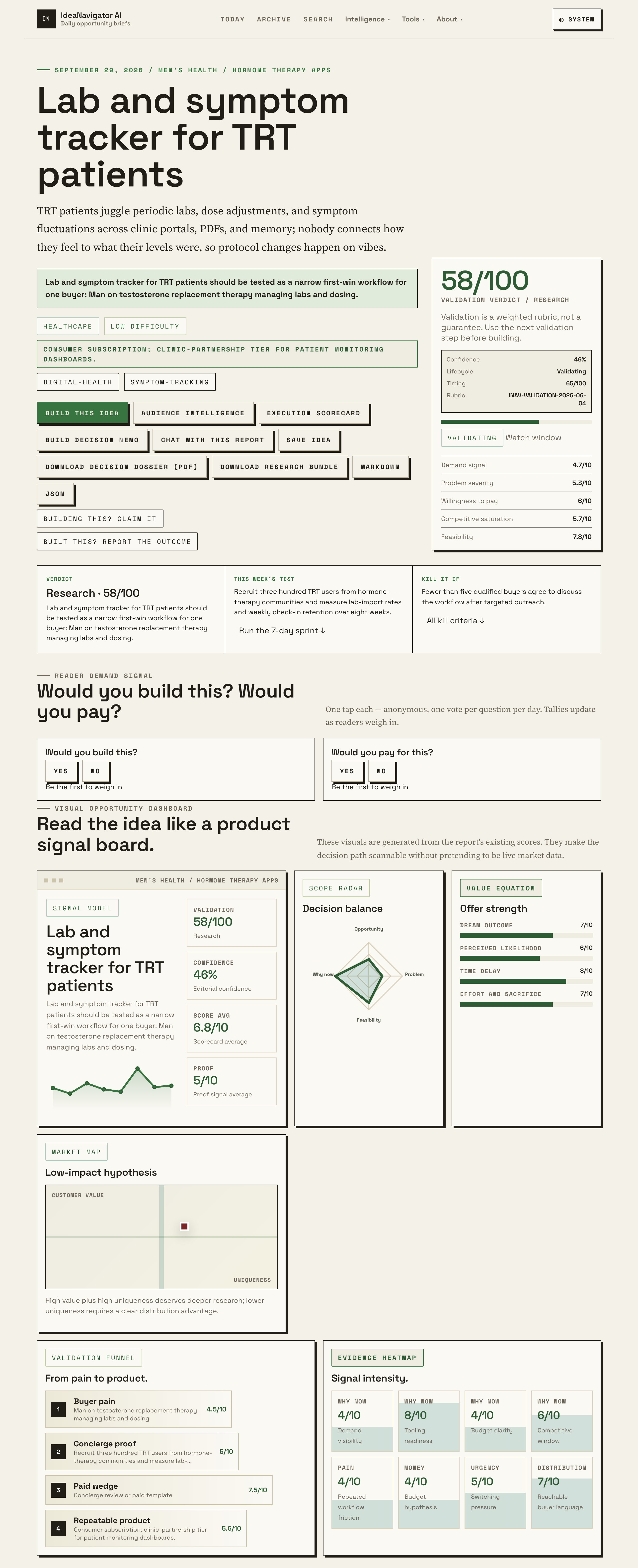
An IdeaNavigator AI proposal describes a lab and symptom tracker for men managing testosterone replacement therapy. It would combine imported lab results, dose changes and daily check-ins, but it is a product concept, not a tested clinical tool; user demand and retention remain unverified.
IdeaNavigator AI has proposed a tracking app for men on testosterone replacement therapy (TRT) that would bring lab results, dose changes and symptom reports together in one timeline. The concept targets patients who manage care across clinic portals, PDFs and personal records, but no product launch, clinical evaluation or user-test results are reported.
According to the IdeaNavigator AI proposal, the first version would let users import laboratory test PDFs, chart hormone results over time and record daily symptoms alongside dose changes. It would also produce trend summaries for clinic visits and flag results that move outside user or clinic target ranges. The proposal does not specify how those ranges would be set or whether clinicians would review the flags.
The proposal suggests a consumer subscription with a possible clinic-partnership tier offering patient-monitoring dashboards. It targets men managing TRT rather than the broader population using health or fitness tracking apps. IdeaNavigator AI provides no pricing, clinic partners, launch date or technical details.
To test demand, IdeaNavigator AI recommends recruiting 300 TRT users through hormone-therapy communities and measuring lab-import rates and weekly check-in retention over eight weeks. These are proposed study details, not completed research: the source reports no recruitment, results or success thresholds.
Connecting Results With Daily Symptoms
The IdeaNavigator AI proposal identifies a record-keeping problem: patients may have lab results, medication instructions and descriptions of how they feel stored in different places. A shared timeline could make it easier for a patient and clinician to review how reported symptoms and dose changes line up with test results. Whether that would improve care is not established by the proposal.
The distinction matters because an app that displays health information can influence how users interpret it. A flag for a value outside a target range could prompt a useful conversation, but IdeaNavigator AI does not describe clinical oversight, alert handling or safeguards against patients changing doses on their own. The proposal presents the tool as a way to prepare for clinic visits, not as a substitute for medical advice.
A Fragmented TRT Record
The IdeaNavigator AI concept focuses on information patients may accumulate between appointments during TRT: hormone panels, dose history and changing symptoms. Its proposal describes those records as spread across clinic portals, PDF files and memory, with no single view connecting them.
IdeaNavigator AI frames the opportunity around growth in TRT prescriptions and telehealth clinics, which it says has created a sizable population managing care across providers. The proposal supplies no figures or citations for that growth, so its scale and the size of the potential market cannot be assessed from the information provided.
Clinical Rules Remain Unspecified
IdeaNavigator AI’s proposal does not say which lab markers the app would support, how it would handle different laboratory reference ranges, or who would define a patient’s target values. It also leaves open how PDF imports would be checked for errors and whether users could correct extracted results.
Other unanswered questions include how sensitive health records would be stored and shared, whether clinicians would see data automatically, and what would happen when a result or symptom report raises concern. The proposal provides no evidence that its charts or alerts improve treatment decisions, and reports no user findings to confirm that patients would keep up daily check-ins.
Eight-Week Demand Test Proposed
IdeaNavigator AI proposes an eight-week test with 300 TRT users, tracking how often participants import lab results and whether they continue weekly symptom check-ins. The proposal gives no start date, recruitment status, measurement thresholds or planned publication of results.
If carried out, the test could show whether users adopt the basic tracking workflow. It would not by itself establish clinical benefit or validate the app’s interpretation of lab results. Those questions would require further evidence, including details on clinical review and how the tool handles different treatment plans.
Source: IdeaNavigator AI
Key Questions
What is the proposed TRT tracker?
It is a proposed app that would combine imported lab results, dose changes and daily symptom check-ins in a timeline for men receiving testosterone replacement therapy.
Is the app available or clinically tested?
No launch or clinical evaluation is reported. The concept has no reported user-test results.
How would the proposed test work?
The proposal suggests recruiting 300 TRT users and tracking lab imports and weekly check-in retention over eight weeks. It does not say that recruitment has begun.
Would the app recommend dose changes?
The described features include charts, visit summaries and flags for results outside target ranges. The proposal does not say that the app would recommend or manage dose changes.
Source: IdeaNavigator AI
Halloween Picks
halloween
As an affiliate, we earn on qualifying purchases.