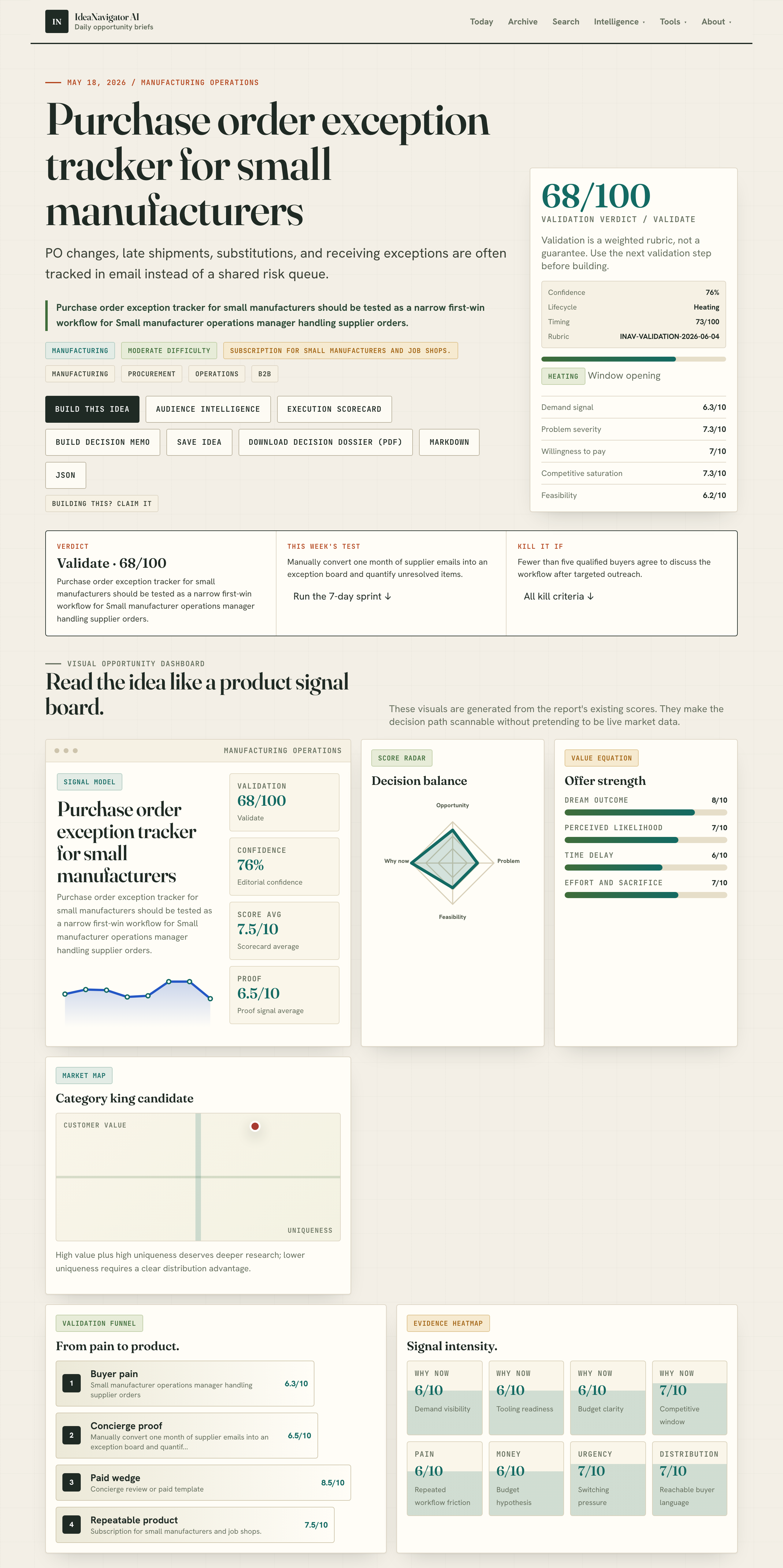
📊 Full opportunity report: Purchase order exception tracker for small manufacturers on IdeaNavigator AI — validation score, market gap, and execution plan.

Get business pricing on tech for your team
- Business-only prices and quantity discounts
- Tax-exempt purchasing
- Multiple users, one account, clear invoices
TL;DR
A prototype purchase order exception tracker is being tested for small manufacturers to streamline handling supplier issues. This could reduce costs and improve operations during supply disruptions.
Testing has begun on a new purchase order exception tracker aimed at small manufacturers, designed to improve how they manage supplier issues such as late shipments, substitutions, and PO changes. This development seeks to address operational inefficiencies caused by reliance on email-based tracking during supply chain disruptions, which are increasingly costly for small teams.
The initiative involves creating a simple exception board that records key details including supplier, purchase order, issue type, owner, next action, and customer-impact notes. The tracker is intended as a minimal viable product (MVP) to be tested by small manufacturing operations managers, with validation involving manually converting one month of supplier emails into the exception board and quantifying unresolved issues.
According to sources involved in the project, the goal is to streamline exception handling, reduce manual tracking errors, and improve response times. The tracker will be offered via subscription, targeting small manufacturers and job shops facing supply volatility and thin operations teams. The project is currently in the testing phase, with broader deployment expected if initial validation proves successful.
Why Small Manufacturers Need Better Exception Management
This development matters because small manufacturers often lack the resources for complex supply chain management systems. Relying on email for tracking supplier issues can lead to delays, overlooked problems, and increased costs, especially during periods of supply volatility. An effective, easy-to-use exception tracker could significantly improve operational resilience and reduce disruptions, making it a valuable tool for small teams managing tight margins.
Products Worth Considering

DJI Mic 2 Wireless Microphone System (2 Transmitters, 1 Receiver, Charging Case)

Apple Watch Series 12 GPS 42mm Smartwatch

DJI Osmo Action 5 Pro 4K Waterproof Action Camera with Dual OLED Touchscreens, Froggi 47-Piece Sport Kit and SD Card
As an affiliate, we earn on qualifying purchases.
Supply Chain Challenges Drive Need for Simpler Tools
Recent supply chain disruptions have highlighted the vulnerabilities of small manufacturers, who typically operate with limited staff and resources. Currently, many track PO issues informally via email, which can become unmanageable during periods of high volatility. The concept of a dedicated exception tracker has gained traction as a way to formalize issue management, but it remains in early testing stages.
Previous efforts to improve supply chain visibility have focused on larger firms with sophisticated ERP systems, leaving small manufacturers underserved. This project aims to fill that gap with a lightweight, accessible solution tailored to their operational scale.
“The goal is to create a simple, effective tool that helps small manufacturers keep better track of supplier issues without adding complexity to their workflows.”
— an anonymous project participant
Uncertainties About Tracker Effectiveness and Adoption
It is not yet clear how well the exception tracker will perform in real-world settings or whether small manufacturers will adopt it widely. The validation process is still ongoing, and broader deployment depends on initial success. Additionally, questions remain about the integration with existing systems and long-term scalability.
Next Steps for Validation and Broader Rollout
The next phase involves manually converting a month of supplier emails into the exception board to measure unresolved issues and response improvements. If results are positive, developers plan to refine the tool and prepare for a wider pilot with additional small manufacturers. Feedback from early users will shape future features and deployment strategies.
Key Questions
How will the exception tracker improve small manufacturers’ operations?
The tracker aims to formalize issue tracking, reduce manual errors, and speed up response times, helping small teams manage supplier problems more efficiently during supply disruptions.
Is this tool ready for general use?
The tracker is currently in a testing phase with initial validation underway. Broader availability depends on successful validation and feedback from early users.
Will the tracker integrate with existing supply chain software?
Details about integration are still being developed. The initial MVP is designed as a simple, standalone tool, with future plans possibly including integration options based on user feedback.
What is the cost structure for small manufacturers interested in this tool?
The tracker will be offered via subscription, but specific pricing details have not yet been announced. The goal is to keep it affordable for small manufacturing operations.
Source: IdeaNavigator AI