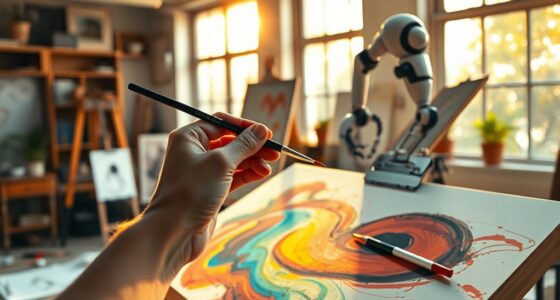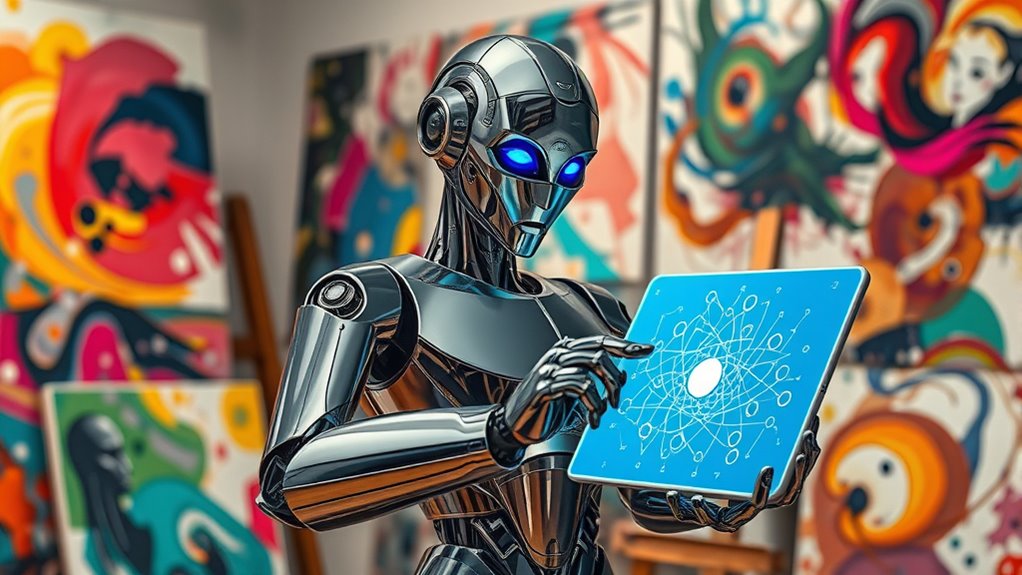
Algorithms today can imitate human creativity very well, producing art, music, and literature that often feels original. While they can generate innovative ideas, many argue they mainly remix or copy existing works rather than truly invent something new. Nevertheless, AI’s collaboration with humans sparks new possibilities and styles that blur the line between imitation and innovation. If you want to understand how these tools influence artistic expression and whether they can genuinely create, there’s more to uncover.

Get business pricing on tech for your team
- Business-only prices and quantity discounts
- Tax-exempt purchasing
- Multiple users, one account, clear invoices
Key Takeaways
- AI tools extend creative possibilities by generating novel ideas, but often rely on existing data, blurring lines between imitation and innovation.
- Algorithms can produce original outputs, yet their creativity is limited by the scope and biases embedded in their training data.
- Human-AI collaboration enhances innovation, with algorithms acting as partners that amplify human ideas rather than replace them.
- Ethical concerns about authenticity and ownership influence perceptions of whether AI-driven works are truly innovative or merely imitative.
- Advances in technology, like projectors and deep learning, enable AI to create increasingly sophisticated and seemingly original art forms.

Artificial intelligence is transforming the way we approach creativity, opening new avenues for artistic expression and innovation. As AI tools become more sophisticated, you might wonder if they genuinely create or merely imitate human ingenuity. This shift raises important questions about ethical implications and the nature of human-AI collaboration. When machines start generating art, music, or literature, it challenges traditional notions of originality and the role of human creators. You could argue that AI acts as a partner, amplifying your ideas rather than replacing your creativity. However, this partnership isn’t without concern. Ethical issues emerge around authorship, ownership, and authenticity. If an AI system produces a painting, who owns the rights—the programmer, the user, or the machine itself? These questions demand careful thought, especially as AI-generated content becomes more indistinguishable from human-made works. You need to think about whether reliance on algorithms diminishes genuine human expression or enhances it by expanding what’s possible. Additionally, advancements in projector technology demonstrate how tools can influence creative processes by providing new visual capabilities.
In human-AI collaboration, you’re not just passively consuming content; you’re actively shaping it alongside algorithms. This partnership can inspire new forms of art that blend human intuition with machine precision. For example, artists use AI to explore styles or generate ideas they might never have conceived alone. But this collaboration also prompts you to reflect on the ethical implications of transparency and intent. Are you comfortable with AI influencing your creative process, and do you understand how these systems operate? Transparency about AI’s role in creation becomes vital to maintaining trust and integrity. Additionally, you should be aware of biases embedded in algorithms, which can subtly influence the output, raising questions about fairness and diversity in creative expression.
Frequently Asked Questions
Can AI Develop Genuine Emotional Expression in Creative Works?
AI can simulate emotional expression in creative works, but it struggles with genuine emotional authenticity. You might notice the expressive capabilities are impressive, yet they lack true feeling behind them. While AI can mimic emotions convincingly, it doesn’t experience them, so authentic emotional depth remains beyond its reach. You’ll find AI’s creative outputs compelling, but their emotional authenticity often feels superficial compared to human expression.
How Does Ai’s Creativity Compare to Human Intuition?
Sure, AI’s creativity is like a magician’s hat—full of surprises, but mostly tricks. It mimics human intuition, yet lacks genuine artistic originality. You might think machine intuition could rival human insight, but it’s more like a parrot echoing your thoughts. While AI can generate impressive outputs, it still can’t truly grasp the nuanced depth of human emotion and spontaneity that fuels authentic creativity.
Are Ai-Generated Artworks Considered Authentic or Derivative?
You might see AI-generated artworks as both authentic and derivative, sparking the originality debate. While some argue these pieces lack genuine human emotion and intent, others believe they push creative boundaries through algorithmic innovation. Authenticity concerns stem from the fact that AI creates based on existing data, potentially making the work feel less original. Ultimately, whether you see these artworks as truly authentic depends on your perspective on creativity and value.
What Are the Ethical Implications of Ai-Driven Creativity?
They say “with great power comes great responsibility,” and AI-driven creativity isn’t exempt. You should consider the ethical implications, like algorithm bias that skews outputs and the challenge of respecting intellectual property rights. When you rely on algorithms, you risk unintentionally perpetuating stereotypes or infringing on artists’ rights. It’s vital to develop transparent, fair systems that honor originality while embracing technological innovation.
Will AI Eventually Surpass Human Innovation in Arts and Sciences?
You might wonder if AI will eventually surpass human innovation in arts and sciences. While machine learning enables AI to analyze vast data and generate creative ideas, it primarily acts as cognitive augmentation. It can enhance your abilities and inspire new concepts, but true human ingenuity—intuition, emotion, and consciousness—remains irreplaceable. AI will likely complement rather than fully surpass your innovative capacity, pushing boundaries together.
Conclusion
So, as you ponder whether algorithms can truly innovate or merely imitate, ask yourself: are these machines creators or merely echoes of human ingenuity? Like a mirror, AI reflects our creativity but may never truly possess it. While they can surprise us, their originality remains questionable. Ultimately, the question isn’t just what AI can do, but what it reveals about our own inventive spirit—and whether we’re willing to see ourselves in the reflection.
Fall Picks
fall essentials
As an affiliate, we earn on qualifying purchases.