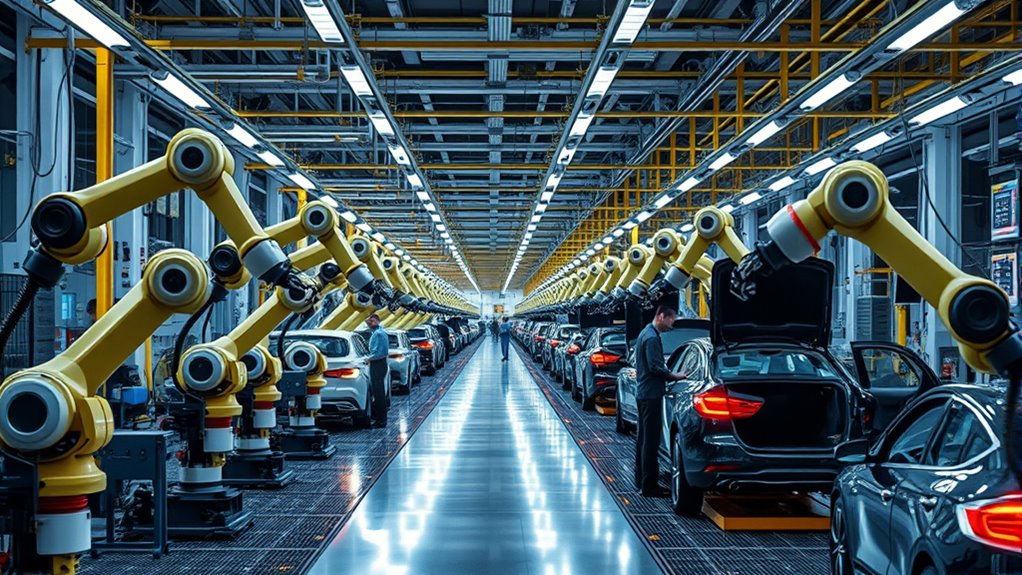

History shows that automation doesn’t cause mass unemployment, even though it does disrupt industries. When new technologies emerge, some jobs change or disappear, but others are created in the process. Past shifts, like during the Industrial Revolution or the digital age, led to economic growth and new opportunities. If you explore further, you’ll discover how society adapts and benefits from technological progress rather than suffers from it.
Key Takeaways
- Historically, technological disruptions have shifted jobs rather than causing widespread unemployment.
- New industries and roles emerge as old ones decline due to automation.
- Past innovations have boosted productivity and created additional employment opportunities.
- Governments and institutions effectively retrain workers, easing transitions during technological shifts.
- Automation tends to enhance economic growth, with employment adapting over time rather than disappearing entirely.
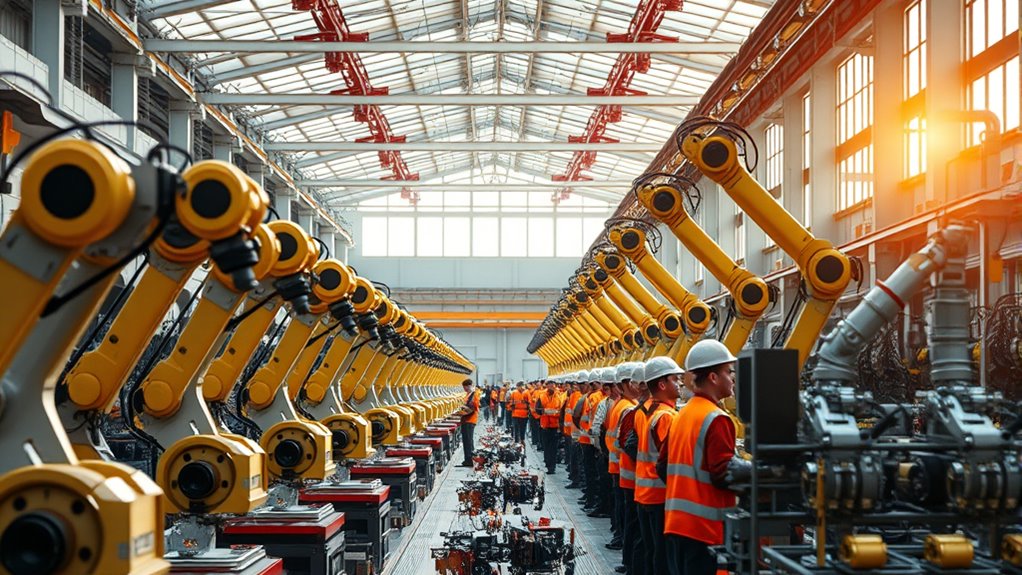
Have you ever wondered how automation is transforming the job market? It’s a question that’s been on many people’s minds as technological advancements accelerate at a breakneck pace. When you hear about robots taking over manufacturing lines or AI systems handling customer service, it’s natural to worry about what that means for employment. But history offers a compelling perspective: rather than causing mass unemployment, automation has typically reshaped the labor market in ways that create new opportunities. The effects of technological advancements aren’t always straightforward; they often lead to shifts in demand, new skill requirements, and industry transformations. While some jobs disappear or change dramatically, others emerge, sometimes almost overnight.
Throughout history, technological progress has consistently disrupted certain sectors while bolstering others. During the Industrial Revolution, for example, mechanization eliminated many manual jobs but also spurred the growth of new industries and employment opportunities. The key insight here is that automation doesn’t simply wipe out jobs; it transforms the labor market. Workers who adapt and acquire new skills often find themselves in roles that didn’t exist before. Today’s digital revolution follows a similar pattern, with automation replacing repetitive, low-skill tasks but also creating demand for tech-savvy professionals, data analysts, and other specialized roles. The labor market effects of these technological advancements are complex but tend to lead to a more efficient economy with a broader array of job types.
Technological progress disrupts sectors but creates new opportunities, transforming jobs and fostering economic efficiency and growth.
What’s important to recognize is that economies have historically adjusted to technological shifts. Governments, educational institutions, and businesses often respond by investing in retraining programs, fostering innovation, and creating new markets. This dynamic helps cushion the impact of automation and guarantees that the labor force can transition rather than be left behind. Additionally, automation in different industries has shown that technological change can be tailored to complement human workers rather than replace them entirely. While some workers are undoubtedly displaced, many find new roles that leverage their experience in different ways. It’s also worth noting that automation can boost productivity, leading to lower prices and increased consumer demand, which in turn stimulates job growth in other sectors.
In essence, the labor market effects of technological advancements are not predetermined to cause widespread unemployment. Instead, history demonstrates that economies adapt, and new opportunities often arise from technological change. So, while automation might challenge certain industries or skill sets, it also opens the door for innovation, new jobs, and economic growth. If you stay flexible and willing to learn, you can navigate the shifts and benefit from the ongoing evolution of the job market.
Frequently Asked Questions
How Have Past Technological Shifts Affected Employment Levels?
Past technological shifts have often transformed the labor market, creating new jobs even as some roles become obsolete. You’ve seen how skill adaptation plays a vital role in this process, allowing workers to shift into emerging industries. While automation can disrupt certain jobs, history shows that the overall employment levels tend to grow as the economy adjusts, making it essential for you to develop new skills to stay competitive in changing times.
What New Job Sectors Have Emerged Due to Automation?
You might be surprised, but automation has created new job sectors like robotic manufacturing and AI-driven services. These fields demand skilled workers to design, maintain, and improve advanced systems. Instead of causing mass unemployment, automation shifts your job landscape, opening opportunities for tech-savvy professionals. Embracing these changes can help you stay competitive, as new roles emerge to support the growing reliance on robotic and AI technologies.
How Quickly Do Economies Typically Adapt to Technological Changes?
You’ll find that economies typically adapt to technological changes within a few years, thanks to labor market resilience and innovation-driven growth. As new technologies emerge, they create opportunities for new industries and jobs, prompting swift shifts in the workforce. Your ability to adapt quickly depends on ongoing education and skill development, which help you stay relevant in a changing job landscape shaped by automation and innovation.
Are Certain Industries More Vulnerable to Automation Than Others?
You might think certain industries are more vulnerable to automation, but industry resilience varies. Sectors like manufacturing face higher automation vulnerability due to repetitive tasks, while healthcare and education show more resilience because they rely on complex human interactions. Although automation may threaten some jobs, dynamic industries adapt quickly, creating new opportunities. Your awareness of industry resilience helps you understand that automation’s impact isn’t uniform, fostering a proactive approach to future workforce changes.
What Policies Can Mitigate Potential Negative Impacts of Automation?
You can mitigate automation’s negative impacts by supporting policies like Universal Basic Income, which provides financial stability, and investing in Vocational Training to help workers adapt. These measures guarantee that as technology evolves, you’re protected from job displacement. By embracing these policies, you create a resilient workforce ready for new opportunities, making automation a tool for growth rather than a threat to employment stability.
Conclusion
So, don’t despair or dread change. History shows that automation, while altering jobs, also opens opportunities and offers optimism. Instead of resisting, embrace evolution, empower education, and explore new endeavors. Remember, progress promotes productivity, prosperity, and progressiveness. By staying adaptable and agile, you can turn technological tides into tools for transformation, not termination. Ultimately, automation’s impact depends on your attitude—approach it with awareness and adaptability, and you’ll avoid unemployment’s pitfalls and embrace a future full of possibilities.