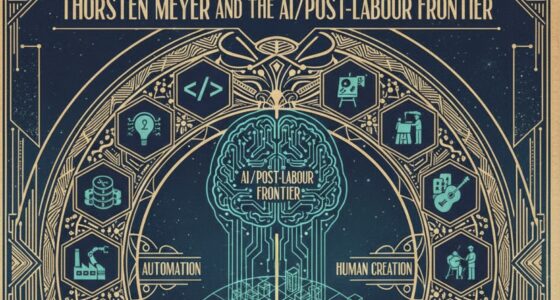

Automation and AI carry serious risks of spreading misinformation, as recent incidents show how false content can quickly go viral and deceive audiences. Literature and Cold War history warn us about automation replacing human control, fueling ethical concerns and potential conflicts. Without proper verification tools and oversight, these systems can cause chaos, damage reputations, and threaten safety. To understand the full scope of potential dangers and how to protect against them, keep exploring this critical topic.

Get business pricing on tech for your team
- Business-only prices and quantity discounts
- Tax-exempt purchasing
- Multiple users, one account, clear invoices
Key Takeaways
- Fact-check automated content and AI-generated book lists using tools like Originality.ai to prevent misinformation.
- Literary dystopias, such as *Player Piano*, warn of automation’s potential to erode human purpose.
- Automated military systems like the Soviet “Dead Hand” pose risks of accidental escalation and ethical concerns.
- Recent incidents show AI can produce convincing false book titles, emphasizing the need for verification.
- Ethical oversight and verification are essential to mitigate automation-related misinformation and unintended consequences.

Automation has long been a subject of both science fiction and serious debate, but recent incidents highlight how easily fabricated content can spread misinformation. As you navigate the digital landscape, you need to be aware of how AI-driven automation can produce convincing but False information that’s difficult to distinguish from reality. For example, in dystopian literature, authors like Kurt Vonnegut imagined societies where machines replace human jobs, managing entire systems through supercomputers like EPICAC XIV. In his novel *Player Piano*, society is driven by machine-generated career profiles, stripping individuals of personal choice and creativity. Despite material comforts, people feel disconnected, highlighting the emotional toll of automation’s unchecked growth. These themes resonate today, as debates about AI replacing human roles continue to intensify, raising questions about the loss of autonomy and fulfillment.
Automation’s risks extend beyond fiction and into real-world systems, especially in the context of nuclear deterrence. The Soviet Union’s “Dead Hand” system, allegedly capable of launching automatic retaliation if Moscow was destroyed, exemplifies how automation can escalate risks of accidental or irreversible conflict. This system, confirmed by Soviet officials and detailed in *The Dead Hand*, relied on automated protocols to ensure mutual destruction, embodying a Cold War era where machine-controlled retaliation increased fears of nuclear escalation. Such strategies rely on automated decision-making for life-and-death matters, posing serious ethical concerns about human oversight and control. Additionally, the increasing reliance on automated systems raises concerns about system vulnerabilities that could be exploited or malfunction, leading to unintended consequences.
The danger of automation is also evident in the modern spread of misinformation, such as the 2025 incident involving AI-generated book lists. A summer reading list published by *Chicago Sun-Times* Falsely attributed ten books to well-known authors like Isabel Allende and Min Jin Lee, though only half of the titles were real. Freelancer Marco Buscaglia admitted to using AI to generate the list and failing to verify the authorship, leading to a wave of misinformation that spread to other outlets like *Philadelphia Inquirer*. This episode underscores the importance of AI detection tools and fact-checking systems to prevent the proliferation of fabricated content.
Tools such as Originality.ai, which combine AI detection and fact-checking, can quickly verify the authenticity of content, flagging fake books or False claims in seconds. When integrated into editorial workflows, these tools could considerably reduce the risk of publishing misinformation and help maintain trust. They serve as essential safeguards against the pitfalls of automated content creation, which, if unchecked, can harm reputations and distort public understanding.
Ultimately, automation’s societal impacts, as depicted in Vonnegut’s *Player Piano*, warn of a future where machines replace human agency, leaving citizens without purpose or fulfillment. Whether in literature, military systems, or journalism, the unchecked expansion of automation demands strict oversight, ethical considerations, and robust verification mechanisms. Only then can society harness automation’s benefits without falling prey to its dangerous potential for misinformation and unintended consequences.
Frequently Asked Questions
How Accurate Are Automation Doomsday Predictions?
You might wonder how accurate automation doomsday predictions really are. In reality, most forecasts tend to overestimate progress, with some claims missing the mark by a wide margin. While certain autonomous military systems show promise, full automation for lethal decisions remains limited and ethically complex. You should approach these predictions critically, recognizing that technological development often unfolds slower and more cautiously than alarmist forecasts suggest.
What Measures Prevent Automation From Causing Widespread Unemployment?
Imagine a busy factory floor where workers and robots collaborate seamlessly. You can prevent automation-driven unemployment through targeted strategies: tracking risks with data, offering reemployment programs, and providing skill training for human-centric roles. You can also implement economic policies like tax incentives and infrastructure projects. By fostering collaboration between industries and governments, you create a resilient job market where technology enhances, rather than replaces, human work.
Are There Legal Frameworks Addressing Automation Risks?
You’re asking if legal frameworks address automation risks. They do, through regulations like GDPR and CCPA that govern data and privacy. You’ll find liability clauses in vendor contracts to limit legal exposure, and regular audits ensure compliance. However, laws vary across regions, making it tricky to stay fully compliant globally. Staying informed about evolving legal standards and implementing risk mitigation strategies helps safeguard your organization from automation-related liabilities.
How Do Automation Doomsday Books Influence Policy Making?
You see automation doomsday books influencing policy making by framing fears around widespread job loss. For example, policymakers might introduce robot taxes or strengthen social safety nets to address automation’s potential to widen inequality. These books fuel debates, encouraging intervention over free-market solutions, shaping policies that prioritize workforce retraining, industry regulation, and social protections, ultimately aiming to mitigate automation’s disruptive economic impact and promote a more equitable future.
What Role Do AI Ethics Play in Automation Fears?
You wonder how AI ethics influence automation fears. They play a vital role by shaping public trust and policy decisions. When organizations implement transparent, unbiased guidelines, it reduces anxiety about job loss and misuse. Conversely, lack of enforcement fuels skepticism and fears of bias, discrimination, or unchecked automation. Ultimately, strong ethical frameworks help you feel more confident that AI will serve society fairly, easing concerns about widespread displacement.
Conclusion
So, don’t buy into the hype of an AI apocalypse just yet. The idea of automation wiping out humanity overnight is wildly exaggerated—like imagining robots taking over the world tomorrow. Instead, stay informed and vigilant, but don’t panic. The future’s not a doomsday scenario; it’s a chance for humans and machines to team up for incredible progress. Keep a level head, and you’ll be ready for whatever tomorrow brings.
Fall Picks
fall essentials
As an affiliate, we earn on qualifying purchases.