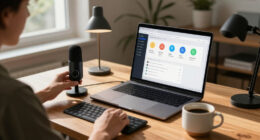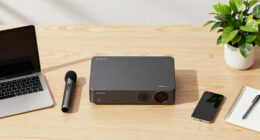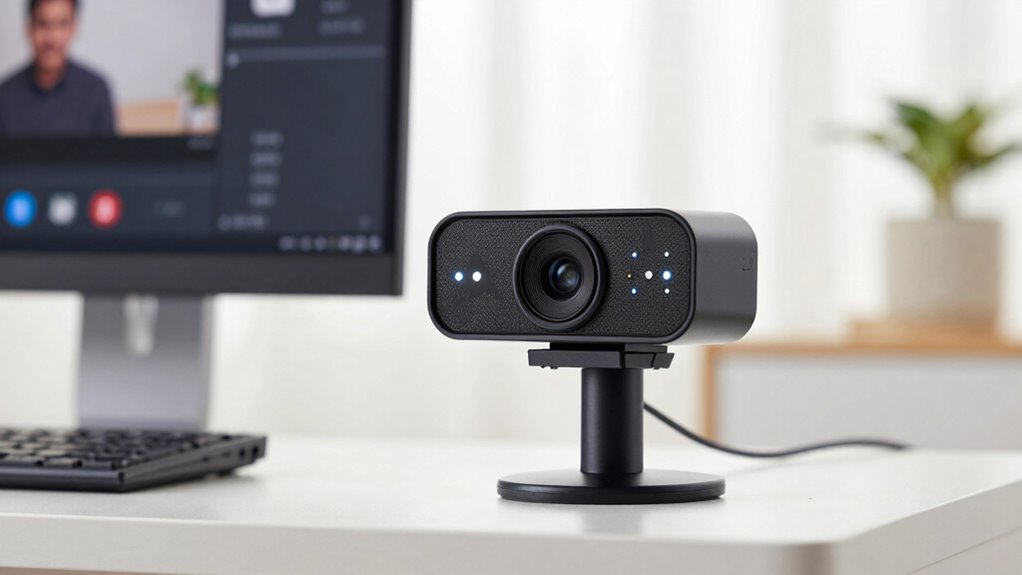

If your main goal is steady, professional framing, improving your environment with better lighting and stable setup might be enough. A PTZ webcam offers remote control for dynamic shots and multi-angle recordings, which is great if you need frequent adjustments or complex setups. However, if your environment is well-lit and your camera stays in one place, manual adjustments can do the trick. To see how to optimize your setup further, keep exploring this topic.

Get business pricing on tech for your team
- Business-only prices and quantity discounts
- Tax-exempt purchasing
- Multiple users, one account, clear invoices
Key Takeaways
- Good lighting and stable framing can often eliminate the need for a PTZ camera.
- Upgrading lighting and audio quality may provide more noticeable improvements than PTZ features.
- PTZ webcams are most beneficial for dynamic presentations or multi-angle recordings.
- Fixed high-quality cameras with manual adjustments might suffice for consistent environments.
- Consider your specific use case—frequent moves or multi-angle needs justify PTZ, otherwise better framing may be enough.
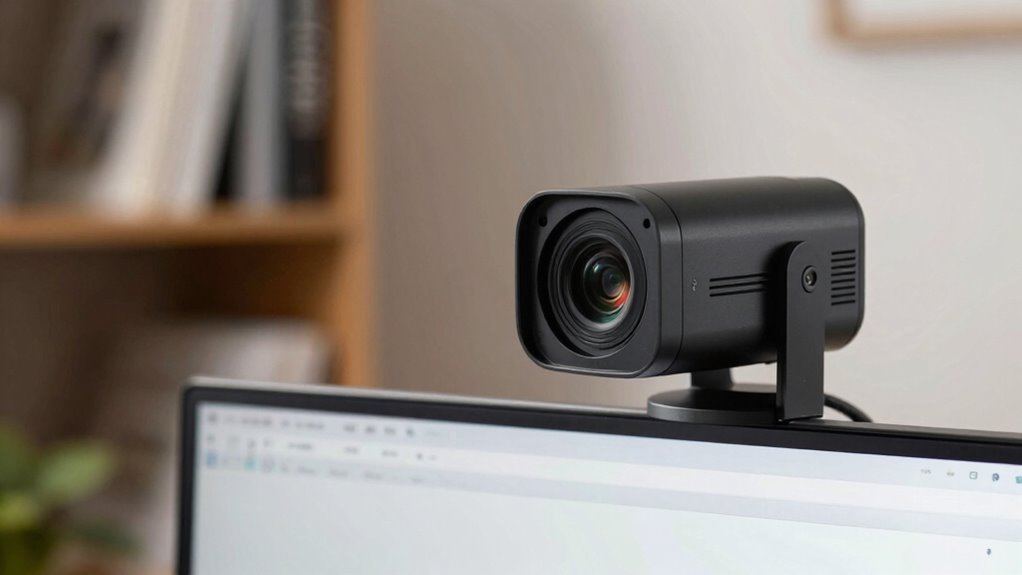
If you’re wondering whether a PTZ webcam is worth the investment or if better framing can achieve the same results, it’s vital to understand what each option offers. A PTZ (pan-tilt-zoom) webcam provides remote-controlled movement, allowing you to adjust the camera’s view without physically repositioning it. This flexibility is ideal if you need dynamic framing, multiple angles, or the ability to focus on different parts of a room during a live session. However, investing in a PTZ isn’t just about the hardware; it also involves considering your lighting setup and audio quality. Good lighting can make your image clearer and more professional, reducing the need for zooming or repositioning. If your lighting is poor, even a high-end PTZ camera won’t produce essential results, and you might find yourself constantly adjusting the camera to compensate for shadows or low visibility. Conversely, a well-lit environment can make a standard camera perform adequately, negating the necessity of a PTZ unless you require frequent framing changes.
Additionally, understanding the importance of lighting in your setup can often determine whether a more advanced camera is truly necessary. Audio quality is equally vital. No matter how advanced your camera is, if your microphone picks up background noise or your voice sounds muffled, your overall presentation suffers. Many PTZ webcams come with built-in microphones, but their quality varies. Investing in a dedicated microphone or sound system can dramatically improve your audio, which is often more impactful than perfect framing. If your primary concern is clear communication, you’ll want to prioritize audio enhancements alongside your camera setup. Better framing isn’t just about aesthetics; it guarantees your face and key visuals stay centered and professional, but it can’t fix poor lighting or audio issues.
Furthermore, lighting quality can influence how well your camera captures details, especially in environments with limited natural light. Moreover, the cost of equipment can escalate quickly when adding features like pan-tilt-zoom or multiple lenses, making it crucial to weigh whether those features genuinely benefit your use case. Ultimately, whether you need a PTZ webcam depends on your specific needs. If you conduct frequent presentations, panel discussions, or multi-angle recordings, the flexibility of a PTZ can be a game-changer. But if your environment already has good lighting and sound, and your framing is stable, a high-quality fixed camera with some manual adjustments might suffice. Remember, investing in lighting and audio quality often yields quicker, more noticeable improvements than upgrading to a PTZ camera alone. So, before making the leap, evaluate what aspects of your setup need the most attention—sometimes, better framing and a focus on lighting and sound can deliver the results you want without the additional complexity and cost of a PTZ system.
best webcam for professional streaming
As an affiliate, we earn on qualifying purchases.
As an affiliate, we earn on qualifying purchases.
Frequently Asked Questions
Can a High-Quality Webcam Replace a PTZ Camera?
A high-quality webcam can sometimes replace a PTZ camera for basic tasks, but it depends on your needs. If you prioritize camera resolution and autofocus capabilities, a good webcam offers impressive clarity and sharpness, making it suitable for many uses. However, PTZ cameras excel in remote control, zooming, and wide-angle views, which a regular webcam can’t match. So, consider your specific requirements before replacing a PTZ with a webcam.
How Does Lighting Affect PTZ Camera Performance?
Lighting is the backbone of your PTZ camera’s performance, much like a lighthouse guiding ships through fog. When lighting precision is poor, your camera’s sensitivity struggles to capture clear images, resulting in grainy or dim footage. Bright, even lighting helps your PTZ camera operate at its best, ensuring sharp, vibrant visuals. Proper lighting enhances camera sensitivity, making motion tracking and detail recognition more accurate, so your broadcasts stay crisp and professional.
Is Software-Based Framing as Effective as Hardware PTZ?
Software-based framing can be quite effective, especially when combined with autofocus technology and software stabilization. While it might not match the precision of a hardware PTZ webcam in dynamic situations, it offers flexibility and ease of use for fixed or semi-fixed shots. If your setup allows for good lighting and steady camera positioning, software framing can deliver professional results without the complexity or cost of a PTZ camera.
What Is the Cost Comparison Between PTZ Webcams and Fixed Webcams?
A PTZ webcam generally costs more than fixed webcams due to its motorized pan, tilt, and zoom features, offering greater flexibility. For a cost analysis, budget options include affordable fixed webcams that deliver good quality without extra features. If you need dynamic movement and professional control, investing in a PTZ webcam might be worth it, but if simplicity suffices, a fixed webcam provides a cost-effective and reliable solution.
Do PTZ Webcams Require Special Setup or Maintenance?
Yes, PTZ webcams require some setup and maintenance. You’ll need to perform camera calibration to guarantee accurate movement and positioning. Additionally, motorized controls need regular checks to keep the camera functioning smoothly. While setup can be straightforward, ongoing maintenance is essential to prevent issues like misalignment or motor failure. Investing time in calibration and maintenance ensures your PTZ webcam consistently delivers ideal framing and performance.
high quality microphone for video conferencing
As an affiliate, we earn on qualifying purchases.
As an affiliate, we earn on qualifying purchases.
Conclusion
In the end, choosing between a PTZ webcam and better framing is like selecting the right paintbrush for a masterpiece. If you want smooth, versatile shots that move with your flow, a PTZ camera can be your trusty artist’s brush. But if your goal is straightforward clarity and simplicity, mastering framing might be all you need. Think of it as steering your ship—sometimes, a steady hand and careful navigation beat fancy sails every time.
adjustable LED lighting for streaming
As an affiliate, we earn on qualifying purchases.
As an affiliate, we earn on qualifying purchases.
As an affiliate, we earn on qualifying purchases.
Fall Picks
fall essentials
As an affiliate, we earn on qualifying purchases.