
You can adapt as fast as tech evolves by embracing continuous reskilling and cultivating a growth mindset. Staying curious about emerging tools like AI and digital platforms helps you stay relevant. Regularly updating your skills through online courses, webinars, and industry insights ensures you keep pace with rapid innovations. If you maintain a willingness to learn and actively seek new opportunities, you’ll find ways to stay ahead of technological change—discover how to master this ongoing journey ahead.
Key Takeaways
- Continuous learning and reskilling are essential to keep pace with rapid technological changes.
- Embracing AI and digital tools enhances worker adaptability and future relevance.
- Lifelong education through online courses and industry workshops supports ongoing skill development.
- A growth mindset and curiosity enable workers to turn tech challenges into opportunities.
- Staying informed about industry trends allows proactive identification of emerging roles and skills needed.
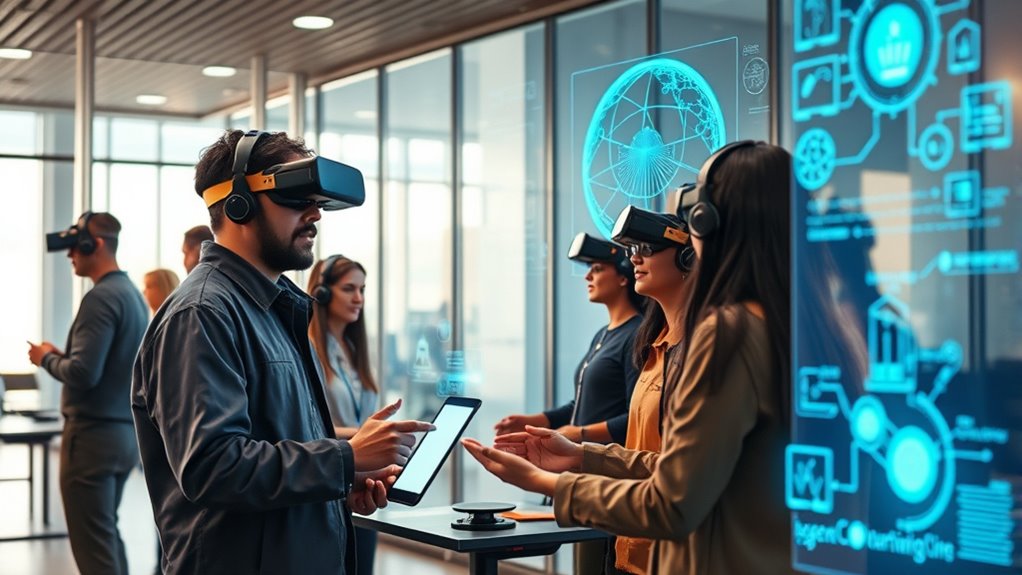
As technology continues to evolve at a rapid pace, staying ahead requires more than just keeping up with new tools—it demands reskilling. The landscape of work is shifting swiftly, driven by innovations like AI integration that automate tasks once thought to require human touch. To remain relevant, you need to embrace lifelong learning, constantly updating your skills to match the pace of technological change. This isn’t a one-time effort but an ongoing process that guarantees you’re not left behind as industries transform around you. Reskilling isn’t just about acquiring new qualifications; it’s about developing a mindset that welcomes continuous growth and adaptation.
AI integration has accelerated the need for this mindset. Many jobs are now influenced by artificial intelligence, whether it’s data analysis, customer service, or even creative work. Instead of viewing AI as a threat, see it as an opportunity to augment your capabilities. By learning how AI tools work and how to leverage them, you enhance your value in the workforce. This kind of reskilling often involves understanding new platforms, mastering data literacy, or gaining expertise in machine learning basics. It’s about becoming comfortable with the digital evolution rather than resisting it. This proactive approach not only helps you stay relevant but also positions you as a forward-thinking professional capable of maneuvering complex technological environments.
Lifelong learning becomes your most powerful tool in this context. It’s no longer enough to complete a single degree or certification; the most adaptable workers are those who continuously seek knowledge. Online courses, webinars, industry workshops, and self-study become part of your routine. The key is to stay curious and open-minded about new skills and industry trends. As technology advances, so should your expertise. This ongoing process builds resilience, allowing you to pivot quickly when new software, programming languages, or automation tools emerge. Recognizing the importance of understanding visual presentation and image quality, such as the contrast ratio in projectors, can also give you an edge in digital environments. It also helps you identify opportunities early — for instance, recognizing how AI integration could streamline your workflow or open new roles within your organization.
In essence, successful reskilling in the face of relentless tech evolution hinges on your willingness to learn constantly and adapt quickly. By prioritizing lifelong learning and actively engaging with AI integration, you position yourself as a valuable asset in any industry. The pace of technological change isn’t slowing down, but neither should your commitment to growth. When you stay curious and open to reskilling, you turn the challenge of rapid tech evolution into an opportunity for personal and professional advancement.
Frequently Asked Questions
How Do Small Businesses Manage Rapid Tech Changes?
You can manage rapid tech changes by prioritizing digital literacy for your team, ensuring everyone stays updated on new tools and processes. Embrace continuous learning, attend training sessions, and leverage online resources. This boosts customer engagement by enabling your staff to use technology effectively, personalize interactions, and respond quickly to evolving customer needs. Staying adaptable and proactive helps your small business stay competitive amid constant technological shifts.
What Role Do Governments Play in Reskilling Initiatives?
Governments act as the backbone of reskilling efforts, providing essential policy support and funding strategies that help workers stay afloat in a turbulent sea of technological change. They craft policies that promote accessible training programs and invest in upskilling initiatives, ensuring no one is left behind. Your success depends on these efforts, as government-led initiatives create a safety net, empowering you to adapt quickly and thrive amid constant tech evolution.
Are There Industries Resistant to Reskilling Efforts?
You’ll find that some industries resist reskilling due to industry inertia and skill lock-in, making change difficult. Sectors like manufacturing or traditional retail may cling to old methods, fearing disruption or costs. This resistance can slow adaptation to new technologies, leaving workers vulnerable. To overcome this, you need proactive efforts, leadership, and incentives that challenge existing norms and promote continuous learning, ultimately helping you stay relevant in a rapidly evolving tech landscape.
How Can Individuals Stay Motivated to Learn New Skills?
You can stay motivated to learn new skills by setting clear motivation strategies, like breaking goals into manageable steps and celebrating progress. Developing strong learning habits, such as dedicating consistent time daily, keeps you engaged. Remind yourself of the benefits, like career growth or personal fulfillment, to maintain focus. Keep a positive mindset, seek support when needed, and track your achievements to stay inspired on your reskilling journey.
What Are the Long-Term Impacts of Continuous Reskilling?
The long-term impacts of continuous reskilling shape the future workforce into adaptable, innovative, and resilient professionals. You’ll stay relevant in a rapidly changing job market by embracing lifelong learning, which boosts your confidence and employability. Over time, this commitment fosters a culture of growth and flexibility, ensuring you’re prepared for emerging opportunities and challenges. Ultimately, continuous reskilling helps you build a sustainable career in an evolving technological landscape.
Conclusion
As you navigate rapid tech changes, it’s tempting to believe reskilling alone guarantees adaptability. However, research suggests that continuous learning environments and supportive policies are just as essential. While reskilling helps, it’s not a silver bullet; the theory of lifelong learning indicates that adaptability depends on a combination of skills, mindset, and infrastructure. Embracing this holistic approach will better prepare you—and the workforce—for the unpredictable pace of technological evolution.