

Universal basic income (UBI) can reduce poverty, streamline social aid, and boost economic growth by providing everyone with a regular, unconditional payment. It simplifies complex welfare programs, cuts administrative costs, and encourages work and innovation. Concerns about funding, inflation, or discouraging employment are valid but can be addressed through smart policy design and creative financing. Exploring these arguments further will reveal effective ways to make UBI work for everyone.

Get tech for your team delivered free — and shop member deals
- Fast, free delivery on millions of items
- Access to Prime Big Deal Days deals on October 6–7
- Prime Video, Amazon Music and more included
Key Takeaways
- UBI reduces poverty and income insecurity by providing unconditional, regular payments to all individuals.
- It streamlines social safety nets, lowering administrative costs and simplifying benefit distribution.
- UBI stimulates economic growth by increasing consumer spending and supporting entrepreneurship.
- It encourages work and social stability by offering financial security without discouraging employment.
- Funding strategies like taxes and reallocations ensure UBI’s sustainability while addressing economic challenges.
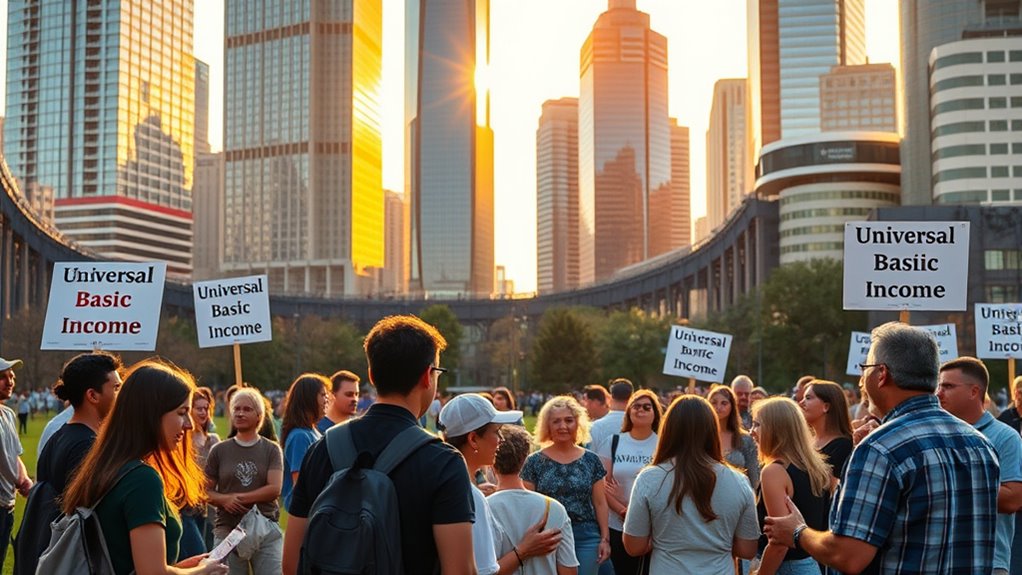
Universal Basic Income (UBI) is gaining attention as a potential solution to economic inequality and job insecurity. You might see it as a way to provide income security for everyone, regardless of employment status. By giving people a regular, unconditional payment, UBI aims to reduce poverty and ensure that basic needs are met. This approach can help lift those struggling at the bottom of the economic ladder, making poverty alleviation more straightforward and consistent. Instead of relying on complex welfare programs, a UBI system offers a simple, universal safety net that guarantees a minimum standard of living. It empowers individuals to focus on improving their skills or pursuing opportunities without the constant fear of financial ruin. You’d have a reliable source of income, helping you plan for the future with more confidence, whether it’s paying bills, covering healthcare, or investing in education. Critics often argue that UBI could disincentivize work, but research suggests that many people continue working or even increase their productivity when they receive a basic income. They see it not as a replacement for employment but as a complement that provides stability during times of transition or economic downturns. Addressing concerns about affordability, proponents argue that UBI could reduce administrative costs associated with targeted welfare programs, streamlining benefits into one universal payment. This could free up government resources and reduce bureaucracy, making social safety nets more efficient. You might also worry about inflation, but studies show that with careful implementation and scaling, UBI can be managed to avoid runaway price increases. Furthermore, many believe that the economic boost from increased consumer spending—since people have more disposable income—could stimulate growth, benefiting everyone. For those concerned about the potential for abuse or dependency, UBI can be designed with supplementary policies that encourage employment, volunteering, or skill development. It’s not meant to create dependency but to serve as a foundation that allows you to build a more stable and productive life. Implementing effective policy design and careful planning is essential to maximize benefits and minimize potential drawbacks. Critics also point out that funding UBI could be challenging, but innovative ideas like wealth taxes, carbon taxes, or reallocating existing welfare budgets can help finance it sustainably. Ultimately, UBI’s goal is to provide a baseline of income security, which directly addresses poverty alleviation. It offers a way to protect individuals from the shocks of economic change, giving you a sense of security and dignity. While it’s not a perfect solution, many believe that UBI can be a powerful tool to create a fairer, more resilient society where everyone has the chance to thrive.
universal basic income informational book
As an affiliate, we earn on qualifying purchases.
As an affiliate, we earn on qualifying purchases.
Frequently Asked Questions
How Would UBI Affect Existing Welfare Programs?
You’ll find that UBI could simplify welfare dependency and strengthen the social safety net by replacing complex programs with a straightforward cash transfer. Instead of steering through multiple benefits, you receive a universal income that reduces bureaucracy and stigma. This approach can empower you to make choices, while ensuring a basic level of support, ultimately making the social safety system more efficient and accessible for everyone.
Would UBI Discourage People From Seeking Employment?
You might worry UBI would reduce workforce motivation and entrepreneurial incentives, but evidence suggests otherwise. When people have a safety net, they’re more likely to pursue meaningful work, innovate, and take risks. UBI can boost entrepreneurial incentives by providing stability, encouraging creativity, and freeing individuals from desperation. Instead of discouraging employment, UBI can empower you to seek fulfilling careers, enhance productivity, and contribute more effectively to the economy.
How Can UBI Be Sustainably Funded Long-Term?
You can maintain UBI long-term by exploring innovative funding models like progressive taxation, wealth taxes, or reallocating existing welfare budgets. Strengthening economic resilience through policies that boost productivity and employment also helps. By diversifying funding sources and ensuring fiscal responsibility, you create a stable foundation for UBI, making it financially sustainable while supporting economic growth. This approach ensures UBI remains a reliable safety net for years to come.
What Impact Might UBI Have on Inflation Rates?
Universal Basic Income could raise inflation rates if not carefully regulated. You might see increased consumer spending, which can lead to inflation if supply doesn’t match demand. To control inflation, policymakers can adjust monetary policy, like raising interest rates or reducing money supply. Proper inflation control ensures that UBI benefits don’t cause runaway prices, maintaining economic stability while supporting individuals.
How Does UBI Address Income Inequality Effectively?
Imagine you receive a steady income regardless of employment, helping lift families out of poverty. UBI promotes poverty alleviation by providing a safety net, ensuring everyone can meet basic needs. It also supports wealth redistribution, narrowing income gaps by giving low-income individuals financial stability. This approach empowers marginalized communities, reduces economic inequality, and fosters social cohesion, making UBI an effective tool for addressing income disparities.
As an affiliate, we earn on qualifying purchases.
Conclusion
So, you’ve seen the compelling reasons to embrace universal basic income. But what if the biggest challenge isn’t economic, but something else entirely? As debates heat up and opinions clash, one thing becomes clear: the future of UBI could reshape your world in ways you never imagined. Are you ready to face the unexpected? The answer might just depend on how you weigh these arguments—and what you decide to do next. The real question is, are you prepared for what’s coming?
financial planning for income security
As an affiliate, we earn on qualifying purchases.
As an affiliate, we earn on qualifying purchases.
government benefit programs guide
As an affiliate, we earn on qualifying purchases.
As an affiliate, we earn on qualifying purchases.
Halloween Picks
halloween
As an affiliate, we earn on qualifying purchases.