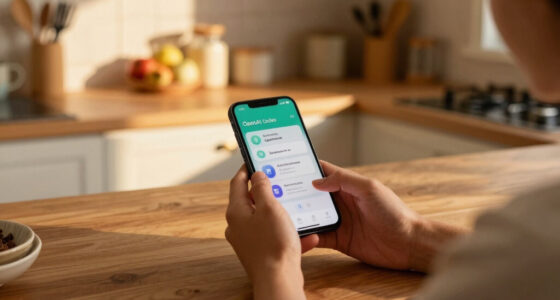
AI-powered checkout systems are revolutionizing retail by combining seamless payment processes with smart advertising and personalized shopping. As you shop, computer vision and machine learning identify products instantly, enabling tailored ads and recommendations right at checkout. This tech not only speeds up your experience but also enhances engagement and satisfaction. Retailers benefit too, saving costs and boosting sales through targeted marketing. Keep exploring to discover how this innovative blend is shaping the future of shopping.
Key Takeaways
- AI-powered checkout systems enable personalized, targeted advertising based on real-time shopper data and product interactions.
- Integration of visual recognition and machine learning allows dynamic product recommendations during checkout.
- Retailers can leverage AI to deliver tailored promotions and offers at the point of sale, enhancing customer engagement.
- Contactless, cashier-less checkouts facilitate seamless advertising opportunities through digital displays and mobile alerts.
- AI-driven insights improve marketing strategies by analyzing consumer behavior and optimizing advertising content in retail environments.
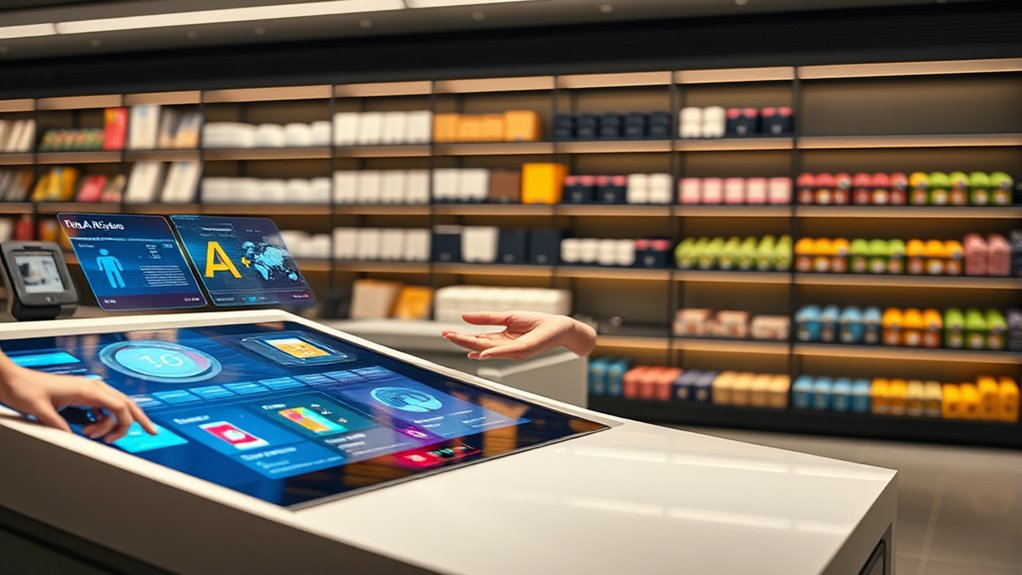
AI is transforming retail checkout experiences by enabling faster, contactless, and more efficient transactions. When you shop today, you might notice how seamlessly products are recognized and billed without traditional cashiers. The market for AI-powered checkout systems was valued at around USD 2.5 billion in 2023 and is expected to skyrocket to USD 15.3 billion by 2032, growing at a compound annual rate of over 22%. This rapid expansion is driven by retailers’ desire to automate operations, reduce labor costs, and meet consumers’ expectations for quick, contactless shopping.
Technological advances like computer vision and machine learning are at the heart of this transformation. These systems can accurately identify products through visual recognition, speeding up the checkout process while reducing errors. As a shopper, you benefit from personalized recommendations based on your purchase history, making your experience more tailored and engaging. Contactless, cashier-less checkouts are becoming the norm, allowing you to breeze through stores without waiting in lines or handling cash and cards directly. Integration with chatbots and virtual assistants further enhances your experience by helping with product inquiries and payment options in real-time. Additionally, the ongoing development of automation technology continues to improve the reliability and efficiency of these systems.
This technology not only improves customer satisfaction but also streamlines retail operations. Retailers cut costs by relying less on human cashiers and automating tasks like returns, inventory tracking, and customer service. Employees can then focus on higher-value activities, elevating the overall shopping environment. For you, this means faster service, fewer errors, and more personalized shopping journeys. The growth of AI checkout systems is especially prominent in North America and Asia-Pacific, where infrastructure and consumer preferences favor rapid, efficient shopping experiences. Additionally, the integration of AI with mobile payments and digital wallets is creating more seamless and secure transaction options for consumers.
Consumer behavior reflects this shift, with about two-thirds of shoppers already using AI tools like chatbots or price comparison apps. A large majority now desire AI-driven, personalized shopping encounters. Retailers report significant cost savings, often between 10-30%, thanks to AI integration. However, challenges remain, including high failure rates in AI implementation, privacy concerns, and potential job displacement. Despite these hurdles, AI continues to reshape retail checkout, making shopping faster, smarter, and more aligned with modern consumer expectations.

HAHA Large Smart Vending Machine, AI-Powered Coolers with A Self-Serve System, Grab and Go Vending Machine for Specialty Operators/Unmanned Supermarkets/Factories (864 Bottle Capacity)
Massive 864-Bottle Capacity: Store 828 drinks (500ml bottles + 330ml cans) across 12 adjustable shelves—perfect for convenience stores,…
As an affiliate, we earn on qualifying purchases.
As an affiliate, we earn on qualifying purchases.
Frequently Asked Questions
How Does AI Improve Customer Shopping Experiences?
AI enhances your shopping experience by personalizing recommendations based on your browsing, purchase history, and real-time behavior, making product suggestions more relevant. It creates tailored descriptions and virtual try-ons, reducing friction. AI-powered chatbots offer instant, empathetic support, while predictive analytics ensure products are in stock and pricing is optimized. All these tools work together to make your shopping faster, more engaging, and satisfying, increasing your loyalty and overall satisfaction.
What Are Privacy Concerns With AI Checkout Systems?
Imagine you’re in a sci-fi movie, but real-life AI checkouts raise serious privacy concerns. You might not know what data is collected, like your purchase history or biometric info. This lack of transparency makes you worry about unauthorized access, data breaches, or misuse for targeted ads. Many feel distrustful because they fear losing control over their personal info, and retailers could face legal trouble if they don’t handle data responsibly.
How Cost-Effective Is Implementing AI in Retail?
Implementing AI in retail is quite cost-effective when you consider the potential savings and increased efficiency. You can reduce operational costs by 10-30%, especially through automation in supply chains and checkout processes. While initial investments vary—from white-label solutions costing $30,000 to $150,000, or custom systems exceeding $1 million—the long-term ROI often justifies the expense. Plus, declining AI costs and productivity gains make it a smart financial move.
Can AI Prevent Theft and Fraud at Checkout?
Yes, AI can prevent theft and fraud at checkout. It actively monitors transactions, comparing scanned items with video footage and weight data to detect inconsistencies. While some may think humans alone can catch theft, AI’s real-time analysis reduces errors, flags suspicious behavior instantly, and distinguishes between accidental mis-scans and deliberate fraud. This technology actually enhances security, making checkout smarter and more secure, preventing losses before they happen.
What Training Is Needed for Staff to Operate AI Checkout?
To operate AI checkout systems, you need training on the interface, navigation, and quick addition of new products. You should learn troubleshooting recognition errors and system malfunctions, as well as integrating with inventory and POS systems. Additionally, develop customer assistance skills, understanding security features, and managing customer frustrations. finally, stay updated on software upgrades and practice adaptability for smooth implementation and ongoing operation of AI checkout technology.

Clover Station – Restaurant POS Soldering Station – POS System – Includes Station, EMV Chip Card Reader, Receipt Printer, Cash Drawer – LED Display
REQUIRES Merchant Account w/SwyftPAY. CANNOT be used with different Processor. Rate match guarantee. No contracts. For Questions call…
As an affiliate, we earn on qualifying purchases.
As an affiliate, we earn on qualifying purchases.
Conclusion
As you step into the future of retail, AI-powered checkouts become your trusty compass, guiding you through a seamless shopping journey. No more lines or checkout chaos—just smooth sailing as technology transforms the retail landscape into a well-choreographed dance. Embrace this AI revolution, where shopping feels like a breeze and every purchase is a step into tomorrow. The retail world is turning a new page, and you’re at the heart of this exciting chapter.
personalized shopping recommendation device
As an affiliate, we earn on qualifying purchases.
As an affiliate, we earn on qualifying purchases.

QIXZOCV MWE 32 Inch Digital Signage Display, Portable LCD Digital Kiosk, Advertising Display Poster, Android Kiosk with Auto Media Player, HDMI/USB
【High-Quality Display】This MWE-QIXZOCV digital signage kiosk features an IPS display screen with FHD image and video quality, offering…
As an affiliate, we earn on qualifying purchases.
As an affiliate, we earn on qualifying purchases.