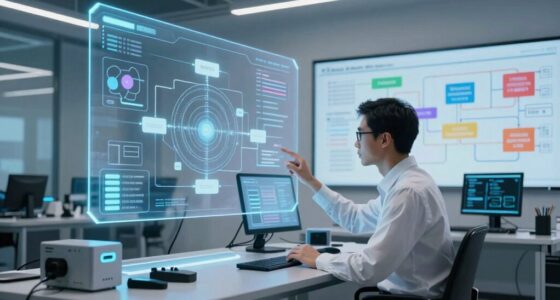
Automation is transforming retail stores by reducing or eliminating human staff through advanced technologies like self-checkout, AI-driven product suggestions, and robotic inventory management. You’ll find faster, safer shopping with contactless payments and seamless online-offline experiences. This shift aims to boost efficiency, cut costs, and meet rising consumer demand for instant, personalized service. If you keep exploring, you’ll discover how these innovations are shaping a smarter, more autonomous shopping future.

Get business pricing on tech for your team
- Business-only prices and quantity discounts
- Tax-exempt purchasing
- Multiple users, one account, clear invoices
Key Takeaways
- Automation enables self-checkout systems, reducing the need for cashiers and increasing checkout speed.
- Smart shelves and IoT devices monitor inventory in real-time, minimizing staff intervention for stock management.
- Robotics and AI-driven systems handle tasks like restocking, order fulfillment, and customer assistance.
- Automated stores utilize mobile POS and digital solutions for seamless online-to-offline shopping experiences.
- The retail industry is increasingly adopting autonomous technologies, moving toward stores operated with minimal or no human staff.

Retail automation is transforming the shopping experience by leveraging advanced technologies to boost efficiency, convenience, and personalization. As a shopper, you now benefit from faster checkouts, personalized recommendations, and seamless online-to-offline progressions, all thanks to innovations in automation. The retail automation market is booming, projected to reach nearly USD 61 billion by 2032, with growth driven by the increasing demand for convenience and cutting-edge tech like AI and machine learning. These advancements are revolutionizing inventory management, making stock levels more accurate, and automating reordering processes, so shelves stay stocked without human intervention. You’ll notice that stores are adopting smart shelves and mobile POS systems, allowing staff to complete transactions anywhere in the store, reducing wait times and improving service efficiency. Contactless payment systems are becoming standard, providing a safer, quicker checkout experience—something consumers like you increasingly prefer, with over 66% favoring self-checkout options over traditional registers. Automation also enhances operational efficiency; warehouses and fulfillment centers use robotics and IoT devices to streamline order processing and delivery, reducing costs and speeding up shipping times. Retailers aim to automate up to 70% of daily tasks by 2025, ensuring smoother operations and better customer interactions. According to industry forecasts, the retail automation market is expected to grow at a compound annual growth rate of approximately 9.7% from 2025 to 2032, reflecting its expanding influence. Consumer preferences are shifting toward personalized, instant shopping experiences, and automation helps meet those expectations. You can enjoy tailored product suggestions, easy self-checkout, and the convenience of shopping across multiple channels without friction. Sustainability is also a growing concern for shoppers, prompting retailers to adopt automated solutions that reduce waste and energy consumption. This shift toward automation is supported by the increasing adoption of technologies like AI and machine learning, which are essential for delivering smarter and more personalized shopping experiences. The market is competitive, with major players like NCR, Diebold Nixdorf, and Toshiba leading the way in developing innovative automation solutions, while new companies continue to emerge. This dynamic landscape promises a future where stores operate more efficiently, cost-effectively, and with less human labor, all while delivering a better shopping experience for you. As retail automation continues to grow at nearly 9.5% annually, expect your shopping journey to become faster, safer, and more personalized. The era of retail without workers is upon us, driven by technology that reshapes how you interact with stores and products every day.
As an affiliate, we earn on qualifying purchases.
Frequently Asked Questions
How Do Customers Feel About Shopping Without Human Staff?
You might feel that shopping without human staff is convenient and quick, especially for routine tasks like checking prices or making simple purchases. However, you could also miss the personal touch and empathy that a human offers during complex issues or special requests. While automation works well for some, you might find it frustrating if systems glitch or can’t handle your unique needs, making your experience feel impersonal or unsatisfactory.
What Are the Security Risks of Fully Automated Stores?
You face significant security risks in fully automated stores. Cyberattacks like ransomware, DDoS, and credential stuffing can cripple operations overnight, causing massive losses. IoT vulnerabilities expose sensitive customer data and store systems to hacking, while physical theft and fraud remain threats without human oversight. Data breaches and system failures threaten your reputation and finances, making robust cybersecurity measures essential to keep your store secure and trustworthy.
How Do Automated Stores Impact Local Employment?
Automated stores reduce local employment by replacing many entry-level retail jobs with machines and AI. You might notice fewer cashiers, stock clerks, and customer service roles available in your community. This shift can lead to economic challenges, like decreased spending and lower tax revenues, especially in areas heavily reliant on retail jobs. While automation boosts efficiency, it also limits opportunities for low-skilled workers seeking employment.
What Maintenance Challenges Do Robotic Systems in Stores Face?
You face maintenance challenges with robotic systems in stores, including unexpected downtime that disrupts operations and risks revenue loss. You need preventative and predictive maintenance, using sensor data and real-time monitoring, to anticipate failures. Modular designs help with quick repairs, but complex integration with existing infrastructure can cause issues. Staying updated on software and hardware compatibility, along with skilled staff, is essential to keep your systems running smoothly and efficiently.
Are There Privacy Concerns With Customer Data in Automation?
Think of customer data in automation like a double-edged sword—you get powerful insights but risk cutting your reputation if misused. Yes, there are privacy concerns. Your store collects sensitive info like location, facial recognition, and health data, which can feel invasive. If you don’t handle this data responsibly, you risk legal trouble, cyberattacks, and losing customer trust. Balancing automation’s benefits with strict privacy measures is essential to keep your customers safe and confident.
automated retail store equipment
As an affiliate, we earn on qualifying purchases.
As an affiliate, we earn on qualifying purchases.
Conclusion
As you walk through a store increasingly run by machines, remember that automation replaces human interaction with precision and efficiency. Yet, behind the sleek screens and robotic aisles, there’s a quiet loss of personal touch and community connection. While technology streamlines your shopping, it also reshapes the human experience you once knew. In this new retail landscape, progress and emptiness coexist, reminding you that progress often comes with a price—something irreplaceable that no machine can truly replicate.
As an affiliate, we earn on qualifying purchases.
As an affiliate, we earn on qualifying purchases.
Fall Picks
fall essentials
As an affiliate, we earn on qualifying purchases.