

You’ll find that the political hurdles of implementing free money policies often outweigh the actual math. Voters react based on personal interests, fears, and values, making how you frame the message critical. Leaders emphasize morality or fiscal responsibility to sway opinions, and public perception often dominates economic facts. Successful policies depend less on numbers and more on strategic messaging that aligns with voter motivations. If you want to discover how these political games play out, keep exploring this complex landscape.

Get business pricing on tech for your team
- Business-only prices and quantity discounts
- Tax-exempt purchasing
- Multiple users, one account, clear invoices
Key Takeaways
- Political framing and voter perceptions often overshadow economic facts in shaping support for free money programs.
- Fiscally responsible messaging is crucial but often conflicts with emotional and moral appeals.
- Gaining bipartisan consensus is challenging due to ideological divides and concerns about long-term fiscal impact.
- Public fears of dependency and reduced work incentives influence political opposition more than economic rationales.
- Effective policy support relies more on strategic communication and aligning with voter values than on economic feasibility.
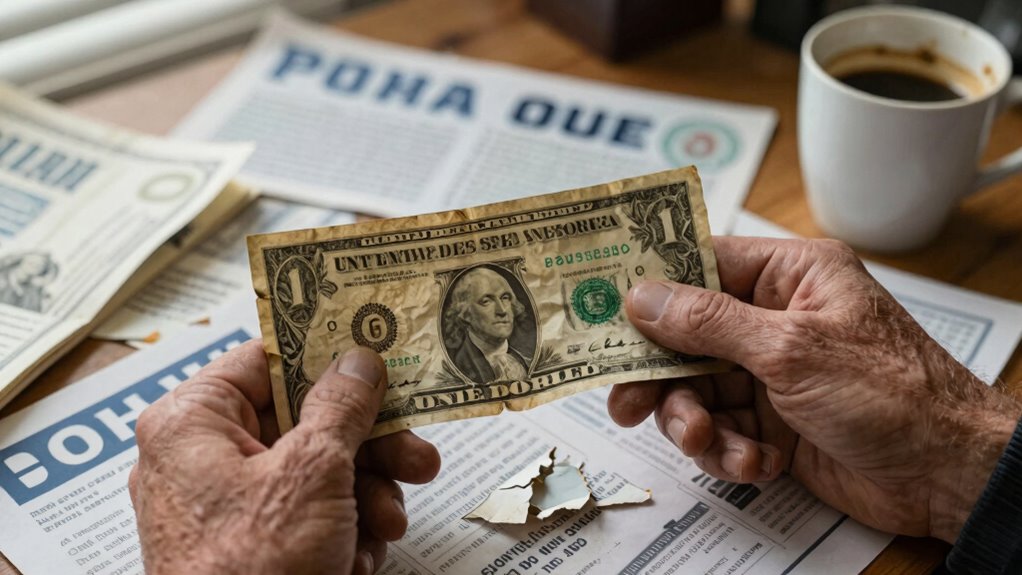
When it comes to debates over free money—whether in the form of universal basic income, stimulus checks, or other welfare programs—the real challenge isn’t the math, but the politics behind it. While many see these programs as straightforward solutions to economic hardship, the political landscape often complicates their implementation. Voter motivation plays a major role here. People tend to support or oppose these measures based on personal interests, perceived fairness, and ideological beliefs rather than just economic calculations. For some, free money symbolizes security and compassion, leading to strong backing. For others, it raises fears of dependency and discourages work, fueling opposition. Politicians must navigate these conflicting motivations, often framing free money as either a necessary aid or a dangerous handout, depending on their audience.
Beyond voter motivation, fiscal responsibility is a central concern that shapes political debates. Lawmakers worry about the long-term impact of these programs on national budgets and economic stability. Even if the math shows that a particular initiative is feasible, politicians face pressure to justify its costs to fiscally conservative voters and their colleagues. They must balance immediate relief for constituents with the need to maintain responsible spending. This often results in a tug-of-war: advocates argue that investing in social programs pays off through a healthier, more productive society, while opponents emphasize the importance of reducing deficits and avoiding inflation. The politics of fiscal responsibility can stall or dilute initiatives, as leaders hesitate to endorse measures that might be viewed as fiscally reckless. Recognizing the political landscape surrounding these issues is crucial for effective policy implementation. Recognizing the role of public opinion can help clarify why certain policies succeed or fail, despite their economic soundness. Additionally, understanding the political feasibility of these programs is essential for their successful adoption and sustainability. A significant public perception exists that economic benefits alone are insufficient to gain political support, making the messaging strategy vital. Acknowledging these political challenges can help strategize better approaches for policy advocates.
The political difficulty lies in convincing voters and fellow policymakers that the benefits justify the costs. It’s not enough to show the economic logic—politicians also have to frame the issue in a way that appeals to voter motivation and aligns with their broader ideological stance. Sometimes, this means emphasizing the moral imperative to support vulnerable populations; other times, it involves stressing the importance of fiscal discipline. These competing narratives influence legislative action more than the actual numbers ever could. Ultimately, the success of free money programs depends less on their mathematical viability and more on political consensus. Leaders must craft messages that motivate voters, address their fears, and reconcile economic realities with political principles. That’s what makes the politics of free money so much harder than the math.
universal basic income informational books
As an affiliate, we earn on qualifying purchases.
As an affiliate, we earn on qualifying purchases.
Frequently Asked Questions
How Do Political Ideologies Influence Free Money Policies?
Your political ideology influences free money policies through ideological biases that shape your views on government intervention and economic support. Policy framing plays a vital role, as different ideologies emphasize either individual responsibility or social safety nets. These biases determine whether you see free money programs as necessary or as incentives for dependency, ultimately guiding the policies you support or oppose based on how they’re presented and aligned with your beliefs.
What Are the Long-Term Economic Impacts of Universal Basic Income?
Imagine you receive a steady basic income, reducing stress and enabling you to pursue education or entrepreneurship. Long-term, universal basic income can decrease income inequality and boost economic growth by increasing consumer spending and innovation. However, if funding leads to higher taxes or inflation, it might strain the economy. Overall, it has the potential to create a more equitable society and foster sustainable economic development.
How Do Public Perceptions Shape Free Money Debates?
Public perceptions heavily influence free money debates by shaping public trust and policy support. When misinformation campaigns spread false narratives, they erode trust, making it harder to implement programs like universal basic income. You’ll find that positive perceptions foster acceptance, while skepticism fueled by misinformation stalls progress. To shift opinions, honest communication and transparency are essential, helping the public understand benefits and dispel myths surrounding free money initiatives.
What Role Do Interest Groups Play in Free Money Policy Decisions?
Interest groups wield significant influence in free money policy decisions, acting like puppeteers pulling strings behind the scenes. Through interest group lobbying and savvy policy influence strategies, they shape debates and sway politicians to favor their interests. You can think of them as the loudest voices in the room, turning complex issues into bargaining chips, ensuring their priorities are heard and sometimes prioritized over the broader public good.
How Can Policymakers Ensure Equitable Distribution of Free Money?
You can guarantee equitable distribution of free money by establishing clear eligibility criteria that prioritize those in greatest need, and regularly reviewing distribution fairness. Transparency in how funds are allocated builds public trust. Engage diverse communities to understand their needs and adjust policies accordingly. By actively monitoring and refining eligibility standards, you make certain resources reach the most deserving, promoting fairness and reducing disparities.
fiscal responsibility guidebooks
As an affiliate, we earn on qualifying purchases.
As an affiliate, we earn on qualifying purchases.
Conclusion
So, as you see, the politics of free money aren’t just about numbers—they’re about nuance, negotiation, and maneuvering the noise. While math may seem straightforward, the true test lies in tackling tough truths and tangled interests. Remember, behind every policy push are people with passions and priorities. Stay sharp, stay skeptical, and see beyond the surface—because understanding the politics behind the payout is where real power lies.
As an affiliate, we earn on qualifying purchases.
political messaging strategy books
As an affiliate, we earn on qualifying purchases.
As an affiliate, we earn on qualifying purchases.
Fall Picks
fall essentials
As an affiliate, we earn on qualifying purchases.