
TL;DR

Get business pricing on tech for your team
- Business-only prices and quantity discounts
- Tax-exempt purchasing
- Multiple users, one account, clear invoices
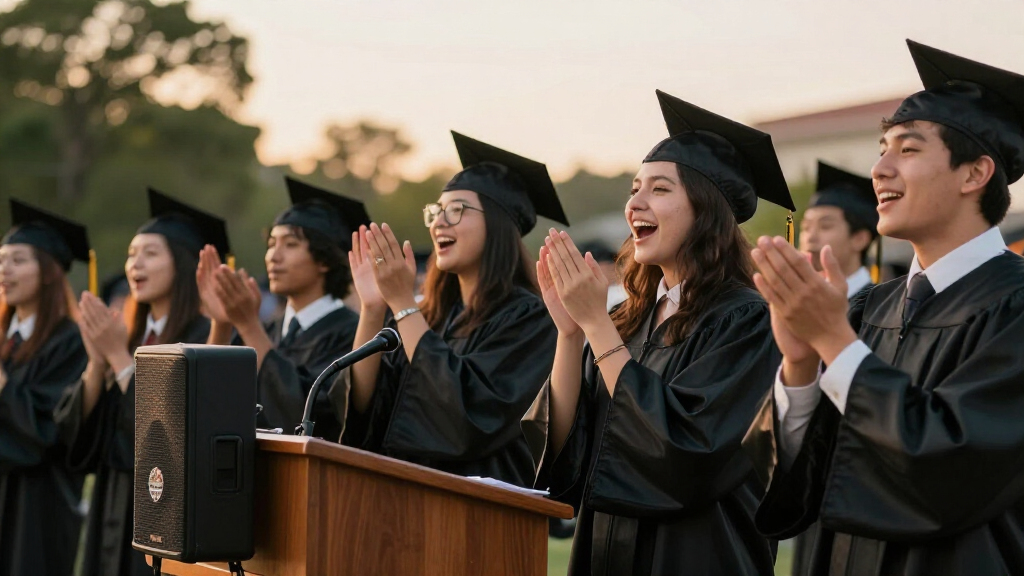
During recent U.S. college commencements, students loudly booed speakers who praised artificial intelligence, reflecting widespread concern about AI’s effects on jobs and society. The event highlights generational tensions over technological change.
Students at multiple U.S. universities booed commencement speakers who praised artificial intelligence, disrupting speeches and expressing skepticism about the technology’s role in the future. The protests reflect broader concerns among young people about AI’s impact on jobs and society, making this a significant sign of generational tension over technological change.
During graduation ceremonies at the University of Arizona, University of Central Florida, and Middle Tennessee State University, speakers who highlighted AI as a transformative or revolutionary force faced loud boos and jeers from the graduating students. At Arizona, former Google CEO Eric Schmidt, who spoke about AI’s influence, was interrupted multiple times and had to pause his speech as student hecklers shouted. Schmidt acknowledged students’ fears, calling them ‘rational,’ but maintained that AI will shape the world and urged graduates to guide its development.
Similarly, at UCF, VP Gloria Caulfield was jeered when she described AI as ‘the next industrial revolution.’ At Middle Tennessee State, music executive Scott Borchetta was also booed after stating that AI was ‘rewriting production’ and telling students to ‘deal with it.’ These incidents indicate a widespread nervousness among students about AI’s rapid advancement and its potential to disrupt employment and societal norms.
Why It Matters
This pattern of protests underscores a growing skepticism among younger generations regarding AI’s promises and implications. As AI continues to influence the job market and societal structures, student opposition signals potential challenges for policymakers, educators, and industry leaders in addressing public concerns and fostering responsible development of the technology. The protests also highlight a broader cultural debate about the pace of technological change and its impact on employment security and ethical considerations.
AI safety and ethics books for students
As an affiliate, we earn on qualifying purchases.
As an affiliate, we earn on qualifying purchases.
Background
Over the past year, AI has become a prominent topic in public discourse, with major tech figures and industry leaders promoting its potential benefits. However, concerns about job displacement, privacy, and ethical issues have also intensified. Recent commencement speeches across the U.S. have included references to AI’s transformative power, but student reactions have ranged from applause to outright heckling. These incidents are part of a larger pattern of skepticism and resistance among younger populations towards rapid technological adoption without sufficient societal safeguards.
“I know what many of you are feeling about that. I can hear you. There is a fear.”
— Eric Schmidt
“Booing and shouting during speeches praising AI.”
— Student heckler (implied)
“AI is the next industrial revolution.”
— Gloria Caulfield
“Deal with it.”
— Scott Borchetta
AI job displacement awareness posters
As an affiliate, we earn on qualifying purchases.
As an affiliate, we earn on qualifying purchases.
What Remains Unclear
It is not yet clear how widespread these protests will become or whether they will influence future commencement speeches or public discourse on AI. The long-term impact on perceptions of AI among graduates and the broader public remains uncertain.
As an affiliate, we earn on qualifying purchases.
What’s Next
Next, organizers and speakers may reconsider how they address AI in future ceremonies to avoid disruptions. Additionally, public debates and discussions about AI’s societal impact are likely to intensify, potentially influencing policy and industry practices. Monitoring student and public reactions will be key to understanding how resistance to AI evolves.
AI educational kits for college students
As an affiliate, we earn on qualifying purchases.
As an affiliate, we earn on qualifying purchases.
Key Questions
Why did students boo the speakers praising AI?
Students booed because they are concerned about AI’s potential to disrupt jobs, privacy, and societal norms. The protests reflect skepticism about the promises of AI and fears over its rapid development.
Are these protests happening only at specific universities?
No, incidents have been reported at multiple universities across the U.S., including the University of Arizona, UCF, and Middle Tennessee State University, indicating a broader trend.
Will this affect how future commencement speeches are delivered?
It is possible that organizers and speakers will modify their speeches or choose different topics to avoid disruptions, but this remains to be seen.
What does this say about generational attitudes toward AI?
This suggests a significant skepticism among younger generations about AI’s benefits and concerns about its societal impact, which could influence public policy and industry practices.
Source: Hacker News
Fall Picks
fall essentials
As an affiliate, we earn on qualifying purchases.