
TL;DR

Get business pricing on tech for your team
- Business-only prices and quantity discounts
- Tax-exempt purchasing
- Multiple users, one account, clear invoices
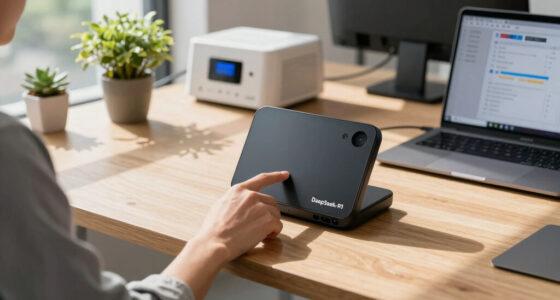
Google is developing an AI-enabled mouse pointer that understands context and intent, allowing users to interact seamlessly across applications. This innovation aims to eliminate complex prompts and make AI collaboration more intuitive.
Google has introduced an AI-enabled mouse pointer designed to understand the context and intent behind user interactions, aiming to create a more seamless and intuitive way to collaborate with AI across various applications. This development marks a significant shift from traditional pointers that only tracked position, toward intelligent systems that interpret what users are pointing at and why it matters.
The new AI-powered pointer, built on Google’s Gemini technology, can operate within Chrome, Googlebook, and other platforms, enabling users to perform complex tasks with simple gestures and speech, without the need for detailed prompts. For example, users can point to an image and request directions, compare products, or visualize changes directly within the interface, streamlining workflows and reducing interruptions.
Google’s research team outlined four core principles guiding this innovation: maintaining flow across applications, showing and telling through contextual understanding, embracing natural shorthand interactions, and turning pixels into actionable entities. These principles aim to shift the workload of conveying context from users to AI systems, making interactions more human-like and intuitive.
Why It Matters
This development could significantly improve productivity and user experience by reducing the friction of complex prompts in AI interactions. It also signals a move toward more integrated, human-centric interfaces that adapt to natural gestures and speech, potentially transforming how users collaborate with AI in daily tasks.
As an affiliate, we earn on qualifying purchases.
Background
Traditional computer pointers have remained largely unchanged for over 50 years, tracking only position. Recent advances in AI, particularly in understanding visual and semantic context, are now enabling a new class of interactive tools. Google’s research builds on this trend, aiming to embed AI understanding directly into user interfaces to make interactions more seamless and intuitive.
“Our goal is to develop more seamless, intuitive ways to collaborate with AI, transforming the pointer from a simple tracking device into a context-aware assistant.”
— Adrien Baranes and Rob Marchant, Google Research
“Applying these principles in our products, like Chrome and Googlebook, will enable users to ask questions and perform tasks just by pointing and speaking, without complex prompts.”
— Google Research team
As an affiliate, we earn on qualifying purchases.
What Remains Unclear
It is not yet clear how widely these AI-enabled pointers will be adopted across different platforms or how they will perform in complex, real-world scenarios. The technology is still in experimental phases, and user acceptance remains to be seen.
As an affiliate, we earn on qualifying purchases.
What’s Next
Google plans to continue testing the AI-enabled pointer across its platforms, including Google Labs’ Disco, and aims to roll out broader integrations in the coming months. Future updates will clarify its capabilities and user experience improvements.
As an affiliate, we earn on qualifying purchases.
Key Questions
How does the AI-enabled pointer work?
The pointer uses AI, powered by Gemini, to understand what the user is pointing at and why it matters, enabling natural interactions like asking for summaries, comparisons, or visualizations without detailed prompts.
Will this technology replace traditional mouse pointers?
It is designed to complement traditional pointers by adding context-awareness and natural interaction capabilities, not replace them entirely.
Which platforms will support this AI-enabled pointer?
Initial support will be available in Google Chrome and Googlebook, with plans to expand to other Google products and platforms in the future.
When will this technology be available to the public?
Google has not announced a specific release date, but the technology is currently in experimental testing, with broader rollout expected in the coming months.
Halloween Picks
halloween
As an affiliate, we earn on qualifying purchases.