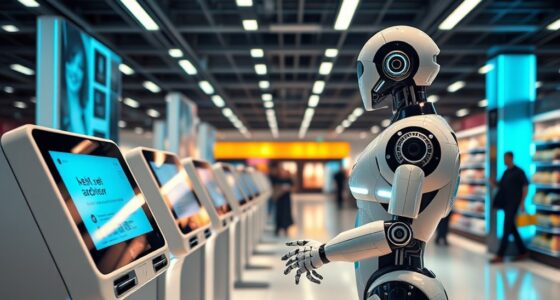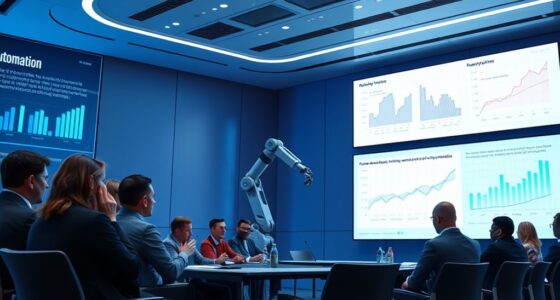
Algorithms are rapidly transforming skill requirements across industries, shifting roles from traditional jobs like taxi driving to advanced tech positions. They automate repetitive tasks, making basic skills less important while emphasizing digital competencies and adaptability. This means you’ll need continuous reskilling and a focus on emerging skills to stay relevant. As technology advances, understanding how algorithms reshape work is vital—to discover how you can stay ahead, keep exploring.
Key Takeaways
- Algorithms automate routine tasks, reducing manual labor in traditional taxi roles and increasing demand for advanced digital skills.
- Transitioning from taxi driving to tech requires reskilling in data analysis, coding, and digital competencies.
- AI-driven platforms now influence skill requirements, emphasizing adaptability and continuous learning across sectors.
- Workplace monitoring and data analysis shape new skillsets focused on data security, privacy, and algorithm management.
- Success in tech-driven roles depends on developing problem-solving, digital literacy, and flexibility to navigate evolving job markets.

Have you noticed how algorithms are reshaping the way we work? They’re no longer just tools for automation; they’re actively influencing decisions about hiring, promotions, and job assignments based on data analysis. This shift means that your skills need to evolve faster than ever. As AI becomes more integrated into workplaces, the importance of basic computer skills is decreasing—by about 9%, in fact—making room for more advanced digital competencies. Tasks once performed manually are now automated, particularly repetitive routines across industries, which reduces the need for manual labor in roles like office support and customer service. If you’re in these sectors, you’ve probably felt the impact firsthand. To stay relevant, you’ll need to reskill and upskill continually, embracing new knowledge and capabilities. Sectors like healthcare and STEM are experiencing a boom, with demand projected to increase considerably by 2030, while roles centered around traditional office functions decline. This creates a shifting landscape where your ability to adapt determines your future.
Algorithms also predict worker behavior, like who might leave a job or organize a union, to help employers make strategic decisions. Real-time monitoring tools track your performance, adjusting expectations and behaviors to optimize productivity. While these advancements boost efficiency and enable smarter decision-making, they raise concerns about privacy and data security. As workplaces become more data-driven—especially since the COVID-19 pandemic—your personal data is under increased scrutiny, and understanding how your information is used becomes vital. Technological progress in AI and data analysis allows for increasingly sophisticated monitoring systems, which can be both a boon and a challenge for workers. Additionally, the role of color accuracy in projectors influences how well visual information is conveyed, impacting the overall quality of digital displays in the workplace.
The demands of the job market are evolving. Demand for health sector professionals and STEM specialists is growing rapidly, whereas roles like customer service and sales face a decline of around 13-18%. This shift requires you to develop new skills aligned with emerging industry needs. AI is making work more efficient by automating routine tasks and supporting decision-making with large datasets. Complex tasks that once required skilled workers are now handled by AI, transforming how different industries operate. To succeed, you’ll need to become an agile learner, investing in lifelong education and proactively updating your skills. Governments and businesses are increasingly responsible for supporting this transition, but individual initiative remains key. Staying ahead means embracing continuous learning and being ready to adapt as the landscape of work evolves. The future of work isn’t just about machines replacing humans; it’s about humans and algorithms working together—requiring a new set of skills and a mindset geared toward constant growth.
Frequently Asked Questions
How Quickly Are Traditional Jobs Becoming Obsolete Due to Algorithms?
Traditional jobs are becoming obsolete at a rapid pace, with AI expected to replace around 85 million jobs globally by 2025. In sectors like manufacturing and retail, automation could displace a significant portion of roles within just a few years. You need to stay adaptable, upskill, and embrace new technologies, as many roles are evolving or disappearing faster than you might think, often within the next few years.
What New Skills Are Most in Demand Because of Technological Shifts?
Like a river carving new paths, technological shifts demand fresh skills. You now need AI and machine learning expertise, including frameworks like TensorFlow and PyTorch. Data fluency and analytical thinking help you interpret large datasets, while cybersecurity knowledge shields systems from threats. Creativity, resilience, and adaptability become your tools for steering through rapid change, ensuring you stay relevant. Continuous learning and collaboration are essential as you work alongside AI and digital tools to thrive in this evolving landscape.
Can Algorithms Replace Human Judgment in Complex Decision-Making?
You might wonder if algorithms can replace human judgment in complex decisions. While they process data quickly and reduce biases, they lack emotional intelligence, moral reasoning, and contextual understanding. Algorithms are better as tools that support, not replace, human judgment. Combining human insight with algorithmic data leads to better decisions, especially in nuanced situations where empathy and ethics are essential. So, full replacement isn’t realistic—collaboration is key.
How Should Workers Adapt to Ongoing Algorithm-Driven Changes?
Imagine you’re sailing through a changing sea of technology—algorithms acting like shifting currents. To stay afloat, you need to learn to navigate these waters confidently. Embrace continuous learning, develop digital and analytical skills, and stay adaptable. Keep an eye on industry trends, earn new certifications, and network within tech-savvy circles. This proactive approach helps you steer your career through algorithm-driven changes instead of being swept away by them.
What Industries Are Most Affected by Algorithmic Skillset Transformations?
You’ll find the manufacturing, healthcare, finance, and retail industries most affected by algorithmic skillset transformations. In manufacturing, robots and AI oversee repetitive tasks and quality control. Healthcare sees professionals collaborating with AI for diagnostics and personalized care. Finance relies on AI for fraud detection and trading, while retail uses algorithms for personalized shopping and inventory management. To stay relevant, you need to develop skills in AI tools, data analysis, and technical supervision.
Conclusion
As algorithms reshape your world, you’re often the ship steering a shifting sea. Embrace the change, view it as an opportunity to grow, and adapt your skills like a seasoned sailor adjusting to the winds. Remember, technology is a mirror reflecting your resilience and willingness to learn. By staying flexible and proactive, you’ll not only keep afloat but also steer toward new horizons, turning transformation into your greatest voyage.