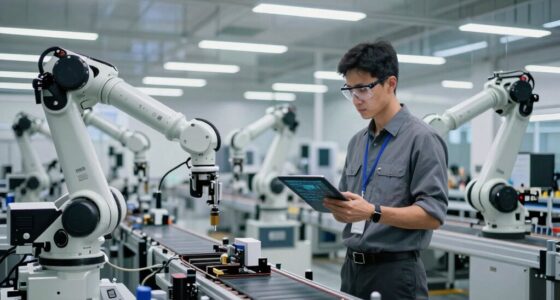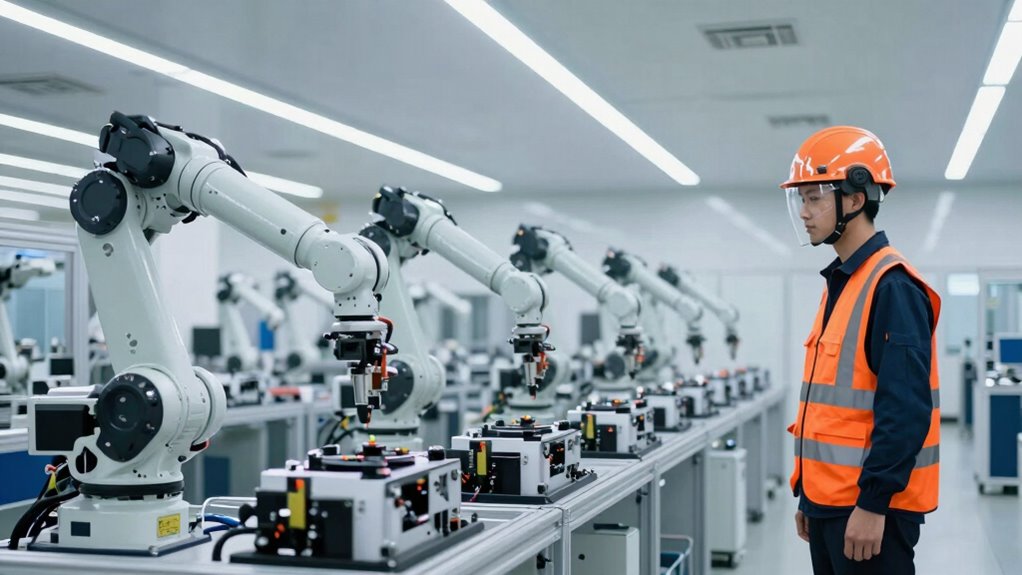

In automated workplaces, you’ll find that humans are crucial for making complex moral decisions, understanding emotional nuances, and providing ethical oversight that machines can’t replicate. While automation handles routine tasks, your judgment is needed to navigate social dynamics and guarantee transparency. Relying solely on algorithms risks ethical violations and loss of accountability. If you stay engaged, you’ll discover how human intelligence remains indispensable to creating fair, responsible, and trustworthy workplaces.

Get business pricing on tech for your team
- Business-only prices and quantity discounts
- Tax-exempt purchasing
- Multiple users, one account, clear invoices
Key Takeaways
- Complex ethical decisions and moral dilemmas require human judgment beyond automation capabilities.
- Human oversight ensures transparency, accountability, and correction of errors in automated systems.
- Tasks involving emotional intelligence and empathy, such as healthcare and customer service, depend on human input.
- Overreliance on algorithms can undermine societal norms, legal standards, and ethical considerations.
- Collaboration between humans and automation enhances safety, fairness, and responsible decision-making in workplaces.
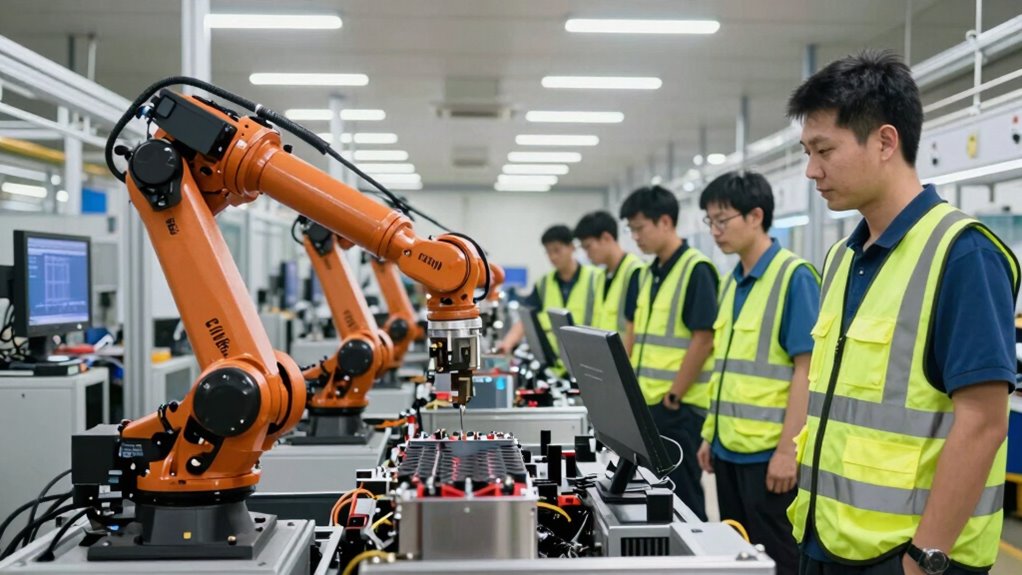
As automation transforms workplaces, many assume that robots and AI will replace humans entirely. However, the reality is more complex. While machines can handle repetitive tasks and improve efficiency, they can’t replace the nuanced judgment, creativity, and empathy that humans bring to the table. This is especially true in environments where robot ethics—decisions about how and when machines should operate—are critical. Human oversight becomes essential to ensure that automation aligns with ethical standards, legal requirements, and social values. You can’t rely solely on algorithms to make complex moral decisions or navigate unpredictable situations. Instead, humans need to supervise and intervene when necessary, guiding automation to serve people’s best interests.
Human oversight is essential to ensure automation aligns with ethics, laws, and social values.
In many workplaces, automation actually increases the need for human workers, not fewer. As machines take on more routine tasks, humans are freed to focus on higher-level responsibilities like strategic planning, problem-solving, and innovation. These roles require critical thinking and emotional intelligence—traits that robots can’t replicate. By maintaining human oversight, you help prevent automation from becoming a black box where decisions are made without accountability. This oversight is vital for addressing unforeseen issues, correcting errors, and ensuring that the use of AI and robotics remains transparent and aligned with societal values. Additionally, understanding robot ethics is crucial for designing and managing automated systems responsibly. Incorporating ethical considerations into automation processes helps ensure that technology respects human rights and societal norms.
Furthermore, as automation becomes more sophisticated, the importance of human judgment grows. Robots can be programmed to follow rules, but they lack the intuitive understanding that humans develop through experience. For example, in healthcare or customer service, machines may assist with diagnoses or support, but the empathetic response and ethical considerations still need human input. You play a crucial role in overseeing these interactions, making sure that technology enhances, rather than replaces, human dignity and trust.
Ultimately, the future of automated workplaces isn’t about replacing humans but augmenting their capabilities. Robots and AI can handle tasks that are dangerous, monotonous, or data-intensive, but they rely on human oversight to navigate moral dilemmas and complex social dynamics. By understanding robot ethics and ensuring proper oversight, you help create workplaces where automation empowers people rather than diminishes their roles. Far from a future where humans become obsolete, it’s a vision where humans and machines work together—each complementing the other’s strengths. This partnership ensures that workplaces remain fair, ethical, and responsive to human needs.
As an affiliate, we earn on qualifying purchases.
Frequently Asked Questions
How Will Human Roles Evolve Alongside Automation?
You’ll find your role evolving to focus on robot empathy and creative collaboration, where your human skills complement automation. As robots handle routine tasks, you’ll take on more complex, emotionally nuanced work, fostering better teamwork and innovation. Your ability to understand and connect with others becomes essential, ensuring that automation enhances productivity without compromising human touch. This partnership makes workplaces more dynamic, creative, and adaptable to future challenges.
What Skills Will Be Most Valuable for Future Workplaces?
In future workplaces, your most valuable skills will be creative problem solving and emotional intelligence. As automation handles routine tasks, you’ll need to think critically and innovate to stay ahead. Emotional intelligence will help you collaborate effectively, understand others, and navigate complex social dynamics. Developing these skills will make you indispensable, enabling you to adapt to changing roles and contribute meaningfully in increasingly automated environments.
How Can Companies Best Integrate Human and Automated Workers?
You should focus on integrating human and automated workers through thoughtful job redesign, emphasizing machine empathy. Studies show that 75% of employees value meaningful work, which automation alone can’t provide. By redesigning roles to highlight human skills like empathy and creativity, you can foster collaboration. Incorporate training that enhances machine empathy, ensuring humans complement automation effectively. This approach boosts productivity while maintaining a human touch in the workplace.
What Ethical Considerations Arise From Increased Automation?
You must consider ethical responsibility and privacy concerns when increasing automation. As you implement new technology, guarantee it respects employees’ rights and maintains transparency. Protect sensitive data from misuse and avoid biases in algorithms. By prioritizing ethics, you foster trust and fairness in the workplace, balancing automation’s benefits with human dignity. Addressing these issues proactively helps prevent potential harm and demonstrates your commitment to responsible innovation.
How Might Automation Impact Workplace Diversity and Inclusion?
Automation can improve workplace diversity and inclusion by enhancing cultural representation and reducing bias. You can implement systems that promote equitable decision-making, ensuring diverse perspectives are valued. However, you must remain vigilant about bias mitigation, as algorithms may unintentionally reinforce stereotypes. Your role involves continuously updating and monitoring automation tools to foster an inclusive environment, ensuring technology supports, rather than hinders, diversity efforts.
emotional intelligence training for employees
As an affiliate, we earn on qualifying purchases.
As an affiliate, we earn on qualifying purchases.
Conclusion
As you see, automation isn’t a one-size-fits-all solution; sometimes, it calls for more human touch, not less. You’ll need skilled workers to manage, troubleshoot, and add a personal touch that machines can’t replicate. Remember, you can’t have a hammer without a hand to hold it. Embracing this balance will help your workplace thrive, proving that in the end, humans and machines work best when they work together, not against each other.
workplace transparency monitoring software
As an affiliate, we earn on qualifying purchases.
As an affiliate, we earn on qualifying purchases.
human oversight automation systems
As an affiliate, we earn on qualifying purchases.
As an affiliate, we earn on qualifying purchases.
Fall Picks
fall essentials
As an affiliate, we earn on qualifying purchases.