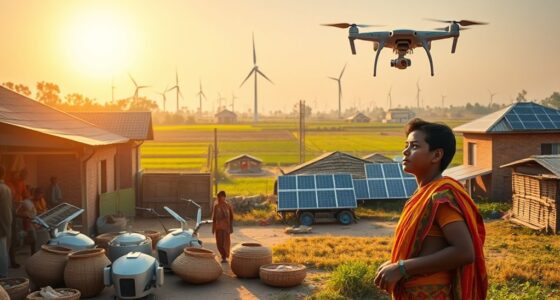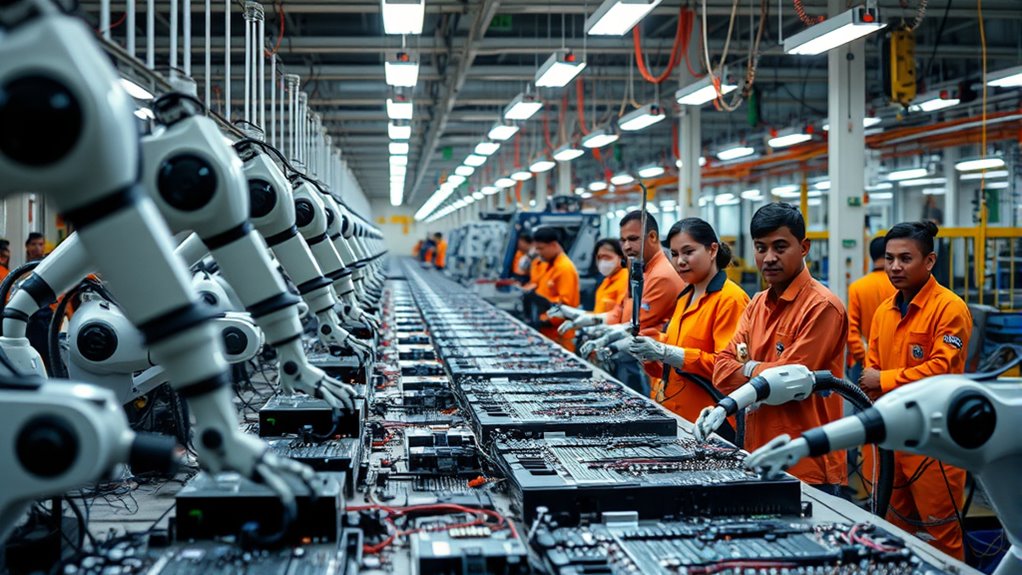

Automation is changing how developing countries participate in global manufacturing, making traditional offshoring less attractive as robots and advanced systems perform tasks faster and cheaper. However, this shift opens new opportunities for these nations to develop specialized skills, upgrade infrastructure, and create high-value industries. By investing in education and innovation, they can strengthen their economies and become tech hubs. Keep exploring to see how technology can help developing countries adapt and thrive.
Key Takeaways
- Automation reduces the cost advantage of offshoring, making it less attractive for companies in developing countries.
- Developing nations can leverage automation to shift towards higher-value industries and specialized skills.
- Investment in education and infrastructure enables workforce adaptation and technological leapfrogging.
- Automation democratizes manufacturing, allowing local small and medium enterprises to compete globally.
- Strategic policies are essential to prevent inequality and ensure automation fosters inclusive economic growth.

Automation is transforming industries worldwide, but developing countries face unique challenges and opportunities in this shift. As technology accelerates, you might wonder how automation impacts offshoring and whether robots will replace human labor in these regions. For many developing nations, this technological leap offers both a threat and a chance to bolster their economic resilience. Historically, these countries relied heavily on offshoring manufacturing jobs to capitalize on lower labor costs. Now, with automation advancing rapidly, that model faces significant disruption. Robots and automated systems can perform tasks faster, more accurately, and at a lower long-term cost, making traditional offshoring less attractive to multinational companies. This shift pressures developing economies to adapt quickly or risk falling behind.
However, automation isn’t solely a threat. It also *liberates* opportunities for these countries to redefine their roles in global supply chains. Instead of competing solely on low wages, they can focus on developing specialized skills and technological capabilities that complement automation. This is where the concept of a technological leap becomes *vital*. By investing in education and infrastructure, you can help your workforce *navigate* into higher-value roles, such as overseeing automated systems or designing new technologies. This leap can strengthen your economic resilience, making your economy less vulnerable to the volatility of global demand for low-cost labor. Countries that embrace this shift can even become hubs for tech-driven industries, attracting foreign investment and fostering innovation.
Furthermore, automation can democratize access to advanced manufacturing tools. Small and medium-sized enterprises, which traditionally struggled to compete globally, can now leverage automation to increase productivity. This reduces dependency on offshoring and encourages local value creation. For developing countries, this means a chance to build more self-sufficient industries that are less susceptible to external shocks. Nevertheless, this *shift* requires strategic planning. You need policies that support workforce upskilling, infrastructure development, and innovation ecosystems to *guarantee* that automation benefits everyone, not just the tech-savvy elite. Without these measures, there’s a risk of widening economic disparities and social unrest.
Frequently Asked Questions
How Will Automation Impact Employment Rates in Developing Countries?
Automation will likely decrease employment rates in developing countries as technological dependency grows, replacing many manual jobs. You might see cultural shifts as communities adapt to new roles, but some traditional employment opportunities could vanish. While automation boosts efficiency, it could also lead to economic challenges. To thrive, you’ll need to embrace new skills and stay flexible, as jobs evolve with technological advances and changing industry demands.
What New Skills Will Workers in Developing Nations Need?
You’ll need to focus on reskilling initiatives and boost your digital literacy to stay competitive. Developing nations require workers to learn new technological skills, such as data analysis, programming, and digital communication. Embracing continuous learning helps you adapt to automation’s impact. By acquiring these skills, you can seize new opportunities and remain relevant in a changing job market, ensuring your career stays resilient amidst automation advances.
Can Automation Lead to Economic Growth in Developing Countries?
Automation is like a spark that can ignite economic growth in developing countries. By making a technological leap and investing in infrastructure, you can attract new industries and boost productivity. This creates jobs, encourages innovation, and enhances exports. You’ll need to focus on building the right skills and institutions, but with strategic planning, automation can be a powerful driver of prosperity and sustainable growth in these regions.
How Are Governments Supporting Workers Displaced by Automation?
Governments support displaced workers by implementing programs like workforce reskilling, helping them learn new skills for emerging jobs. They also introduce initiatives such as Universal Basic Income to provide financial stability during shifts. By investing in education and training, you can better adapt to automation’s impact, ensuring you stay relevant and secure in the evolving job market. These measures aim to reduce unemployment and promote economic resilience.
Will Automation Widen or Reduce Global Economic Inequalities?
Automation has the potential to both widen and reduce income disparity, depending on how you implement it. If you leverage technology inclusively, it can bridge gaps and promote economic equality. However, if access is limited, it risks creating a technological apartheid, deepening existing inequalities. You might find that without careful policies, automation accelerates wealth concentration, making income disparity more pronounced globally.
Conclusion
As automation advances, the future of offshoring in developing countries hangs in the balance. Will robots replace human labor entirely, or will new opportunities arise? The choices you make now could shape economies and lives in ways you can’t yet imagine. The true impact remains uncertain, and the next chapter is still unwritten. One thing’s certain: the world as you know it is about to change—are you ready to face what’s coming?