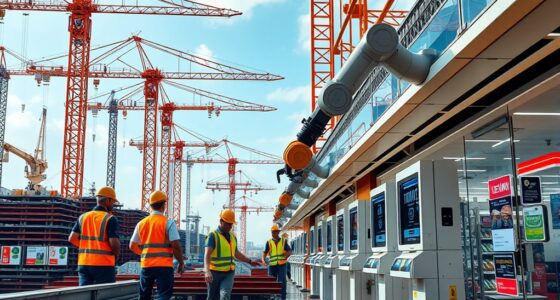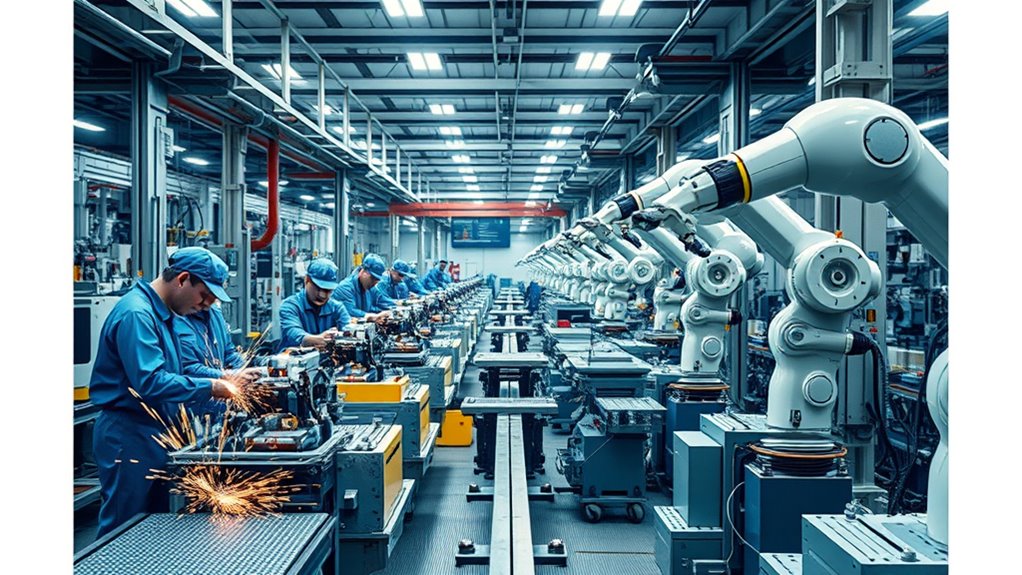

Automation is transforming your job landscape by replacing many middle-skill roles with machines and software. Tasks in manufacturing, administration, and service sectors are shrinking as companies seek efficiency. This shift can lead to job displacement, making stable, well-paying middle-income positions less common. Instead, workers often find themselves in low-wage, insecure jobs. To understand how you can navigate these changes and what it means for your future, keep exploring these important trends.
Listen free for 30 days with Audible
Thousands of audiobooks and originals — cancel anytime.
As an affiliate, we earn on qualifying purchases.
Key Takeaways
- Automation replaces routine middle-skill tasks, reducing employment opportunities in manufacturing, administrative support, and service roles.
- Middle-skill jobs become vulnerable as companies adopt advanced machinery and software to boost efficiency.
- Workers with median skills face displacement, leading to job instability and limited pathways to higher wages.
- The decline of middle-skill roles contributes to increased wage disparity and economic inequality.
- Reskilling and policy reforms are necessary to help workers adapt to automation-driven job polarization.
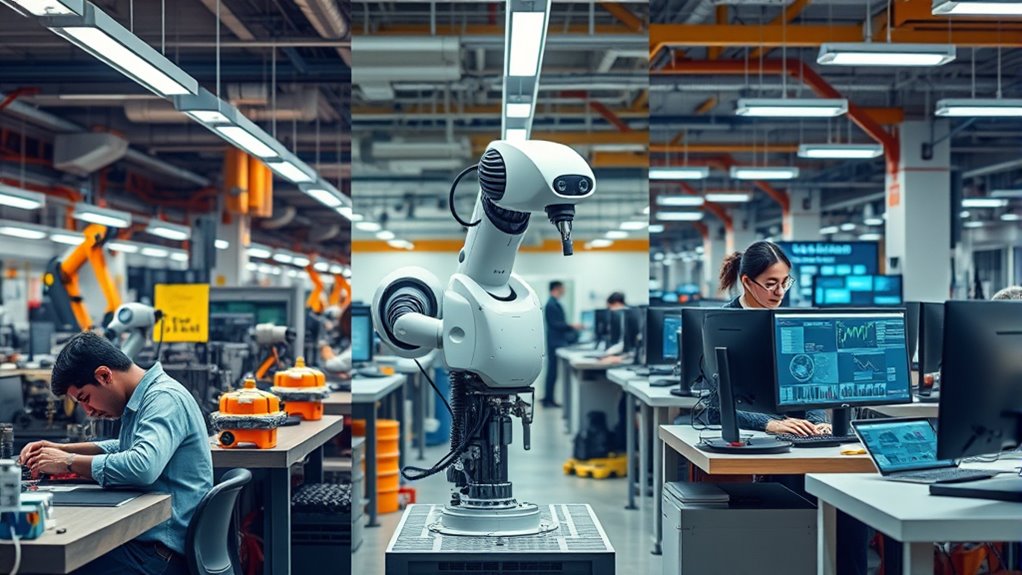
Have you noticed how many jobs today seem to be shifting toward either high-skill, high-wage roles or low-skill, low-wage positions? This phenomenon is a clear sign of job polarization, driven largely by technological displacement. As automation and advanced machinery replace routine tasks, middle-skill jobs—often found in manufacturing, administrative support, and certain service sectors—are shrinking. These positions, once considered stable and well-paying, are increasingly vulnerable to being taken over by machines or software, leaving workers in a tough spot. The result is a growing divide in the labor market, where the gap between high-wage, high-skill jobs and low-wage, low-skill roles widens profoundly.
Job polarization is growing as automation replaces middle-skill jobs, widening economic divides.
You might notice that jobs requiring moderate skills, like assembly line work or clerical tasks, are disappearing or transforming. Companies adopt automation to boost efficiency, but this often comes at the expense of workers performing routine tasks. As machines take over, workers with median skills face technological displacement, making it harder to find stable employment that pays well. This process can also lead to increased environmental and health concerns, as automation and technology sometimes contribute indirectly to environmental degradation or workplace health issues. Instead, they’re pushed into low-wage positions, often with fewer benefits and less job security. Meanwhile, the high-skill jobs—those in tech, management, or specialized fields—continue to grow, but they demand advanced education and training. This heightens wage disparities, with top earners pulling ahead while middle-income workers struggle to keep pace.
You may also see that this polarization accelerates economic inequality. With fewer middle-skill jobs available, many workers find themselves stuck in low-paying roles that don’t provide enough to improve their quality of life. The wage disparities become even more pronounced, creating a cycle where advancing your skills becomes vital but increasingly difficult without access to quality education or training programs. As automation becomes more prevalent, it’s clear that the middle ground of employment is shrinking, leaving a hollowed-out job market. The challenge lies in adapting to these changes—whether through reskilling, policy reforms, or new economic strategies—to guarantee that workers aren’t left behind in this evolving landscape.
In essence, job polarization isn’t just about the shifting nature of work; it’s a reflection of how technological displacement is reshaping the economy and deepening wage disparities. Recognizing this trend is the first step toward addressing the inequalities it creates and finding ways to support workers caught in the middle.
As an affiliate, we earn on qualifying purchases.
Frequently Asked Questions
Which Industries Are Most Affected by Automation-Driven Job Polarization?
You’ll find manufacturing sectors and customer service industries most affected by automation-driven job polarization. In manufacturing, robots replace routine tasks, reducing middle-skill jobs while increasing demand for high-skill roles. Similarly, customer service positions shift as AI chatbots handle basic inquiries, pushing workers into either low-skill or high-skill roles. This trend can challenge your job stability, prompting you to adapt by developing advanced skills or seeking new opportunities.
How Can Workers Adapt to Changing Middle-Skill Job Opportunities?
You can adapt to changing middle-skill job opportunities by embracing reskilling initiatives and committing to lifelong learning. Seek out training programs, online courses, and certifications to stay current with evolving skills. Stay proactive, network with industry professionals, and remain flexible to shift into new roles. By continuously developing your expertise, you guarantee your skills stay relevant, making you resilient amid automation-driven job shifts.
What Policies Can Mitigate Negative Impacts on Middle-Skill Workers?
You can support middle-skill workers by implementing policies that promote reskilling initiatives, helping them acquire new skills for evolving job markets. Strengthening social safety nets guarantees they’re protected during transitions. By investing in accessible education and training programs, you help workers adapt effectively. These policies reduce negative impacts, promote economic stability, and ensure middle-skill workers remain essential contributors in the changing labor landscape.
How Does Automation Influence Income Inequality Across Skill Levels?
Automation can dramatically widen the income gap and increase wage disparity across skill levels, making it feel like the rich get richer while everyone else struggles to keep up. As technology replaces middle-skill jobs, high-skill workers often benefit with higher wages, while low-skill workers face stagnation or job loss. This accelerates income inequality, deepening societal divides and risking economic instability if unchecked.
Are There Successful Case Studies of Regions Managing Job Polarization?
Yes, some regions successfully manage job polarization through regional strategies and community initiatives. For example, tech hubs like Austin, Texas, invest in workforce training programs and foster partnerships with local businesses to upskill middle-skill workers. These initiatives create new opportunities and help workers shift into higher-value roles, reducing inequality. By actively supporting reskilling and community collaboration, regions can adapt to automation’s challenges and sustain economic growth.
As an affiliate, we earn on qualifying purchases.
Conclusion
You might be surprised to learn that middle-skill jobs have declined by nearly 20% over the past decade, as automation replaces routine tasks. This shift highlights how technology favors high-skill roles and automates low-skill jobs, leaving middle-skill workers caught in the middle. To stay ahead, you’ll need to develop adaptable skills and embrace lifelong learning. Recognizing these trends helps you prepare for a future where your career depends on continuous growth and flexibility.
As an affiliate, we earn on qualifying purchases.
As an affiliate, we earn on qualifying purchases.
Fall Picks
fall essentials
As an affiliate, we earn on qualifying purchases.