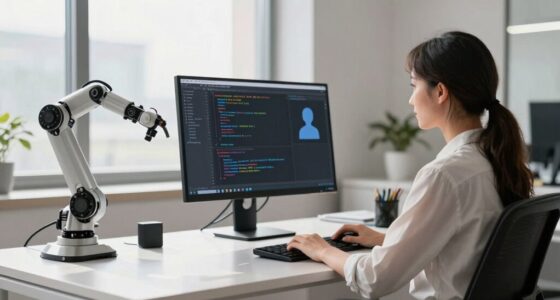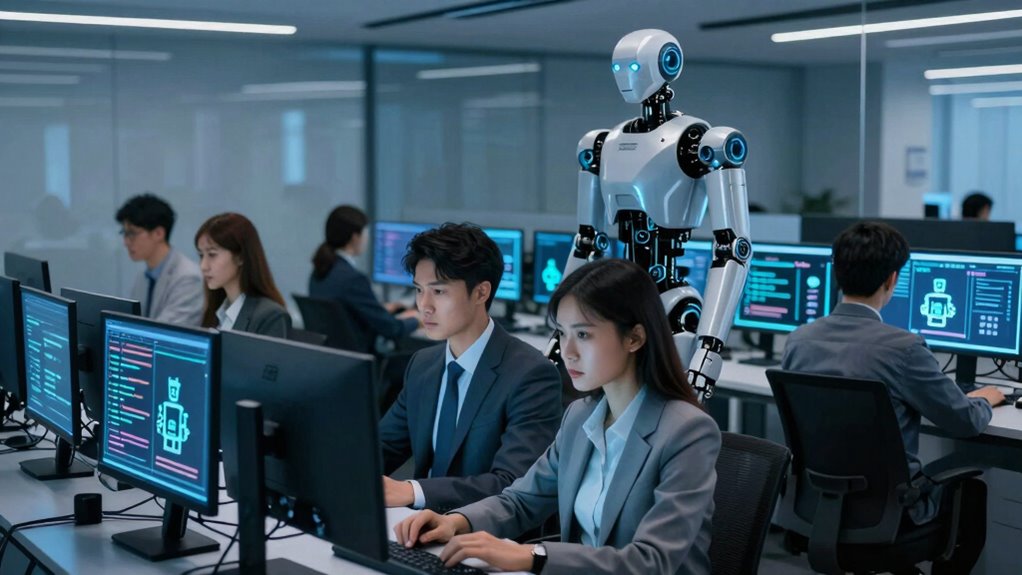

Automation is subtly changing your career prospects, often without you realizing it until promotions start to slow down. As machines handle routine tasks, the workplace shifts, requiring you to develop new skills in collaboration and strategic thinking. Over time, traditional paths to advancement may weaken, making soft skills like emotional intelligence more valuable. Staying aware of these changes and adapting early can help you maintain your growth trajectory—if you want to learn more, keep exploring how to stay ahead in this evolving landscape.

Get business pricing on tech for your team
- Business-only prices and quantity discounts
- Tax-exempt purchasing
- Multiple users, one account, clear invoices
Key Takeaways
- Automation gradually redefines roles, subtly reducing opportunities for promotions based on traditional skills.
- As automation handles routine tasks, promotion criteria shift toward leadership and innovative capabilities.
- Slow integration of automation can mask career stagnation until opportunities noticeably decline.
- Emphasis on soft skills and human-machine collaboration becomes critical for career advancement.
- Proactive adaptation and continuous learning are essential to maintain relevance amid evolving workplace dynamics.
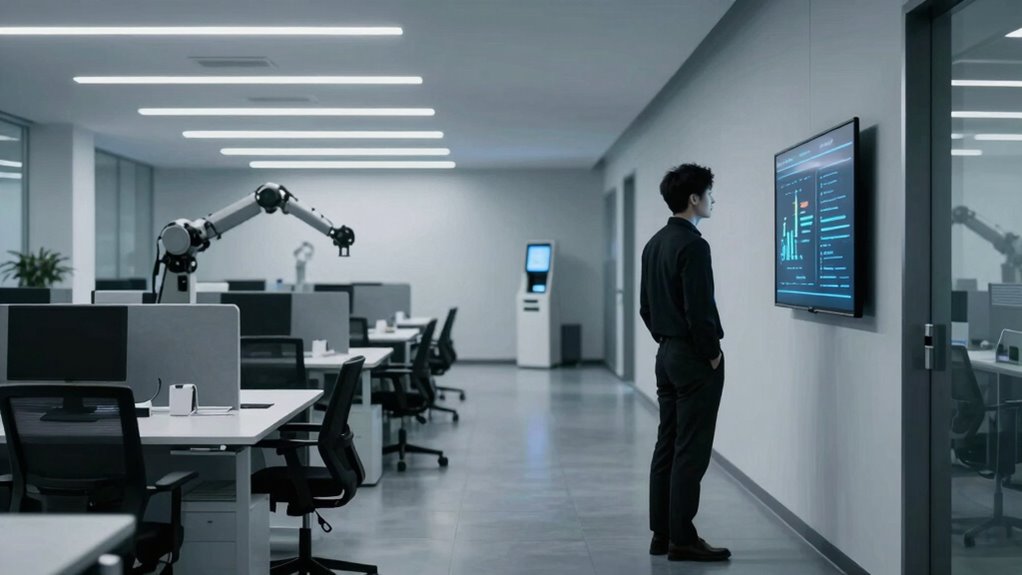
Even if automation hasn’t disrupted your job yet, you might not realize how it’s quietly reshaping your career prospects. As technology advances, many workplaces are undergoing subtle transformations that influence how you work and how your career progresses. One of the most significant shifts involves workplace adaptation—how employees learn to coexist with intelligent systems and automated processes. This isn’t just about replacing manual tasks; it’s about redefining roles, requiring you to develop new skills that complement automation rather than compete with it.
Automation subtly transforms careers, requiring new skills to work alongside intelligent systems and redefine roles.
In this evolving environment, human-machine collaboration becomes central. Instead of viewing machines as threats, you’re encouraged to see them as partners that can enhance your productivity and decision-making. For example, automation tools can handle routine data entry, freeing you to focus on strategic thinking and creative problem-solving. By embracing these collaborations, you’re not just keeping pace—you’re positioning yourself as an indispensable part of the new workplace. This shift demands continuous learning and flexibility, as the ability to adapt to new technologies becomes more critical than ever.
However, the real impact of automation may not be immediately apparent. You might currently feel secure in your position, but the slow, steady integration of automation tools can gradually diminish opportunities for advancement. Promotions often hinge on your ability to demonstrate leadership, innovation, or specialized expertise—traits that automation can now assist or even substitute for. When machines take over routine tasks, the traditional pathways to promotion may become less clear, making your ability to demonstrate uniquely human skills—such as emotional intelligence, strategic insight, or complex problem-solving—even more vital.
As automation becomes more embedded in your workplace, you might find that your role is evolving without your notice. You may be doing the same tasks, but the context is shifting. Employers increasingly look for workers who master human-machine collaboration, who understand how to leverage automation to achieve better results. If you resist this change, your prospects for promotion could slow or stall. Conversely, those who proactively adapt—learning new technologies, honing their soft skills, and becoming adept at integrating automation into their workflow—stand to benefit in the long run. Recognizing the importance of technological integration can help you stay ahead in this changing landscape. Developing a future-oriented mindset that embraces ongoing change is also crucial in adapting to these workplace shifts.
Ultimately, the automation shock most workers won’t see until promotions slow isn’t about losing jobs overnight; it’s about the slow erosion of traditional career advancement pathways. To navigate this, you need to focus on workplace adaptation and embrace human-machine collaboration. Doing so ensures you stay relevant, valuable, and ready for the future, even when it arrives quietly behind the scenes. Recognizing how automation tools are reshaping job roles can help you better prepare for ongoing changes in the workplace. As the integration of automation continues, developing a mindset geared toward continual learning and adaptation becomes crucial for long-term success. Additionally, understanding the impact of automation on career trajectories can empower you to make strategic choices to stay competitive.
human-machine collaboration tools
As an affiliate, we earn on qualifying purchases.
As an affiliate, we earn on qualifying purchases.
Frequently Asked Questions
How Will Automation Impact Job Security in the Long Term?
Automation will challenge your job security in the long term by causing job displacement in certain roles, especially repetitive tasks. To stay secure, you’ll need to focus on skill adaptation, learning new technologies, and developing uniquely human abilities like creativity and emotional intelligence. By proactively upgrading your skills, you can remain valuable in the workforce and better navigate the changing landscape driven by automation.
What Industries Are Most Vulnerable to Automation Shocks?
You should watch industries like manufacturing, retail, and transportation, which are most vulnerable to automation shocks. These sectors often struggle with maintaining industry resilience as automation adaptation accelerates, replacing routine jobs quickly. While some roles may evolve, many task-based positions could disappear, leading to significant job displacement. Staying adaptable and continuously updating your skills can help you navigate these shifts, but overall, these industries face higher risks from rapid automation integration.
How Can Workers Prepare for Automation-Related Career Changes?
To prepare for automation-related career changes, focus on skill adaptation and commit to continuous learning. Stay updated on industry trends, learn new technologies, and develop versatile skills that are hard to automate, like critical thinking and creativity. You can also pursue training programs or certifications to stay competitive. Embracing change proactively helps you adapt quickly, ensuring you remain valuable even as automation transforms your workplace.
Will Automation Lead to Increased Wage Inequality?
Yes, automation will likely increase wage inequality due to wage polarization and skill displacement. As machines handle routine tasks, high-skill workers may see wages rise, while those displaced or with low skills face stagnation or decline. To stay ahead, you should focus on developing adaptable skills, especially in areas less susceptible to automation, such as critical thinking and creativity. This way, you can better navigate the evolving job market and reduce wage disparities.
How Quickly Will Automation Effects Become Evident in Promotions?
Automation effects on promotions will hit like a tidal wave, gradually revealing themselves over the next few years. As AI integration accelerates, you’ll notice that skill adaptation becomes vital for career advancement. Promotions may slow as machines take over routine tasks, making it essential for you to upskill quickly. Staying ahead means embracing change now—don’t let automation’s quiet tide catch you unprepared, or your growth could stall unexpectedly.
As an affiliate, we earn on qualifying purchases.
Conclusion
Imagine riding a wave—you feel the surge, but the true power hits when the crest finally breaks. That’s what automation’s about to do to your career. While you might not notice the quiet changes now, when promotions slow, it’ll hit like a tidal wave. Just like a surfer who’s caught off guard by a sudden swell, you’ll realize too late that the automation tide has reshaped the landscape. Stay alert, or risk being swept aside.
As an affiliate, we earn on qualifying purchases.
As an affiliate, we earn on qualifying purchases.
Fall Picks
fall essentials
As an affiliate, we earn on qualifying purchases.