AI-driven creative work is more of a renaissance than a threat. It enhances your ability to produce content faster, fosters innovation, and opens new career opportunities in areas like AI content creation and design. While some traditional roles may decline, AI acts as a tool that amplifies human talent rather than replaces it. If you want to explore how to embrace this shift and thrive, there’s more to discover below.

Get business pricing on tech for your team
- Business-only prices and quantity discounts
- Tax-exempt purchasing
- Multiple users, one account, clear invoices
Key Takeaways
- AI enhances creative efficiency and innovation, fostering a renaissance of new artistic possibilities and workflows.
- It automates routine tasks, allowing human creators to focus on higher-level, strategic, and conceptual work.
- Concerns persist about job displacement and the devaluation of traditional creative roles.
- Ethical issues around transparency, fairness, and copyright challenge responsible AI integration in creative sectors.
- Overall, AI is viewed as a tool that complements human creativity, driving a transformative renaissance rather than a threat.
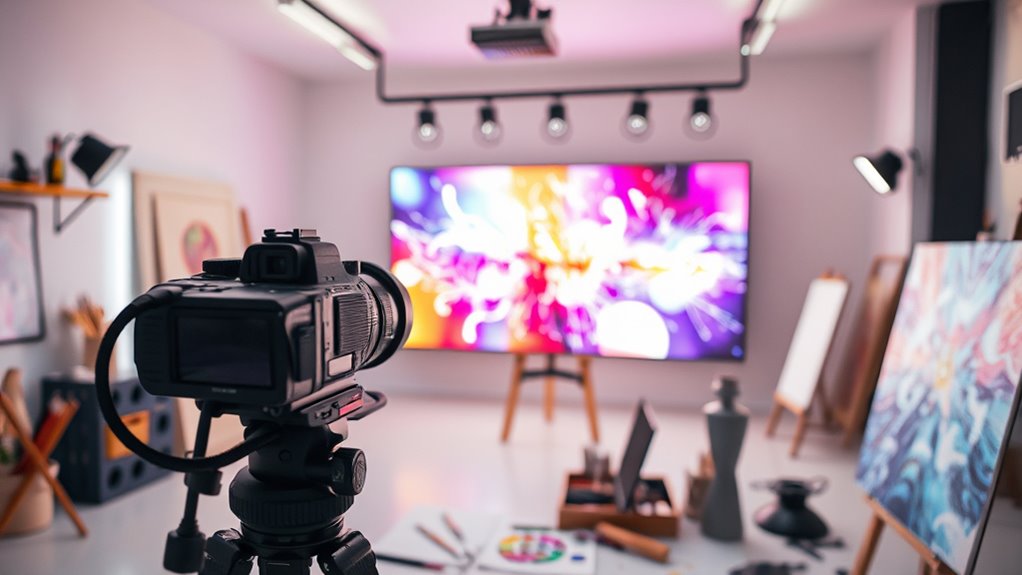
Have you ever wondered how artificial intelligence is transforming creative work? Today, AI is becoming an integral part of the creative industries, fundamentally changing how content is produced and shared. Generative AI tools are responsible for a massive increase in AI-generated images, which is reshaping marketing and artistic practices. You can now access a variety of AI tools tailored to different creative fields, from art and video editing to music production. This surge in AI adoption not only boosts efficiency but also opens new avenues for innovation. As a result, the job market is shifting, with new roles like AI content creators and specialists emerging, although some traditional roles, like prompt engineers, are declining due to automation.
In visual art, AI models such as Stable Diffusion now generate around 80% of all AI-created images, while platforms like Adobe Firefly have produced over 7 billion images since March 2023. These tools let you create stunning visuals quickly, scaling production to tens of millions of images daily. AI painting tools like NVIDIA Canvas allow you to sketch and turn your ideas into detailed artwork effortlessly. Platforms like Midjourney and DALL·E make AI art accessible, enabling you to experiment with new styles and concepts without extensive technical skills. This rapid output transforms how artists and marketers approach visual content, making high-volume production more feasible and diverse. Additionally, the widespread adoption of AI in creative sectors has led to a significant increase in talent demand, prompting many professionals to upskill or specialize in AI-driven techniques. The integration of AI into creative workflows is also driven by improvements in natural language processing (NLP) capabilities, which facilitate better communication and idea generation.
In music, AI tools like AIVA and Amper Music enable you to generate custom compositions tailored for different media. Platforms such as Boomy and Soundful let you create royalty-free tracks instantly, reducing costs and speeding up production. AI accelerates the music creation process, making it easier for you to craft unique soundtracks and sound effects, expanding opportunities in advertising, film, and gaming. Deep customization options mean you can fine-tune AI-generated music to match your specific needs, blending human creativity with machine efficiency.
For writing and content creation, tools like Jasper, Writesonic, and Sudowrite help you produce articles, stories, and marketing copy rapidly. Frase offers SEO optimization and research support, allowing you to scale your content efforts without sacrificing quality. By automating editing and research, AI improves your productivity, ensuring consistent excellence across large volumes of work. In video production, AI tools such as Runway, Veed.io, and Lumen5 streamline editing, automate subtitles, and turn text into engaging videos. These innovations save time and resources while expanding your creative possibilities through faster iteration and testing.
This AI revolution is also reshaping the job landscape. New roles like AI engineer and content creator are emerging rapidly, emphasizing human skills like creativity, judgment, and empathy. While some roles, such as prompt engineers, are fading, the overall trend points toward a future where AI complements human talent rather than replacing it. Instead of threatening your creative work, AI offers a renaissance—an opportunity to innovate faster, produce more, and push the boundaries of what’s possible. As AI continues to evolve, the importance of ethical considerations such as privacy, fairness, and transparency remains critical to ensure responsible adoption and use of these powerful tools.
Frequently Asked Questions
How Does AI Influence the Financial Value of Creative Industries?
AI substantially influences the financial value of creative industries by boosting efficiency, reducing costs, and opening new revenue streams. You can scale personalized content globally, attract diverse audiences, and innovate with AI-powered tools. However, you also face challenges like high implementation costs and ethical concerns. Overall, AI has the potential to both increase profitability and reshape the industry’s economic landscape, depending on how you adopt and balance its use with human creativity.
Can AI Truly Replicate Human Emotional Expression in Art?
You wonder if AI can truly replicate human emotional expression in art. While AI analyzes emotional datasets and enhances creativity, it still struggles to capture the nuanced depth of genuine human feelings. Collaboration between humans and AI can improve emotional resonance, but AI-generated art often lacks authentic emotional depth. As technology advances, it may get closer, yet fully matching the complexity of human emotion remains a significant challenge.
What Legal Rights Do Ai-Generated Works Hold?
You might think AI-generated works are on equal footing legally, but the law says otherwise—copyright protection hinges on human creativity. Without a human touch, your AI art isn’t eligible for copyright, and courts haven’t consistently applied fair use. While the industry grows, legal rights remain fuzzy, and you need meaningful human input to secure protections. It’s a case of “the proof is in the pudding”—law still favors human originality.
How Will AI Impact Future Job Opportunities for Creatives?
You’ll see AI reshape creative job opportunities considerably. While some roles may diminish due to automation, new positions like AI Content Creator and Prompt Engineer will emerge, blending tech skills with creativity. To stay competitive, you’ll need to develop hybrid skills, embrace continuous learning, and adapt to AI tools. This evolving landscape offers exciting growth, but also demands agility and strategic skill-building to thrive in future creative careers.
Are There Ethical Concerns With AI in Creative Collaboration?
Think of AI as a mirror reflecting society’s biases—it’s a symbol of ethical challenges in creative collaboration. You might worry about algorithmic bias, ownership disputes, and transparency issues. These concerns highlight the need for responsible use, clear guidelines, and fair compensation. By addressing these ethical questions, you can guarantee AI enhances your creativity without compromising integrity, turning technology into a tool that respects human artistry and promotes trust in collaborative innovation.
Conclusion
Think of AI-driven creative work as a mighty river—it’s powerful, unpredictable, and full of potential. You can choose to navigate its currents, harnessing its strength to carve new paths, or let it overwhelm you. Instead of fearing the flood, embrace it as an opportunity for innovation and growth. With your skill and vision as your vessel, you can steer this river toward a future where technology and creativity flow together in harmony, forging endless possibilities.
Fall Picks
fall essentials
As an affiliate, we earn on qualifying purchases.